

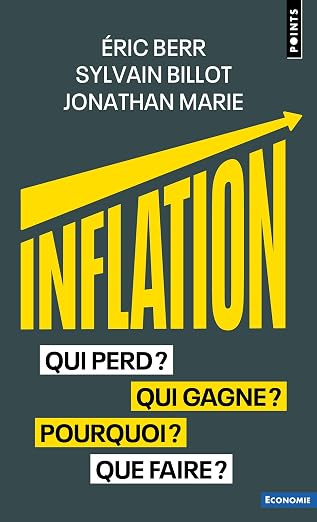
Following its initial publication in September 2024, the authors have published a new paperback edition. The book mainly covers the period of high inflation observed between 2021 and 2024. The aim of the book is to understand the causes that generated inflation during this period and to demonstrate that “inflation is above all a political matter.” After presenting the various indicators used to analyse price developments, the authors examine the consequences of inflation within society. “According to the OFCE, the 60% of the least affluent households experienced higher-than-average inflation, while the wealthiest 30% faced lower inflation”: deprivation for some, as opposed to a reduction in non-essential spending for others. The authors argue that the profits generated in the energy, agri-food and manufacturing sectors account for a significant share of inflation. Prices rose the most in sectors facing supply shortages caused by scarcities or disruptions in supply chains. Beyond energy-related shocks, they believe that different groups of economic actors play a role in price increases through their position within social relations: the actions of shareholders and corporate executives, wage increases demanded by workers, and government action through fiscal measures. One chapter is devoted to the European Central Bank’s monetary policy, which targets an inflation rate close to 2%. This policy has shown that it is easier to curb inflation by raising key interest rates than to generate inflation in a context of sluggish or even zero growth. The authors question this outdated monetary policy, which they regard as a constraint at a time when the ecological transition requires a large-scale public investment plan. Eric BERR is a senior lecturer in economics at the University of Bordeaux. His research focuses on debt and, more broadly, on the financing of economies, as well as on macroeconomic policies and the sustainability of development models. Sylvain BILLOT is an economist and statistician, a graduate of ENSAE, which trains senior officials for France’s national statistics institute, INSEE. He specialises in national accounting. Jonathan MARIE is a professor of economics at IHEAL-CREDA, Université Sorbonne Nouvelle. His research focuses on macroeconomics. Book review written by Sophie FRIOT
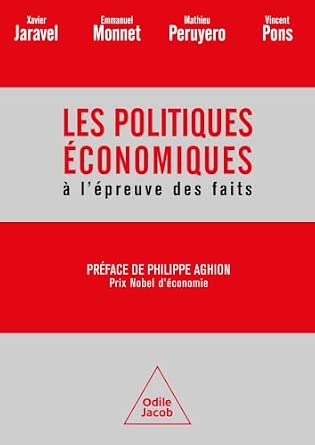
Xavier Jaravel, Emmanuel Monnet, Mathieu Peruyero and Vincent Pons, Economic Policies Put to the Test of Facts, Odile Jacob Publishing, 542 pages.
The ambition of this book is to defend an idea that may, at first sight, appear straightforward: economic policies should be judged on the basis of their observed effects, rather than according to grand egalitarian, utilitarian, liberal, Keynesian, interventionist or other doctrines. The design of public policies should follow an iterative process in which evaluation is integrated at every stage. The authors draw on recent advances in empirical economics, causal evaluation and the use of large databases to establish facts and examine what actually works in such diverse areas as employment, education, public debt, inequality, globalization and the ecological transition. Their approach does not claim that economics could replace political decision-making. On the contrary, they advocate dialogue between those who produce rigorous knowledge, but are sometimes distant from the practical constraints of policymaking, and those involved in action who do not always understand what actually works. The objectives of economic policy and the trade-offs involved must remain collective choices and be subject to democratic debate. Once these objectives have been defined, however, economic analysis can help identify the most effective and least costly policy instruments, and a number of disagreements can be settled empirically. It is within this framework and hybrid approach that the authors make an alarming assessment. France faces major economic challenges while, at the same time, experiencing a technological and industrial decline exacerbated by the AI revolution and climate shocks. They propose an economic strategy structured around six major areas. Education and human capital occupy a central position, as they determine employment, productivity, innovation and the ability to reduce long-term inequalities. Education spending should be directed towards policy levers whose effectiveness has been documented and demonstrated. The authors also emphasize the importance of innovation for growth, but advocate an approach to innovation focused on strategic priorities. With regard to public finances, restoring sound public accounts is a sine qua non for ensuring the sustainability of our social model. Debt must be stabilized, and support measures whose effectiveness has not been demonstrated should be discontinued. On inequality, the book calls for moving beyond redistribution after the fact. Policies relating to early childhood, education, healthcare and access to economic opportunities can reduce disparities at their source. Wealth inequality and inheritance are also among the important issues addressed. This book proposes a new philosophy of public action: diagnose, experiment whenever possible, measure the results, and then adjust. Politics sets the objectives, but facts should guide the choice of means. As Philippe Aghion writes in his preface, “the faster decisions are made and the more fragmented knowledge becomes, the rarer and more necessary a rigorous synthesis of knowledge is.” This book provides precisely that. Xavier Jaravel is Professor of Economics at the London School of Economics and Deputy Chair of the Council of Economic Analysis. Emmanuel Monnet is Inspector General of Finance. Mathieu Peruyero is a senior civil servant and teaches at Sciences Po. Vincent Pons is Professor of Economics at Harvard Business School and a member of the Council of Economic Analysis. Ph. Alezard

Nicolas HAZARD, je ne suis pas un algoritme !, Editions Flammarion, Février 2026, 182 pages
The Turgot Prize was awarded in 2021 to Aurélie Jean for her book Les algorithmes font-ils la loi ? (Do Algorithms Make the Law?). In his book Je ne suis pas un algorithme (I Am Not an Algorithm), Nicolas Hazard offers a fresh perspective, providing what he sees as a clear-eyed diagnosis of our times and, above all, an invitation to take action. We live in a world of dependence and alienation, in which we believe we are exercising our freedom when in fact we are merely responding to the prompts and solicitations of a system that is beyond our control. In the age of social media, where the individual takes centre stage, where growth drives our economic system, and where technology occupies a dominant position, we retreat into what reassures us most and act in pursuit of immediate results, while remaining deeply dissatisfied and having lost sight of the meaning of our lives in favour of an endless pursuit of “more.” Fortunately, we are much more than algorithms make us believe. Technology is merely a set of tools. It is up to us to decide what place we want to give it and to set appropriate limits. We therefore need to regain control of our lives and our minds. The freedom to make our own choices is often only an illusion, because there is frequently an algorithm influencing us. Our true freedom does not lie in being able to do everything we desire, but in learning to exercise self-restraint and select the options that will make us happy in the long term. This book is a wake-up call—a call to stop submitting to a digital diktat—so that everyone can reconnect with their own uniqueness, take responsibility for their choices, and regain control over what makes us profoundly human. Nicolas Hazard offers several practical recommendations: take a mini digital detox and spend some time away from your phone; stop using social media for 48 hours; write for fifteen minutes about a value that defines you; read an article, watch a video or listen to a podcast presenting an opposing viewpoint and reformulate its ideas with empathy; keep a “meaning journal” and record an activity or encounter that seemed meaningful to you; carry out one concrete altruistic act every day, as this can increase your self-esteem; and devote at least one hour a week to a project or cause that is important to you. In short, let us take action to reclaim the meaning of our lives. Nicolas Hazard, a graduate of Sciences Po and HEC, is an entrepreneur and essayist. He is also a Special Adviser to the European Commission on social innovation and the founder of INCO, a group that develops responsible investment solutions, supports entrepreneurs, and trains young people for the jobs of the future. Book review written by Michel Gabet
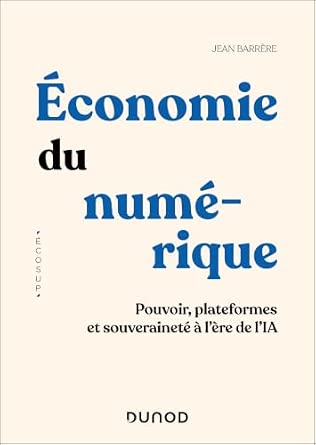
Jean BARRERE, Economie du numérique – Pouvoir, plateformes et souveraineté à l’ère de l’IA , Dunod , septembre 2026, 198 pages.
“Nothing lasts; life is nothing but change.” This is a substantial reference work that requires a methodical approach to fully grasp its contents. Jean Barrère highlights imbalances that have changed everything! Even the analytical tools of political economy now belong to a world where products, markets, and boundaries have fundamentally shifted in nature. The gap is widening, the author notes, driven by technologies governed by a hyper-powerful mechanism in which growth begets growth—a virtuous, self-reinforcing spiral. We are worlds away from the classical law of diminishing returns. The book dissects this unique phenomenon of rent reinforcement across three sections and ten chapters, shedding light on the concepts, their foundations, measurement methods, temporal metrics, and associated risks. The author outlines the exponential dynamics inherent to the digital economy—characterized by its structure, regime shifts, and capacity for market lock-in. Notably, this exponential trajectory requires a different financing model than a linear one. He reminds us that the battle for digital sovereignty is not primarily fought at the level of visible applications. Instead, the infrastructure should be viewed as a stack of bottlenecks comprising various constituent layers. Generative AI is spreading at breakneck speed, and the capital being mobilized is surging furiously. Yet, power within this market structure remains heavily concentrated, despite any decline in token value. “Superstar firms” already command a massive installed base. The real issue at stake is not the disappearance of work, but rather the pace at which new tasks are created and how productivity gains are shared. Admittedly, governance technology is advancing more rapidly than the legal frameworks intended to regulate it. However, given the pace at which the industrial policy shaping the digital economic landscape is evolving, only a few hyperscalers will remain, exercising absolute control over the sector’s infrastructure. Among its other merits, this book appears to be particularly timely! Jean Barrere is a strategy and artificial intelligence consulting partner at the firm Accurency and a lecturer in the economics of the digital sector at the University of Paris-Panthéon-Assas. Book review by Freddi Godet des Marais – Club Turgot 2026
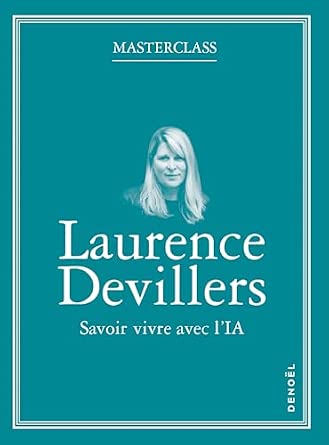
Laurence DEVILLERS, Savoir vivre avec l’IA , Denoel, 2026, 284 pages.
With her latest book, Laurence Devillers establishes herself as one of France’s leading experts in automation, robotics and AI. In it, she undertakes a useful exercise in analysing the lessons to be be learned from the exponential development of generative AI since 2022. This exercise is becoming increasingly difficult due to the recent proliferation of books, articles and talks, which are more or less “hallucinatory”, – on this “disruptive innovation” and this historic “social phenomenon”. The author clearly explains how to “survive with AI”, by harnessing its digital capabilities without losing its human capabilities, that is to say, unlike software, to retain one’s ability to understand situations, to make sense of phenomena and to become aware of one’s responsibilities. She endeavours to convince the reader that, although the the development of AI is inevitable, it can nevertheless be controlled by humans, thanks to practices governed by rigorous ethical charters and to appropriate actions for learning its systems, its logic and its languages. She criticises approaches that ascribe to AI a consciousness and a personality. She identifies the multiple biases of its software but puts into perspective the risks that AI poses to the psychology of its users and to democracy. She answers 8 of the questions that her users ask themselves: How can deepfakes be recognised? What is a ChatGPT hallucination? from ChatGPT? What are the hyperparameters of ChatGPT? How do you train ChatGPT to perform a task and make it repeat it? What are the limitations of current AI? What language does AI speak to us in? What is the paradox of our use of Big Tech? How can we foster critical thinking in young children when it comes to digital technology and AI? The author also endeavours to shed light on the 8 myths surrounding AI. Finally, she explores the scientific potential of AI, its contribution to public health, health, its environmental impact and its contribution to the graphic arts. Laurence Devillers is a professor at Sorbonne University and director of the LISN laboratory at the CNRS. Jean-Jacques Pluchart
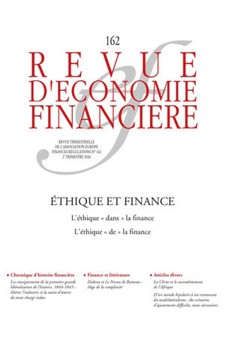
JOURNAL OF FINANCIAL ECONOMICS:
Issue No. 162 (2nd quarter 2026), ‘Finance and Ethics’ The special issue was edited by A. Buresi, Presiding Judge of Chamber at the Rennes Court of Appeal, and Ch. Walter, Scientific Adviser to the Cercle Turgot and Associate Researcher at EHESS. It brought together 29 authors and 20 articles. The publication of the dossier led to a conference on 21 September at the Institut de France, which was chaired by J-C. Trichet (Chair of the Turgot Prize jury) and by P. Berès (Chair of the Europe-Finance-Regulation Association). The publication is divided into four parts: Ethics, finance and behaviour of stakeholders; Ethics and business; Ethics and market finance; Ethics of the financial system. In each of the sections, the authors distinguish, on the one hand, the reprehensible behaviour of financial actors and the institutional mechanisms frameworks (civil and criminal) put in place to regulate them, and on the other hand, unethical biases – described as epistemic – introduced by financial systems and models into the functioning of organisations. The authors specifically clarify the differences between the concepts of ethics, professional ethics, conflict of interest, social, civil and liability, market integrity, etc. They show that the presentation of non-financial data (ESG) is a new challenge for the Chief Financial Officer. They highlight the growing difficulty of balancing finance and performance, financial return return and collective objectives, responsible finance and sustainable investment… The authors trace the evolution of European and French law as applied to finance, in order to integrate compliance into the strategy and operations of the company, and to ensure compliance with the standards, codes and charters issued by the State and companies. The authors also endeavour to measure the contributions of AI to sustainability reporting and the alignment of management practices with compliance requirements. The most interesting issue, which was highlighted by J-C. Trichet during the conference, concerned the ethics of the financial system, the organisation of which can lead to behaviours that are incompatible with the collective interest and whose some of its models contain biases . The topic and the wealth of content in this special issue make it essential reading essential reading for regular readers of the Cercle and Turgot Club newsletter. J-J. Pluchart
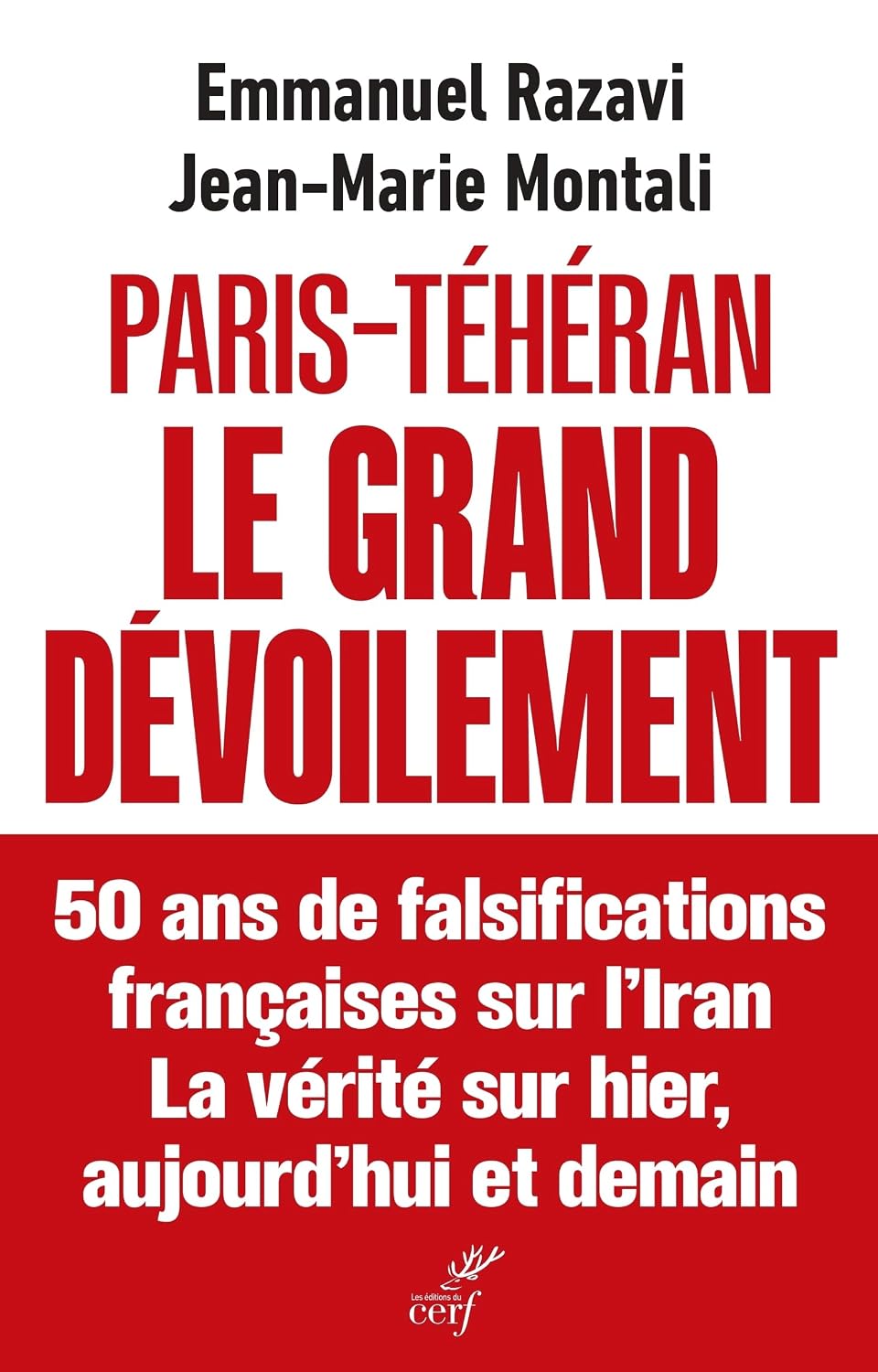
Emmanuel Razavi, Jean-Marie Montali, Paris-téhéran, Le grand dévoilement, Les éditions du Cerf, 2026, 234 pages.
The two authors – both Iranian nationals – are senior journalists specialising in the Middle East. They wrote this book in response to the expert opinions we read in the media. There is a considerable gap between analysis and reality. The Islamic dictatorship that has been in place since 1979 operates solely through extreme violence. It is a regime that is afraid of everything: afraid of freedom, afraid of women… In 2022, the death of Mahsa Amini and the slogan “Woman, Life, Freedom” showed that the Iranian people have nothing left to lose. In Iran, rising prices, the collapse of purchasing power and the environmental crisis are the direct consequences of a mafia-like regime based on corruption, predation and repression. The Iranians are not asking for reform of the regime; they want it to disappear. This is an insurrection against a totalitarian and sclerotic system. Many Iranians do not understand why we watch them fall in silence… and why we react so little, so late and so weakly. Iran’s youth no longer want this closed-off system. Bloomberg conducted an investigation that shed a harsh light on the financial empire – controlled by the ruling structure – built on the confiscation of property. It represents assets worth billions of dollars. These financial realities – which, beyond their illicit nature – contrast, to say the least, with the image of piety and austerity promoted by the state media and the power of the Ayatollah and his family. This book is a lesson in history, geopolitics and humanity. Emmanuel Razavi contributes to the international editorial teams of Le Figaro, Paris Match, Franc-Tireur, Atlantico… Jean-Marie Montali was Executive Director of Le Figaro Magazine and Le Parisien. They are the authors ofseveral books on the Middle East Michel Gabet
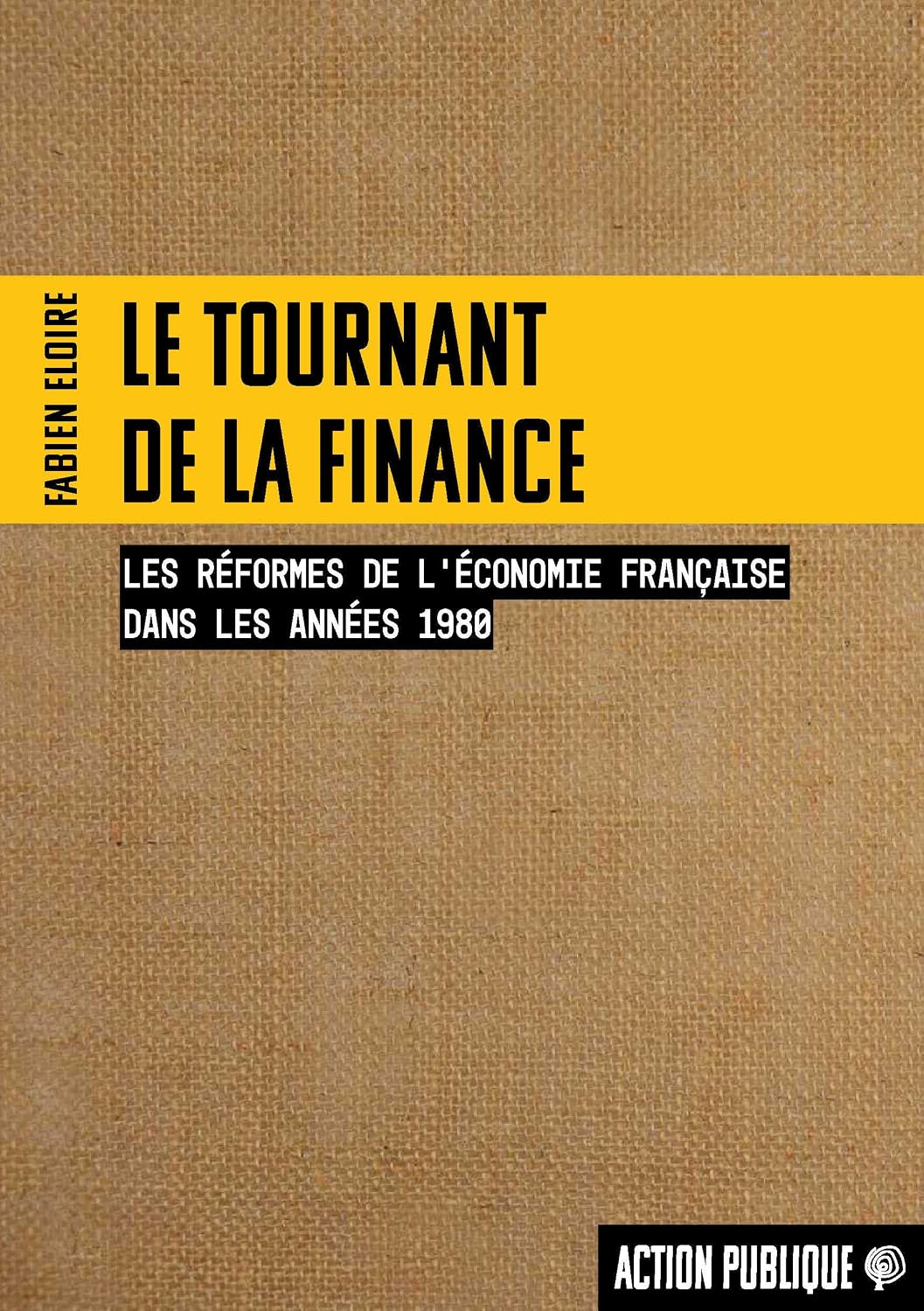
Fabien ELOIRE, *The Turning Point in Finance*, Ed Action publique, 328 pages, June 2026.
In the mid-1970s, the French financial sector was on the verge of a major transformation that some have termed the financialization of the French economy. Ten years later, measures had been implemented. This book examines the events that brought about these changes and the reforms developed within ministries and government agencies that led to a new framework for public policy in the monetary and financial spheres. By examining the key players behind the scenes and the goals they pursued, by analyzing their rhetoric and justifications, and by describing the inner workings of their respective institutions, the sociological approach at the heart of this book demonstrates the complexity involved in understanding the trajectory of reform—a demonstration that is successfully achieved in this work. The objective is to describe and analyze the period from 1980 to 1986, during which far-reaching changes were initiated in the monetary and financial sectors: -The end of the Bretton Woods agreements (1973) and the oil crises (1973, 1979): monetary instability and the need for reforms. -The left’s rise to power in 1981, followed by an economic reorientation beginning in 1983 (competitive disinflation). -The Fabius government (1984–1986) and Economy Minister Pierre Bérégovoy: key figures in the reforms. The first part of the book is devoted to the period preceding the monetary and financial reforms of the “Tournant de la rigueur” (1981–1983); it analyzes the mechanisms that led to the shift from a stimulus policy to one more in line with the prevailing orthodoxy in economic policy, based on maintaining the “grands équilibres.” The second part deals with monetary and financial reforms proper (capital markets, credit policy, and stock market modernization). It focuses in particular on the inner workings of the central administration and the bureaucratic process by which officials from the Treasury Directorate, in collaboration with the Bank of France and the office of the Minister of Economy and Finance, designed and implemented these measures. This analysis is fascinating in that it describes the educational role played by senior civil servants toward their counterparts in the Socialist Party and Parliament, and, above all, the explanatory methodology adopted by Jacques Delors and Pierre Bérégovoy. Part Three analyzes the course of reforms pursued by the French government from a “neoliberal” perspective. Behind the economic debates lie symbolic and geopolitical issues as well, and the choice of Europe weighs heavily on the Socialists’ economic policies. The text notes the existence of a “White Paper” drafted by members of the Bérégovoy cabinet (under the leadership and coordination of JC Naouri), considered the most comprehensive resource for understanding all the measures taken during this period, which calls for “the modernization of the economy, the reconciliation of business with society, and balanced budgets.” The fourth part revisits the origins of the new economic strategy for disinflation. Bourdieu is drawn into the discussion because, according to him, it is necessary to understand “the state of opinion among the mobilized and organized segment of opinion makers.” The author confirms that the homogeneity of the backgrounds and socioeconomic origins of these “influencers,” the “pioneers,” and the “new converts” is key to the development of this “neoliberal” policy. The conclusion draws a connection between these reforms of the economy’s financing system in the 1980s—which affected the very structures of France’s monetary and financial institutions—and the trend toward the financialization of the economy that took hold in the following decade. Finally, the author steps beyond his role as a researcher and commentator on the facts to point out that this “deregulated, liberalized, and flexibilized” post-reform world has favored “those who hold capital.” This book will captivate those who lived through this period—which significantly changed the way they worked—as well as those who, beyond simply recalling the structural measures that shaped the French economy, are interested in the “making of laws and regulations” from a sociological perspective. A fascinating book! Dominique Chesneau

Isabelle GUERIN.The indebted woman. La Découverte Political Economy Collection, 394 pages
The result of two decades of research and local collaboration, the author invites us on a journey through time and space to illustrate the uniqueness of women in human cybernetics, based on real-life cases drawn mainly from Asia and Africa, but also, to a lesser extent, from the Western past. The book focuses on women in all their dimensions: as childbearers, wives and mothers, but also in their central role as managers of daily life and in maintaining the balance of the family unit. The various testimonies highlight her vital role in community life and in the often precarious economic balance precarious balance of the family. This precariousness is created and perpetuated by a combination of several factors: endemic unemployment mainly affecting men, human relationships dependent on social status within the community, the persistence of practices that lead to debt (dowry, marriage), the aggressive commercial policies of the banking sector and various intermediaries, an age pyramid distorted by the high proportion of young people in need of training and therefore financial support, changes in traditional resources, the emergence of new needs, etc. Women are largely responsible for managing the burden of debt and financial obligations towards lenders, whether they are the community, banks or loan sharks. This involves difficult negotiations with problematic outcomes, sometimes obtained in exchange for favours, with the woman’s body becoming a bargaining chip or a means of facilitation. This sexualisation in the process is a significant factor, particularly in Africa, despite attempts at alternative forms of financing, such as microcredit or those set up by religious congregations. Furthermore, lenders favour commitments from women, which are considered more reliable, and this strengthens the lender/borrower relationship. In summary, in a traditionally patriarchal system, traditionally patriarchal system, the qualities recognised in women enable them to occupy a central place in family life, community life and in the economic and social environment. In return for the mental, physical and sexist burden that is their daily life, women often find often find a joyful outlet in the bonds that unite them. This state of indivisibility tends to diminish with the emergence of a new, more educated generation. A thoroughly researched, resolutely feminist work, offering insight into the intimate details of the cases studied over a long period and, through them, the opportunity to explore other cultures, as well as to relive European life in the late 19 th and early 20 th centuries. Isabelle GUERINSocio-economist. Research Director at IED and CESSMA, affiliated with the French Institute in Pondicherry. She co-founded and co-directed the Observatory on Rural Dynamics and Social Inequalities in South India. She has published numerous works on the financialisation of inequalities, the resistance it provokes, and the investigative approach that brings lives and figures into dialogue. Reading notes HubertAlcaraz
Jean-Hervé Lorenzi & Alain Villemeur, Guerre et Paix entre salaires et profits, Eds Odile Jacob, 2026, 196 pages.
The authors start from a question old but once again central question: how to distribute the wealth created between labour and capital in such a way as to simultaneously promote growth, employment and social cohesion? In their view, the contemporary debate on taxation, purchasing power or inequality cannot be understood without returning to this fundamental question of the distribution of income. In particular, they challenge the idea that an increase in the share of profits would automatically end up benefit the economy as a whole through increased investment and growth. Their reasoning is that high profits do not in themselves not in themselves a guarantee of growth: if too large a share of wealth is captured by capital to the detriment of wages, consumption and therefore demand weaken. Conversely, an economy that overly prioritises wages at the expense of profits would risk reduce the profitability of companies, their capacity to invest and, and, above all, their ability to finance innovation. Keynes and Schumpeter must be reconciled Schumpeter within the same growth model. Based on their work and comparison with economic history, particularly in the USA and South Korea, they arrive at a balance: this balance would be particularly conducive to sustainable and job-rich growth. It would make it possible to both maintain sufficiently buoyant demand and leave companies the resources they need to invest and innovate. This balance is approximately two-thirds of income for wages and one-third for profits. The authors also introduce an important distinction between the different forms of investment. In particular, they believe that rationalisation investments, which aim to increase productivity by substituting capital for labour, should account for no more than around one-third of total investment. In the second half of the book, the analysis becomes more specifically French. Lorenzi and Villemeur link the question of distribution with the problems of an ageing ageing, the financing of social protection and the situation of young people, including the growing difficulties in accessing employment and housing. They consider that these imbalances risk fuelling conflict not only between employees and capital holders, but also between generations. The book ultimately turns to the subject of taxation. The authors propose eight tax principles designed to bring the French economy closer to this distribution, which they consider to be optimal. Their aim is to reorganise tax incentives in order to further encourage work, employment, productive investment and innovation, with the aim of putting France back on a path combining growth and social progress without an overall increase in the tax burden. Jean-Hervé Lorenzi, Professor Emeritus at Paris Dauphine, President of the Economic Meetings of Aix-en-Provence. Alain Villemeur holds a PhD in Economics from Paris Dauphine University Ph Alezard