

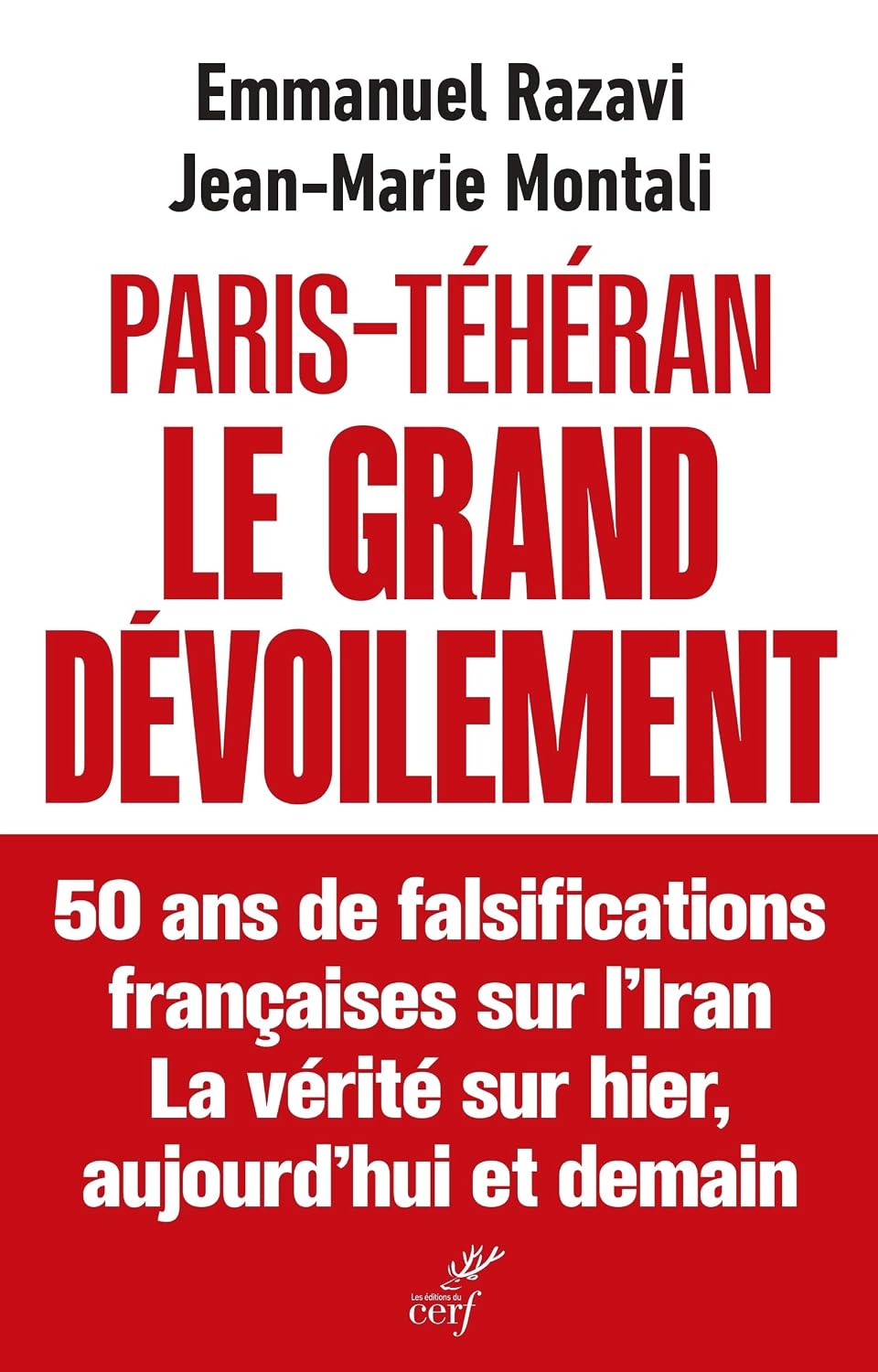
The two authors – both Iranian nationals – are senior journalists specialising in the Middle East. They wrote this book in response to the expert opinions we read in the media. There is a considerable gap between analysis and reality. The Islamic dictatorship that has been in place since 1979 operates solely through extreme violence. It is a regime that is afraid of everything: afraid of freedom, afraid of women… In 2022, the death of Mahsa Amini and the slogan “Woman, Life, Freedom” showed that the Iranian people have nothing left to lose. In Iran, rising prices, the collapse of purchasing power and the environmental crisis are the direct consequences of a mafia-like regime based on corruption, predation and repression. The Iranians are not asking for reform of the regime; they want it to disappear. This is an insurrection against a totalitarian and sclerotic system. Many Iranians do not understand why we watch them fall in silence… and why we react so little, so late and so weakly. Iran’s youth no longer want this closed-off system. Bloomberg conducted an investigation that shed a harsh light on the financial empire – controlled by the ruling structure – built on the confiscation of property. It represents assets worth billions of dollars. These financial realities – which, beyond their illicit nature – contrast, to say the least, with the image of piety and austerity promoted by the state media and the power of the Ayatollah and his family. This book is a lesson in history, geopolitics and humanity. Emmanuel Razavi contributes to the international editorial teams of Le Figaro, Paris Match, Franc-Tireur, Atlantico… Jean-Marie Montali was Executive Director of Le Figaro Magazine and Le Parisien. They are the authors ofseveral books on the Middle East Michel Gabet
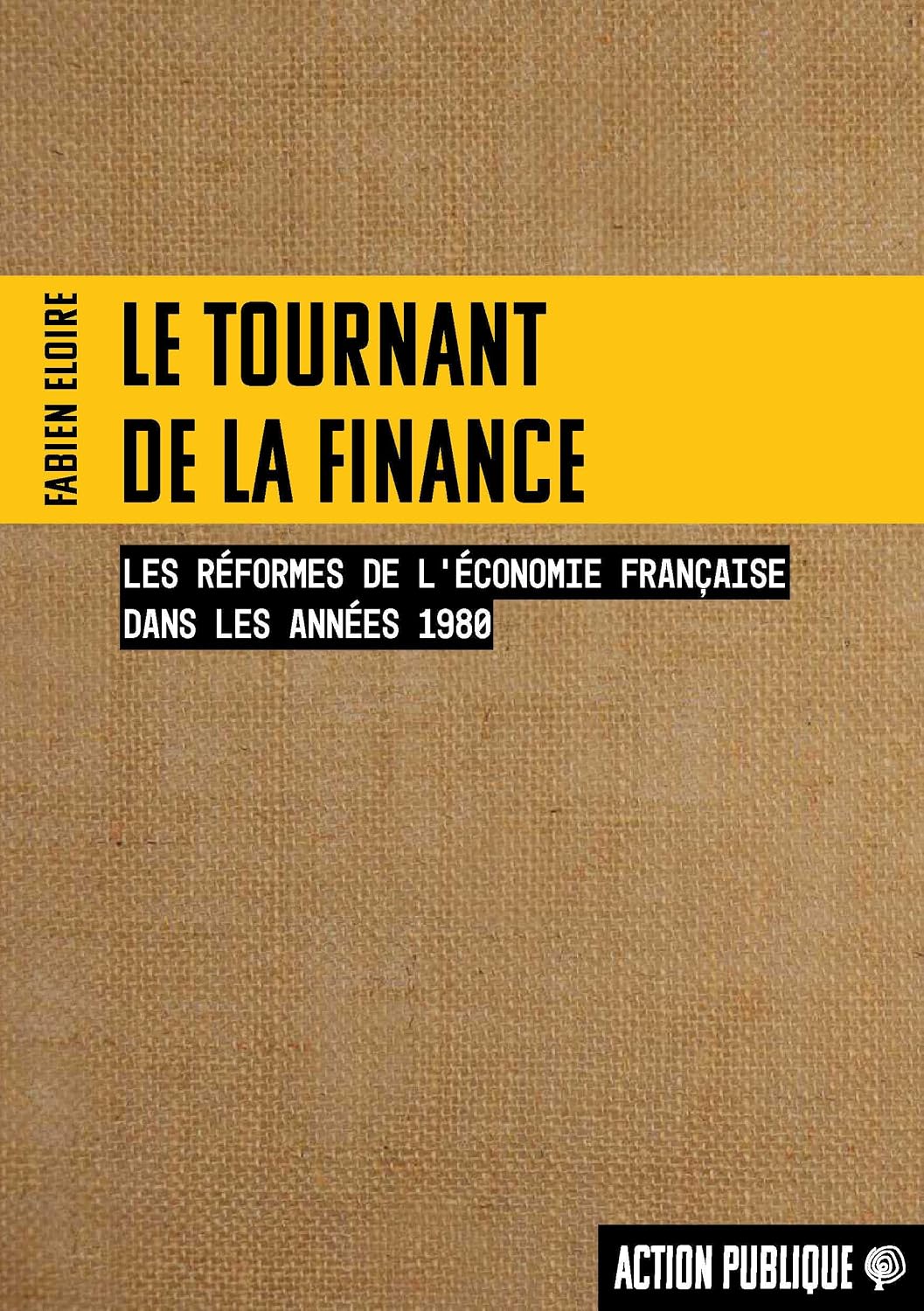
Fabien ELOIRE, *The Turning Point in Finance*, Ed Action publique, 328 pages, June 2026.
In the mid-1970s, the French financial sector was on the verge of a major transformation that some have termed the financialization of the French economy. Ten years later, measures had been implemented. This book examines the events that brought about these changes and the reforms developed within ministries and government agencies that led to a new framework for public policy in the monetary and financial spheres. By examining the key players behind the scenes and the goals they pursued, by analyzing their rhetoric and justifications, and by describing the inner workings of their respective institutions, the sociological approach at the heart of this book demonstrates the complexity involved in understanding the trajectory of reform—a demonstration that is successfully achieved in this work. The objective is to describe and analyze the period from 1980 to 1986, during which far-reaching changes were initiated in the monetary and financial sectors: -The end of the Bretton Woods agreements (1973) and the oil crises (1973, 1979): monetary instability and the need for reforms. -The left’s rise to power in 1981, followed by an economic reorientation beginning in 1983 (competitive disinflation). -The Fabius government (1984–1986) and Economy Minister Pierre Bérégovoy: key figures in the reforms. The first part of the book is devoted to the period preceding the monetary and financial reforms of the “Tournant de la rigueur” (1981–1983); it analyzes the mechanisms that led to the shift from a stimulus policy to one more in line with the prevailing orthodoxy in economic policy, based on maintaining the “grands équilibres.” The second part deals with monetary and financial reforms proper (capital markets, credit policy, and stock market modernization). It focuses in particular on the inner workings of the central administration and the bureaucratic process by which officials from the Treasury Directorate, in collaboration with the Bank of France and the office of the Minister of Economy and Finance, designed and implemented these measures. This analysis is fascinating in that it describes the educational role played by senior civil servants toward their counterparts in the Socialist Party and Parliament, and, above all, the explanatory methodology adopted by Jacques Delors and Pierre Bérégovoy. Part Three analyzes the course of reforms pursued by the French government from a “neoliberal” perspective. Behind the economic debates lie symbolic and geopolitical issues as well, and the choice of Europe weighs heavily on the Socialists’ economic policies. The text notes the existence of a “White Paper” drafted by members of the Bérégovoy cabinet (under the leadership and coordination of JC Naouri), considered the most comprehensive resource for understanding all the measures taken during this period, which calls for “the modernization of the economy, the reconciliation of business with society, and balanced budgets.” The fourth part revisits the origins of the new economic strategy for disinflation. Bourdieu is drawn into the discussion because, according to him, it is necessary to understand “the state of opinion among the mobilized and organized segment of opinion makers.” The author confirms that the homogeneity of the backgrounds and socioeconomic origins of these “influencers,” the “pioneers,” and the “new converts” is key to the development of this “neoliberal” policy. The conclusion draws a connection between these reforms of the economy’s financing system in the 1980s—which affected the very structures of France’s monetary and financial institutions—and the trend toward the financialization of the economy that took hold in the following decade. Finally, the author steps beyond his role as a researcher and commentator on the facts to point out that this “deregulated, liberalized, and flexibilized” post-reform world has favored “those who hold capital.” This book will captivate those who lived through this period—which significantly changed the way they worked—as well as those who, beyond simply recalling the structural measures that shaped the French economy, are interested in the “making of laws and regulations” from a sociological perspective. A fascinating book! Dominique Chesneau

Isabelle GUERIN.The indebted woman. La Découverte Political Economy Collection, 394 pages
The result of two decades of research and local collaboration, the author invites us on a journey through time and space to illustrate the uniqueness of women in human cybernetics, based on real-life cases drawn mainly from Asia and Africa, but also, to a lesser extent, from the Western past. The book focuses on women in all their dimensions: as childbearers, wives and mothers, but also in their central role as managers of daily life and in maintaining the balance of the family unit. The various testimonies highlight her vital role in community life and in the often precarious economic balance precarious balance of the family. This precariousness is created and perpetuated by a combination of several factors: endemic unemployment mainly affecting men, human relationships dependent on social status within the community, the persistence of practices that lead to debt (dowry, marriage), the aggressive commercial policies of the banking sector and various intermediaries, an age pyramid distorted by the high proportion of young people in need of training and therefore financial support, changes in traditional resources, the emergence of new needs, etc. Women are largely responsible for managing the burden of debt and financial obligations towards lenders, whether they are the community, banks or loan sharks. This involves difficult negotiations with problematic outcomes, sometimes obtained in exchange for favours, with the woman’s body becoming a bargaining chip or a means of facilitation. This sexualisation in the process is a significant factor, particularly in Africa, despite attempts at alternative forms of financing, such as microcredit or those set up by religious congregations. Furthermore, lenders favour commitments from women, which are considered more reliable, and this strengthens the lender/borrower relationship. In summary, in a traditionally patriarchal system, traditionally patriarchal system, the qualities recognised in women enable them to occupy a central place in family life, community life and in the economic and social environment. In return for the mental, physical and sexist burden that is their daily life, women often find often find a joyful outlet in the bonds that unite them. This state of indivisibility tends to diminish with the emergence of a new, more educated generation. A thoroughly researched, resolutely feminist work, offering insight into the intimate details of the cases studied over a long period and, through them, the opportunity to explore other cultures, as well as to relive European life in the late 19 th and early 20 th centuries. Isabelle GUERINSocio-economist. Research Director at IED and CESSMA, affiliated with the French Institute in Pondicherry. She co-founded and co-directed the Observatory on Rural Dynamics and Social Inequalities in South India. She has published numerous works on the financialisation of inequalities, the resistance it provokes, and the investigative approach that brings lives and figures into dialogue. Reading notes HubertAlcaraz
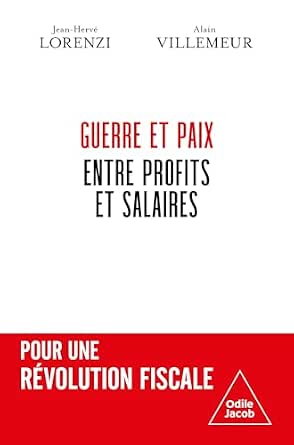
Jean-Hervé Lorenzi & Alain Villemeur, Guerre et Paix entre salaires et profits, Eds Odile Jacob, 2026, 196 pages.
The authors start from a question old but once again central question: how to distribute the wealth created between labour and capital in such a way as to simultaneously promote growth, employment and social cohesion? In their view, the contemporary debate on taxation, purchasing power or inequality cannot be understood without returning to this fundamental question of the distribution of income. In particular, they challenge the idea that an increase in the share of profits would automatically end up benefit the economy as a whole through increased investment and growth. Their reasoning is that high profits do not in themselves not in themselves a guarantee of growth: if too large a share of wealth is captured by capital to the detriment of wages, consumption and therefore demand weaken. Conversely, an economy that overly prioritises wages at the expense of profits would risk reduce the profitability of companies, their capacity to invest and, and, above all, their ability to finance innovation. Keynes and Schumpeter must be reconciled Schumpeter within the same growth model. Based on their work and comparison with economic history, particularly in the USA and South Korea, they arrive at a balance: this balance would be particularly conducive to sustainable and job-rich growth. It would make it possible to both maintain sufficiently buoyant demand and leave companies the resources they need to invest and innovate. This balance is approximately two-thirds of income for wages and one-third for profits. The authors also introduce an important distinction between the different forms of investment. In particular, they believe that rationalisation investments, which aim to increase productivity by substituting capital for labour, should account for no more than around one-third of total investment. In the second half of the book, the analysis becomes more specifically French. Lorenzi and Villemeur link the question of distribution with the problems of an ageing ageing, the financing of social protection and the situation of young people, including the growing difficulties in accessing employment and housing. They consider that these imbalances risk fuelling conflict not only between employees and capital holders, but also between generations. The book ultimately turns to the subject of taxation. The authors propose eight tax principles designed to bring the French economy closer to this distribution, which they consider to be optimal. Their aim is to reorganise tax incentives in order to further encourage work, employment, productive investment and innovation, with the aim of putting France back on a path combining growth and social progress without an overall increase in the tax burden. Jean-Hervé Lorenzi, Professor Emeritus at Paris Dauphine, President of the Economic Meetings of Aix-en-Provence. Alain Villemeur holds a PhD in Economics from Paris Dauphine University Ph Alezard

Aurélien Ragaigne, Jean-Laurent Viviani, Hélène Rainelli-Weiss(coord.), Évaluer l’impact extra-financier des organisations, EMS, 2026.
The twenty authors of the book address the issue of the economic and financial assessment of ESG (Environmental, Social and Governance) impacts ESG (Environmental, Social and Governance) impacts of companies’ activities. The subject is difficult because it has dimensions that are simultaneously regulatory (Pacte law, sustainability reports, non-financial accounting, GDPR, etc.), accounting (CRDS framework, principle of double materiality, etc.), technical (integration of IT systems, use of AI), environmental (SDGs) and social (inclusion, gender equality, etc.). The proliferation of stakeholders stakeholders (shareholders, staff, customers, suppliers, banks, the State, local authorities, social networks, etc.) subjects companies to an increasing number of more or less paradoxical injunctions and trade-offs between short- or long-term, defensive or offensive, shareholder or partnership actions, etc. One of the difficulties lies in the choice of indicators (more than 1,000 are proposed by accounting experts), in their compliance with French and European rules, frameworks and standards, standards, in their measurement and in their monitoring over time. Some companies are tempted to choose only data that is easily accessible, always favourable, difficult to verify, not closely monitored, etc. These biases are only intended to promote the company’s image of the company among investors and savers, without it making any progress in terms of sustainable performance and the common good. The authors therefore recommend moving from a logic of “measuring to communicate” approach to a “measure to understand, discuss and transform” approach. The three coordinators of the book are university professors in management sciencesat the University of Rennes – IGR-IAE. Jean-Jacques Pluchart
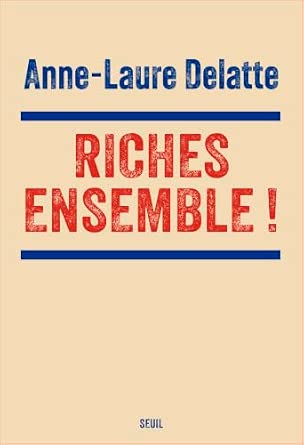
Anne-Laure DELATTE, Riches ensemble ! Du bon usage des dépenses publiques, Paris, Seuil, coll. « Essais », septembre 2026, 224 pages.
The author compares tax revenues and public spending between the countries of the European Union. She notes that French public spending is the highest high in relation to GDP, but that their efficiency is one of the lowest in Europe. She argues that the use of the private sector for certain types of expenditure is inefficient: “We lose out twice: individually, because paying individually costs more than putting it in a common pot; collectively, because investing less in education, the environment, and transport means reducing our long-term prospects.” She proposes a set of concrete measures aimed at to improve the productivity and quality of public services, as well as to boosting collective spending on environmental protection, improving education and developing infrastructure (shops, factories, public services, public transport, roads). It also recommends stimulating job creation and skills development through a set of fiscal and social measures to stimulate job creation and skills development. She favours the implementation of a reasoned policy more focused on supply than on demand. The author also criticises the excessive concentration of French wealth, which is largely unproductive. The long-term rise in stock market prices term and property capital gains promote the accumulation of capital following a systematic and recurring process. With the ageing of the population, there are more rentiers than entrepreneurs, more heirs than creators, and more inactive than active people. This is why the author proposes to establish a virtuous process of a social, regulatory, financial and fiscal nature, helping to boost investment, employment and growth, as well as social mobility. Anne-Laure Delatte is Director of Researchat the CNRS, attached to Paris Dauphine University and a Fellow at the Center for EconomicPolicy Research. Article written by Jean-Jacques Pluchart
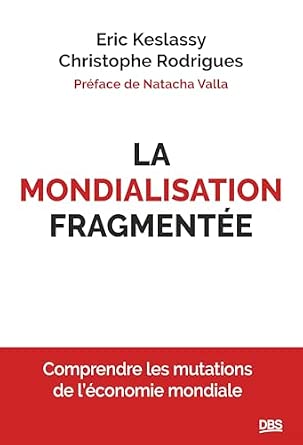
KESLASSY Eric & RODRIGUES Christophe. La mondialisation fragmentée, De Boeck Supérieur, 2026, 320 pages
The purpose of the book by Éric KESLASSY and Christophe RODRIGUES is to demonstrate, through historical and economic analyses, how the economic cooperation cooperation between nations, which was intended to guarantee peace between states, is now “fragmented”. The effects of globalisation have had noticeable effects on democracy. Recently, the Russian-Ukrainian conflict has changed the organisation of globalisation, which is tending towards a “movement of globalisation among friends”: international trade is organised according to geopolitical affinities, slowing down global economic growth and driving inflation up. The book then looks more specifically at the history of globalisation through the various agreements and treaties. Based on international cooperation, these agreements were made in order to establish a multilateral order in monetary and commercial terms: the establishment of the gold standard in 1870, the Bretton Woods agreements in 1944 to organise the new international monetary system after the Second World War. The United States thus became the world’s creditor, and emerged with very clear economic dominance, with the dollar as the key currency. Then came the GATT agreement in 1947 to reduce customs duties and stimulate world trade before the creation of the WTO in 1995. A new period began with hyperglobalisation, from 1990 to 2007, with the entry of China and India. During this period, the US economy was hit by the “Chinese shock” and deindustrialisation. Over time, the economic and social consequences have generated inequalities among populations worldwide, thus creating conditions favourable to the rise of populism. History reveals that the Donald Trump’s protectionism is part of an old American tradition: tradition: since its independence, the United States has always sought to protect their industries from foreign competition. The multilateralism of the WTO today no longer seems to to meet the interests and vision of the member states. With hyperglobalisation having gone too far, many regional trade agreements have been put in (380 in force, notified to the WTO). Faced with this fragmented globalisation, Europe must regain industrial sovereignty to face up to American protectionism and the “Chinese steamroller”. In the last part of the book, the authors propose two major lines of thought on the reindustrialisation of the continent and the accelerated decarbonisation of its production system. A book that is both economic and historical, offering the reader an in-depth analysis of the global imbalances that weigh on Europe, so that it can regain control of its economic and political future. Éric KESLASSY holds a doctorate in economic sociology(Paris-Dauphine). After teaching economics and sociology for many years atSciences Po, he is a professor of economics and social sciences in the preparatorypreparatory class at La Prépa Autrement (LPA). Christophe RODRIGUES is a senior lecturer ineconomics and social sciences. He teaches in the preparatory class at the Lycéedu Parc de Lyon and in the CPES of the École Normale Supérieure de Lyon. Reading note by Sophie FRIOT

DESAUNAY Cécile, La société des besoins. Collection manifestô,155 pages.
After the publication of her first book, published in 2021, devoted to the Consumer Society, the author presents her reflections on the evolution of consumerism in France. Analysis of the latest national data reflects a strong trend of a gradual slowdown in consumption. The downturn can be explained by the combination of several factors : an ageing population whose needs are largely met, a saturation of material needs, and increasingly constrained households. Paradoxically, our society is generally wealthy, but the basic needs of all individuals are not being met. Mechanically, this rate of dissatisfaction should increase with the decrease in purchasing power and a cost of living that will continue to rise. This deterioration in living conditions, along with environmental and climatic constraints, will increasingly influence our behaviour and decisions, causing tensions between individuals and, more broadly, between citizens and public authorities. This will require trade-offs and a new approach to meeting material and non-material needs. Meeting basic needs, whether material or immaterial, in this context of economic contraction will require a reversal of the current pyramid of Needs (Base) and natural ecosystems (Top), with a new hierarchy: needs of natural ecosystems (Base) and Economy (Base). This reversal of priorities will result in a profound change for consumers and producers , and in strong incentives from the political sphere to, on the one hand, meet the 2050 environmental objectives (carbon neutrality ) by developing several actions: the circular economy, recycling, second-hand rather than new, product design, the development of services, the taxation of products and services with a high environmental impact, global and individual quotas, etc. And on the other hand, to meet basic needs, not excluding the use of more punitive taxation on income , property, inheritance , etc. The author draws on on ADEME ‘s studies and projections, the advice of certain national experts, and draws extensively on international literature. Question : the transposition of the desired trajectory for France would require a great deal of education in order to be exported, even within Europe, as national situations and interests can diverge and even conflict. Some of the points touched upon would require more in-depth analysis of the carbon, environmental, social and societal impacts on many issues: electric cars, international treaties on agriculture, intermittent energies, etc. Cécile Désaunay, Directorof Studies at Futuribles. In 2021 in the Manifestô collection “La société de déconsommation, larevolution of living better by consuming less” Hubert ALCARAZ

Pierre Marie AUBERT, Vers un nouveau Modèle Agricole, Eds Odile Jacob, 2025, 224 pages.
The author presents a new agricultural model, whose protagonists are both farmers and consumers. He suggests that future consumers must adapt by changing their diet to include more fruit and vegetables and less meat. His alternative: if necessary, pay more for commercial products with healthier production, while limiting pesticides while maintaining or even increasing yields. The author shows that this model, while it has made it possible to considerably increase yields considerably, has also generated significant environmental, social and economic costs. In particular, he highlights soil depletion, dependence on inputs, loss of biodiversity and the weakening of farms. He proposes a gradual transformation transformation of the agricultural system based on greater consideration of ecological balances and a reduction in dependence on external resources. resources. It stresses the need to rethink public policies in order to truly support farmers in this transition. The change of model cannot be based solely on the individual responsibility of farmers. Agriculture must be more integrated with its environment This well-researched book on new agricultural models and on global agricultural markets does not, however, address large-scale retail, as the average cost of producing agricultural products is only 8% of the final cost of the product. Moreover, the bibliography mentioned at the end of each chapter remains incomplete. In his preface, MEP Pascal Cantin expresses his support for his preface to the reading of this book, which is the result of work carried out at IDDRI), in which the author summarises the issues addressed by this institute. Pierre Marie Aubert is an AgroParisTech engineer and programme manager at IDDRI (a think tank) conducting studies on these subjects with a political and international aspect. Pona Samnik

Pierre-Antoine DONNET, Chine, la défaite de l’Occident, Editions de l’Aube,230 pages.
For more than two decades, the loyal readers and listeners of Pierre-Antoine DONNET, recognised over the years as one of the great experts on the Chinese world of China and the Asian world, have been eagerly awaiting their annual rendezvous annual appointment with the new publication by their favourite author. And each time, their patience is rewarded with the publication of the new “AP Donnet” of the year, an illuminating work that sheds light on global geopolitics and the Chinese world, each time with a new point of view. The author’s biography is impressive, marked by an immense culture enriched by the perspective of the journalist (former editor-in-chief of AFP and currently of Asia magazine), who is committed to covering both the ins and outs of Chinese politics, as well as the geopolitical data of the visible or covert relations it maintains with its allies and global competitors. This new publication sounds like a warning signal for all democracies that are asleep and withered by too much arrogance and naivety: “a danger that is both deadly and imminent for Europe and its industry in the face of the Chinese war machine.” As his illustrious predecessor Alain Peyrefitte* had already largely anticipated, China has not only awakened, but has unleashed a veritable economic and technological tsunami, and technological tsunami, making it “the world’s leading economic and commercial giant ahead of the United States, a true factory of the world and soon its laboratory”. Also, the central thesis that the author maintains remains that the real long-term threat to the West is not Russia, ” admittedly an inconvenient partner”, but China. In his six brilliantly documented chapters, Pierre Antoine Donnet illustrates his conviction by analysing the causes and consequences of the Chinese strategy, including a feeling of humiliation (the West did not taken it seriously), leading to a desire for revenge, the dream of a “peaceful” awakening fuelled by the blindness of our elites, the structural distrust of the “regime” towards the democratic model that it constantly discredits in order to sow chaos, the obsession with the stability of the “one-party” system, leading to absolute control of information (700 million surveillance cameras) …. The fascination with gigantism and the adventure of excess… In this geopolitical game of Go, China can count on the de facto vassalisation of Russia and the blindness of the American president, president, “the laughing stock”, weighed down by his intemperance and his disproportionate ego. This threat most often advances quietly, quietly, in the logic of influence and domination where it excels, but Xi Jinping’s global objectives and ambitions clearly remain become the world’s leading power: it is moving towards its goal patiently, with an undervalued currency, while attacking European and Western industry head-on and unfairly, European and Western industry, by rearming intensively, and by preparing for a long-term conflict, including the conquest by blockade of Taiwan and the taking of control of the Pacific. Faced with these disturbing and painful realities, the question of the end of the game arises for the West. Has it already lost? The point of no return is near… but the author wants to believe that there is still time to find a “balance” in the ongoing competition; this last resort requires cooperation between all democracies, European and Asian, to build together strategic convergences by sharing their common values and with a view of China that is “free of our naivety”. Pierre-Antoine DONNET is a former central editor-in-chief of Agence France-Presse, editor-in-chief editor-in-chief of ASIA magazine. A recognised expert on the Chinese world, author of an impressive collection of reference works (including Le choc Europe-Asie in1998, Chine le grand prédateur in 2021) and winner of numerous awards, including the Grand Prix Turgot for Chief Financial Officers in 2021. Jean Louis CHAMBON *Alain Peyrefitte, Quand la Chine s’éveillera .. le monde tremblera, Fayard,1973.