

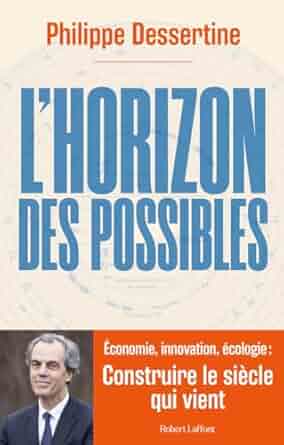
The author’s objective is to highlight the logic linking the successive shocks – of a financial, economic, health and geopolitical nature – that have occurred since the beginning of the century, then to open avenues of progress for the future, advocating, if necessary, a break with the previous industrial or post-industrial model. The author strives to reconcile history and modernity, transversality and depth, culture and creativity. He presents the French as a case study. He believes that they are victims of their fantasized past, but that as heirs of Montaigne and Descartes, they are able to overcome their fear of tomorrow and to show both logical sense, responsiveness, and above all creativity to build their future. The book is organized into nine chapters raising (meta) issues that are both transversal and complex: new economic and social models; the disruption of the old world; immobility and mobility; growth and algorithms; the geopolitics of influence and brains; hyper-innovation and hyper-intelligence; new values and new growth; extra-monetary impact. The book stands out from the conventional academic work of economists, historians, and political scientists. Its writing alternates between concepts and narratives, quotes and contemporary examples. It is part of the narrative economy, illustrated by the work of several Nobel Prize winners in economics, such as Acemoglu, Johnson, and Robinson. It reflects a phenomenological approach to economic and social facts, which have most marked Western enlightened minds. These phenomena are not presented in chronological order or geographical logic, but according to the occurrences of the events that have most marked the consciousness of consumers and producers. This reading of history is served by a style that is both educational and creative, with a sense of the formula – especially based on paradoxes – which is illustrated in particular in the titles of chapters and paragraphs. Philippe Dessertine (professor at the University of Paris I, director of the IHFI and lecturer) delivers in his book a masterful lesson in economics, a message of optimism and a call to the awakening of disillusioned citizens. J-J.Pluchart’s note
BAAL Daniel, THERY Nicolas. Pour une société plus mutuelle – Sortir de l’ultralibéralisme, L’aube Eds De, 168 pages.
Mutualism is by definition a long-term process, and one could almost praise it for its patience. How can it be the solution to a fragmented society, to the rise of individualism, and where each decision accelerates at the pace of AI, … What remains of the legacy of Raiffeisen, one of the founders of mutualism and its raison d’être of the “Help and Serve” era? This is the subject of the essay written by Daniel Baal and Nicolas Thery, who wish to convince readers that mutualism is anything but out of time and that it has never been more modern in the face of the challenges that lie ahead. Through their experiments as Presidents within Crédit Mutuel Alliance Fédérale, they present their decisions and strategies, particularly since the adoption of the status of a company with a mission in 2020. The essay promotes mutualism through evidence from its stakeholders. Mutualism is only effective if it is nourished by the diversity of its elected representatives and employees around a common vision. It is the commitment of the collective that takes precedence over the interest of the individual, by putting society and its needs at the heart of attention. The authors remain objective, however, because for this mutualism to remain true to its values and ambitions, there is still some way to go to improve the diversity of profiles and the feminization of management and supervisory bodies. “Stairs are cleaned from the top”: the exemplarity imposed by the function is essential to engage all stakeholders. Faced with the consequences of global warming, an interesting parallel is described in the essay between a financial crisis and a climate crisis. The accumulation of speculative wealth or greenhouse gases eventually gives way. Mutualism, by being centered on the needs of its territory, responds to the urgency of environmental and solidarity issues. The authors defend the societal dividend announced in 2023. By allocating 15% of its net income to the benefit of society each year, it wishes to act and support the territories in the ecological transition. Not to mention that Crédit Mutuel, like its 2 competing mutual banks (Crédit Agricole and BPCE), are the first contributors to corporate tax in France and thus to the financing of public services and investments necessary for energy and societal transitions. Coincidentally, this essay is published in the “International Year of Cooperatives 2025” decreed by the UN. One more argument, so that the foundations and values of mutualism must be taken up by all companies in the social and solidarity economy; and all citizens who wish to act “for a more mutual society”. Note by Sophie FRIOT

Anne LAUVERGEON, Un secret si bien gardé, Grasset, 2025,201 pages
A graduate in physical sciences and chief engineer of Mines, she founded Areva and made it the world leader in nuclear power. Today, as head of ALP, she advises companies, governments and entrepreneurs on their strategies. The author, a privileged witness of the French nuclear industry, offers her reading on the “Saga” of nuclear power in France, delivers her diagnosis on the existing situation and finally proposes avenues for reflection for the future. Energy has been the determining factor in the evolution of humanity. It was so with the domestication of fire about 400,000 years ago, wind and solar in the Bronze Age, and then in the late 18th century with coal and hydraulics, joined by oil and gas at the beginning of the modern era. Profound social, political and economic changes accompany each energy transformation. From the end of the 19th century, France, a major consumer of fossil fuels, developed the desire to reduce its dependency by moving towards an energy mix and diversifying its supplies. The wars in the Middle East and the loss of gas and oil fields in Algeria reinforced this orientation, which, from 1974, included a nuclear energy component. The official announcement, in 1974, of a vast nuclear program, subject of a political and trade union consensus, was based on the mastery of a good technology. The announcement allowed the sector to accelerate and, above all, be financed. In the late 1990s, France had five global giants (Total, GDF Suez, Alstom Power, Areva, EDF), in a context of security and global recognition. From the 2000s, this building was challenged by environementalist movements, suffered the European doxa, was deconstructed by a national policy largely influenced by the choices of personalities from most anti-nuclear movements, by the virtual abandonment of hydroelectric energy, by environmental activism, by the growing weight of Germany, a coal subscriber, in European decision-making process. These factors added together explain the downgrading of France in the ranking of the level of payload (Ratio of actual production/theoretical capacity), from over 90% to less than 70%, which relegated it from the top to the last of the 32 countries that have developed nuclear energy. As a result, French electricity, once the cheapest in Europe, has become more expensive with its industrial consequences and the impoverishment of the country, Europe having indexed the KWh on the marginal price of the last KWH produced by natural gas plant ie in Germany… In addition to this observation, there are many French specificities: voluntary limitation of the nuclear energy production from 20 to 80% depending on the efficiency of renewable energies, which would partly explain the erosion of the circuits; a pause time of 100 days every 12 months in France compared to 38 days every 18 months in the United States. This difference is all the more remarkable since the fuel loading in the United States is provided by Framatome. It is necessary to underline the absence of a universal parameter, the payload, referring instead to the TWh taken as a ceiling, corresponding to a maximum payload of 70% whereas elsewhere, the latter is between 93 and 88%! Finally, is the current structure (EDF, RTE, and Enedis) a guarantee of transparency, efficiency, and economy? In conclusion, the author highlights the shortcomings of our industry and the means, without colossal investments, to remedy them by giving back to nuclear and hydraulic energy their preeminence, the urgent need for a policy based on ambitious objectives to halt the decline of our industries and give purchasing power to consumers, communicate to make our decisions understandable, avoid about-turns without impact studies, and finally introduce more professionalism to avoid amateurism in conflicts of national and European interests. A very dense work, documented with a widely developed European part (ECSC, Brussels) which allows us to better understand the underside of Franco-European decisions and the state of France. Anne LAUVERGEON, to whom we owe “The Promise” (Grasset) Note by Hubert ALCARAZ

Dominique Foray, Innovations – Une économie pour les temps à venir, La Découverte, mai 2025, 320 pages
“Death Valley”! This is the first notion that appears in a randomly found figure entitled: The life cycle of a start-up. It is all the more striking that the said “valley” does not end up extending over a period that we imagine to be leading to all dangers. This may be an explanation for the fact that, while they have experience, a network, and capital, executives of large groups invest little in start-ups, as shown in a recent study by Forvis Mazars. These are two different worlds (The word “risk” in venture capital is certainly not foreign). Beyond this anecdotal knowledge, we have in our hands a book that does not deny Schumpeter and his creative destruction, but introduces a number of concepts that are sometimes well established (such as positive externalities of all kinds or spillovers) but also less known (such as innovatization) to explain how large programs like Apollo can be great technological successes, but without marked innovation. The difference with SpaceX is that it is centered on innovation driven by a change in value, a reduction in costs, where business opportunities explode. The three parts of the book focus with the microeconomics of innovation, macroeconomic and historical analysis up to the end of the twentieth century. The last part, very ambitious (if we refer to the traditional use of the idea of innovation) has no other purpose than to define an economy capable of “contributing to the solutions of major societal problems”. Incidentally, Dominique Foray, a member of the Swiss Science Council, does not fail to point out how Europe would – according to him – have already lost access to space, despite a Brussels agenda tinged with technological sovereignty and strategic autonomy, as well as his “dissection” of the curious animal that is the CNRS, which is particularly cruel when comparing this noble institution to the Swiss system. Dominique Foray is Professor Emeritus at the Swiss Federal Institute of Technology in Lausanne and a member of the Swiss Science Council. His work focuses on the knowledge economy, the economy and innovation policies. His work on smart specialization has strongly influenced the regional policies of the European Union. Alain BRUNET

Fanny HENRIET , L’Economie peut-elle sauver le climat ? PUF . 2025
This is a very interesting book that succeeds in addressing an essential and complex subject in an educational and simple way to stimulate the reader’s reflection; after recalling the unavoidable nature of reducing the carbon footprint if we want to control climate change, the author demonstrates the complexity of the problem. This includes problems of measuring the actual carbon consumption of a given entity; for example, how to assess the impact of a company’s decisions on the carbon footprint of its subcontractors? Conversely, who should bear the carbon cost or benefit of a change in specifications, at the initiative of a subcontractor? The complexity of the problem also lies in the collection of data necessary to measure carbon consumption, which covers a vast and varied field such as paper consumption and its link with deforestation, business trips by plane, etc. The list would be long if we wanted to be exhaustive. Faced with this complexity, what concrete actions can be taken? Here, too, the author highlights the difficulty of measuring the “ROI” of a given investment in reducing the carbon footprint. An investment in energy transition to electricity can miss its target, if overconsumption leads to the reactivation of coal-fired power plants. Experiments to reduce the energy consumption of a population show, in many cases, an increase in energy consumption, contrary to the desired objective. The explanation is that the gains in energy efficiency can be offset by an increase in consumption, with prices remaining stable. The author’s general conclusion is that the battle will not be won by isolated actions within “small” nations and that it requires a multitude of actions framed in a global geopolitical scheme leading to a thorough review of business models, behaviors, and habits. Note by Denis MOLHO

DAGORRET Guillaume et DE VESINNE-LARÜE Thibault. L’esprit ludique du capitalisme, CLIMATS, 216 pages
In this book, Guillaume DAGORRET Guillaume and Thibault DE VESINNE-LARÜE tackle the foundations of capitalism and its future. The essay approaches the subject from a highly original angle, through games, and specifically through video games. In a playful way, the authors invite us to reflect deeply on the question: does capitalism still have a future, and can it meet the economic, environmental and social challenges of the 21st century? In order to understand the link between video games and capitalism, the authors look at the definition of games, what makes them successful and what makes them addictive. What defines the game is the conjunction of the “core” and the “meta”, notions that will be the common thread running through the entire essay. Core” refers to a set of elementary actions that a player repeats over and over again. It is essentially an iterative loop of simple actions. The “Meta” refers to the incentive system that drives the player to repeat the basic actions of the “Core” over and over again. Once the debate is over, opposing visions collide. For some, capitalism cannot be a game; in the sense that it is not entertainment, free choice or outside reality. For capitalism to be a game, it must satisfy the “core” and “meta” formula. In a capitalist world, economic players exchange goods and services between themselves. For several decades now, productivity gains have been slowing down in developed countries due to the evolution of economies: they are more difficult to achieve in the service sector, innovation is lagging behind, household consumption is also at half-mast, the ageing of the population raises questions about the financing of social services, etc…. In line with these observations, capitalism could collapse as a result of social inequalities or global warming: “capitalism is dying from a lack of growth, not an excess of growth”. The authors then propose 3 possible scenarios for the future of capitalism: 1- Capitalism could regain its former vitality thanks to dynamic, sustainable growth. Hopes are pinned, for example, on the development of AI. Productivity gains could match those generated in previous industrial revolutions: by automating complex, repetitive tasks and speeding up decision-making. 2- The rebirth of the old games: in this section, the authors associate war with a game. This parallel may seem far-fetched, but on closer examination they demonstrate that war respects the rules of the game: the “core” is the repetition of human and material destruction; the “meta” is the conquest of territories. 3- The emergence of new games, such as the fame game, with the development of social networks: this means repeatedly posting photos, videos, etc., with the aim of getting more and more “likes”. This accumulation has become the “new gross domestic product” of influencers. This essay is an invitation to take a fresh look at capitalism, through the metaphor of the “game”. Readers will be able to form their own opinion: what is obvious and natural for some, can also be absurd and senseless for others. Guillaume DAGORRET is a graduate of HEC Paris, where he teaches. He is Project Director in an international consulting firm. Thibault de Vésinne-Larüe is vice-president and head of game production at Voodoo, world leader in the mobile video game industry. He is a graduate of Centrale Paris. by Sophie Friot
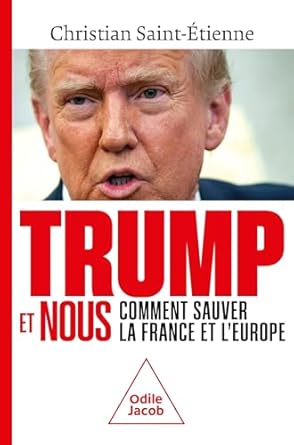
Christian Saint-Etienne, Trump et Nous, comment sauver la France et l’Europe, Eds Odile Jacob, 211 pages.
Is a new world order being created? China and Russia want to de-dollarize the world, the race for economic, military, and financial supremacy is open. Since the re-election of Donald Trump, the United States does not really seem to want to build alliances with democratic countries. The 47th President initiated his new mandate with a declaration of commercial war, ending 70 years of multilateralism. On April 2, during his announcement on “Liberation Day”, Trump locked the United States in a customs citadel. Faced with this upheaval in the hierarchy of nations, Europe seems to be in dire straits. It has failed to enter the digital world and is lagging behind in processors, it faces productivity problems, it is over-regulated with constrained funding, and is in a delicate geostrategic situation. The Draghi report made a scathing observation of all the shortcomings of this European bureaucratic world. For the author, Europe has become “a bureaucratic machine powerless against the United States, China, and Russia”, governed by regulations and prohibitions rather than by a clear strategic vision. While this Europe, which made economic, social, and moral progress possible in the 17th and 18th centuries through the competition of useful knowledge, has many assets. To do this, it will be necessary to review the role and missions of the European Commission, which were established in another world 7 decades ago. An entrepreneurial and decentralized approach must be adopted, fostering innovation. It must have a real capacity to control imports, an obligation to act in the service of European sovereignty, simplify bureaucratic procedures, encourage the development of AI, promote research infrastructures, and relaunch industry while maintaining the decarbonization trajectory by boosting its productivity. But can we entrust the Brussels bureaucracy with the mission of de-bureaucratizing? The answer is obviously no, we must develop agencies such as DARPA or BARDA, which are at the origin of major innovations in the United States, within an intergovernmental European alliance for research and technology. The European Union must focus on three objectives: building an integrated market with reciprocal openness and therefore closure with our trading partners, enforcing the foundations of liberal democracy, and promoting sustainable growth. At the same time, we must create a cooperative of nations with a qualified majority, built on the principle of strategic power and not bureaucracy, which will be in charge of industry, defense, research, and innovation. This core would be the third world power, contributing to international geostrategic stabilization. Christian Saint-Etienne, est universitaire ayant enseigné à Science Po, Dauphine et au CNAM Philippe Alezard
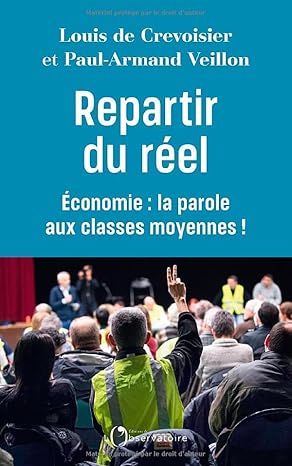
Louis de CREVOISIER et Paul-Armand VEILLON, Repartir du réel. Economie : la parole aux classes moyennes, L’Observatoire, 205 pages.
This essay answers a fundamental question that is shared by half of the French: how to meet the economic expectations and social aspirations of the French middle classes. The authors recall that this was already the objective of the government during the Thirty Glorious Years: social ascent, improvement of the standard of living, economic and political stability. Half a century later, these objectives remain relevant when reading the grievance books written by more than 700,000 French people after the “yellow vests” crisis. The authors note that the proposals formulated in these notebooks have never really been the subject of in-depth analysis, and even less so of concrete application. This implies moving from a macroeconomic vision to a microeconomic approach, from theoretical modeling to pragmatic representation, and from “false populist promises” to sustainable projects. The authors formulate proposals to “rebuild the middle class”, which has been “excluded from the social model” and battered by crises, inflation, taxation, over-regulation, and income redistribution. They propose to “start from experience” and build a “new economic grammar based on the essential issues of everyday life”. In the first part, they recommend ensuring more economic security for the French, in particular thanks to a reduction in the cost of labor, a fairer distribution of the value created, the establishment of a “wage shield” between assets and inactive, the establishment of a “more incentive” and “more virtuous” tax system. They propose to “protect the purchasing power” of the French, through a better valorization of energy (especially electricity) and a set of reforms concerning VAT, complementary health and consumer goods prices. In the second part, they advocate “a sustainable way of life”, including a renovation of medium-sized cities, a revision of mobility systems, a “selected reindustrialization”… In the third part, they suggest offering new opportunities to the middle classes, by revaluing scientific studies and promoting research, a better access for children of the popular and middle classes to higher education and to careers as executives and liberal professions. They advocate a reform of inheritance tax, and more selective incentives for innovation (they consider the start-up nation program launched in 2017 too elitist and the Research Tax Credit ineffective). They conclude with some common-sense advice to economists who are considered too theoretical, to public services that are insufficiently close to the public, and to political leaders who are disconnected from citizens. With their common sense advice, the authors expose themselves to criticism from the working classes – who make up the majority of the “yellow vests” authors of the “citizens’ notebooks” -, the upper classes – who consider themselves overtaxed -, but also the middle classes themselves, who are particularly divided (active-retired, urban-rural, employees-independent, heirs-creators…). The authors draw their reflections from their experiences in public service, from a careful reading of the grievance books and, above all, from the latest reports, books, and speeches of the most influential economists and industrialists. The book deserves to be read by all French people, but especially by elected officials in search of re-election, by economists in search of notoriety, and by the media in search of readers. Louis de Crevoisier (HEC-ENA-Inspection des finances) is a senior official at the Ministry of Economy and Paul-Armand Veillon ((X-ENSAE) is an administrator at INSEE. Note by J-J. Pluchart

Eve Chiapelo and Alexandre Violle, Sociologie des circuits financiers. Les infrastructures de l’argent et leurs politiques (Sociology of Financial Circuits. Les infrastructures de l’argent et leurs politiques (The Infrastructures of Money and Their Policies), Eds Setemtrion, 420 pages.
This collective work brings together 16 teacher-researchers affiliated with CEMS (CNRS-EHESS), whose object of study, both original and complex, focuses on the sociology of financial circuits, defined as “systems of financial action” or “sets of rules of law and accounting, distribution and collection of money in its monetary and non-monetary forms.” These circuits mobilize public and private operators linked by trust and combining technical, administrative, economic, accounting, and IT skills (assisted in particular by AI). The authors tackle the historical and geographical dimensions of this issue, focusing their analyses on the materiality of financial and extra-financial circuits, that is, on the practical conditions of their implementation. The research analyzes in particular the financialization of political institutions and the economic systems of territories (Unions, States, local authorities). Reading the book requires concentration and synthesis because of the heterogeneity of the concepts involved, the systems analyzed, and the case studies observed, but these efforts help convince the reader of the increasingly essential role played by finance in modern society. The first part of the book, entitled “The Making of the Sovereign through Circuits,” uses the example of the birth of Swiss social welfare to show that the formation of a modern state is based on “its ability to levy taxes and to structure financing systems in a sustainable way.” This part is also devoted to the construction of the first European financial circuits under the supervision of the European Central Bank. The second part focuses on “the making of public policy by financial circuits” and revisits the many French reforms of public aid and subsidies, and in particular, the French reforms of pension schemes in 1967 and 1983, which were made possible by the merging of unemployment insurance and pension systems. Another study focuses on “the greening of French energy policy, and on the action of the French Development Agency, which has been transformed by combining various forms of credit and free aid. The way in which financial circuits create organizations and the way in which organizations create circuits is at the heart of Part 3 (The Making of Organizations by Circuits). The case studied is that of the Italian “Banking Foundations (FOB)” born from the reform of the Italian banking system, which created a capital link between them and the Italian banks. The FOBs then helped to create a new housing finance circuit. The study also analyzes “Culture Action Europe,” which shows that the origin of the funds that support it has important consequences on the functioning of the organization and the way it carries out its missions. Part 4 (The infrapolitics of circuits) focuses on the consequences of the least visible circuits and addresses the unintentional sequences produced by changes in certain elements of the circuits on other circuits. It shows that in some situations, public policy may have been hampered by a lasting failure of IT and administrative infrastructures. The case of toxic loans taken out by local authorities due to “incremental changes” in bank and community financing circuits is also discussed. The last chapter uses the example of the pension funds of Belgian local authority officials and the budgets of these authorities to show that these two circuits are linked: personnel management policies and the statutes of agents interact in a deferred manner on pension policies and vice versa. In conclusion, the authors synthesize the theoretical contributions to the public debate. They aim to do for macroeconomics what has been done for the links between the sociology of markets and microeconomics. This project was conceived from a research program on financialization, an interdisciplinary field of research that sees macroeconomic and sociological work intersecting, focusing on particular systems or sites of power. The book aims to contribute “pragmatically” to the debates on the financing of the ecological transition and on “digital currencies.” One idea is to shift the focus from the volumes of money needed to the way in which the funds will be disbursed when the authorities do not always have the infrastructure or the technical skills to allow the money to be put into circulation for projects. Another idea is “to consider new taxes and new distribution channels and reorientations of flows.” As for “digital currencies”, they change, compared to “fiat” currencies, the nature of the infrastructure and the organization of the circuit. They could make it possible, according to the authors, “to change the currency in order to ‘change the economic world and transform both the state and capitalism’.” This book is at the crossroads of many disciplines, most of which fall under sociology and few under economics. The approach is the result of a highly documented, painstaking work. Admittedly, money is too serious a subject to be left to monetary economists alone, and “related” ideas bring freshness to classical thought. Nevertheless, several observations seem to be the egg of Columbus even if the historically observed ideas are explained and finely analyzed. The conceptual contribution remains more sociological than monetary. Changing money to change capitalism and therefore change life is a vast program! Note prepared by Dominique Chesneau and Jean Jacques Pluchart
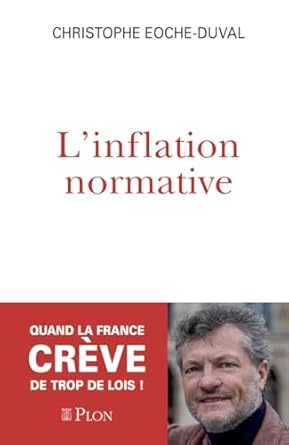
EOCHE-DUVAL Christophe Regulatory Inflation, PLON, 224 pages
Christophe EOCHE-DUVAL has for several years made overproduction of legislation his warhorse and in this book offers an objective inventory of the normative apparatus. This is in order to enlighten the reader and make them aware of the impacts of this overproduction on the functioning of our country. First of all, the author focuses on demonstrating this overabundance of standards. To measure it, he will rely on the one hand on the number of pages of the “Official Journal” and on the other hand, in the annual report “Statistics of the standard” of the General Secretariat of the Government established since 2019. From the latter, we can note the number of “Légifrance” words registered in the “Official Journal” as well as in all the norms (laws, ordinances, decrees, orders…). The findings are clear: with more than 400,000 standards already in force, the number of “Légifrance” words has more than doubled in 20 years, reaching more than 46 million in 2024. Also, over the years, the State publishes fewer texts but they are getting longer and longer. In order to understand this inflation, the author presents the sources. International standards, including those of the UN and its satellites, are the primary providers of standards. Each bill has been ratified by the French Parliament since 1958, although this is not mandatory. Then come the European standards that automatically enter into force in national law. Other strata are added to the previous ones, such as prefectural and municipal by-laws, the exact number of which seems impossible to know. Once the inventory is complete, the author seeks to measure the impacts and notes that these standards often paralyze the productive apparatus in all sectors of activity. To make it more noticeable, he tries to estimate the cost. The various analyses seem to converge towards a figure of 3.7% of GDP, or about 60 billion per year. Beyond the cost aspect, these overlapping standards that have accumulated since the beginning of the Fifth Republic at the mercy of the various heads of state, makes it difficult to know which version is in force at the time this document is being written. The State, itself caught in this vice, ends up circumventing the rules in order to speed up the machine that produces the standards. In recent years, the triggering of Article 49.3 or the publication of ordinances, allowing the executive to pass laws in place of Parliament, are examples. The author dedicates a chapter to two accelerators of normative inflation: the finance and Social Security financing laws. These laws, based on government texts, must be validated in a limited time; not allowing sufficient parliamentary time. Another effect of this normative inflation is exposed in the chapter “Legiscracy against democracy”, since only 4% of French people are able to understand the texts and laws. Despite this terrible observation where the state and politicians seem to be caught and struggle to get out of this straitjacket, the author proposes pragmatic solutions which, he hopes, can be raised during the debates of the next presidential election in 2027. He insists on legislating less and focusing on applying existing laws by lowering the normative pace, thus freeing up parliamentary time. He also advocates transparency on the costs of implementing laws to better assess their relevance. This book has a pedagogical virtue for any reader in search of a better understanding of our legislative arsenal. Christophe EOCHE-DUVAL is a senior civil servant and state advisor. Sophie Friot’s note