

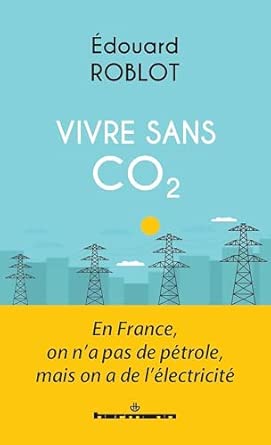
Edouard Roblotdescribes electricity as a natural resource that should continue to be supported, and even developed, given the increasing scarcity of fossil fuels. He outlines the history of electricity since the 1970s, with the development of nuclear power in France, the aim of which was already to move away from fossil fuels and achieve energy independence.
The author identifies the various sectors in which the development of electricity presents an opportunity in the years to come, particularly in domestic applications. He then addresses the power supply for electric vehicles, whether private cars or road transport, whose widespread adoption of electric power would require the installation of charging stations at all parking spaces to enable them to be charged.
The author also proposes reducing daily travel distances by clustering residential areas, thereby limiting emissions, with the added benefit of revitalising local shops. Another challenge outlined is the need to promote the thermal renovation of buildings, but also, and above all, to eliminate energy-inefficient buildings, by implementing a programEdouard me for new, eco-friendly buildings with the support of the State. This would have the advantage of avoiding certain shortcomings of the current thermal renovation programmes, which involve the preparation of voluminous applications that rarely lead to successful outcomes.
Finally, the large-scale deployment of low-cost, low-carbon electricity generated from renewable energy sources is a key issue in securing the future of energy in France, given the ageing nuclear power plants. In this context, the proposal is to focus on new nuclear power, offshore wind energy, solar energy for car parks and buildings, and hydropower.
Edouard Roblot emphasises the importance of concentrating on these seven battles to be fought, without spreading oneself too thin and ultimately achieving nothing in an effective and meaningful way, by focusing on the fight against global warming and CO₂ emissions. These are challenges that need to be addressed within a reasonable timeframe.
Throughout the book, the technological shifts proposed could lead to a societal change that would support these new developments, as possible future solutions to emerge from the current crisis and envisage a better life.
Edouard Roblot is a graduate of the École Polytechnique and the Institut d’Études Politiques de Paris, specialising in energy transition. His career has focused on the energy sector, where he held the position of Low-Carbon Buildings Director at IDEX. He has worked as a Renewable Energy Project Manager at the Energy Regulatory Commission and as a Foresight Manager for the Total Group.
Pona SAMNIK