

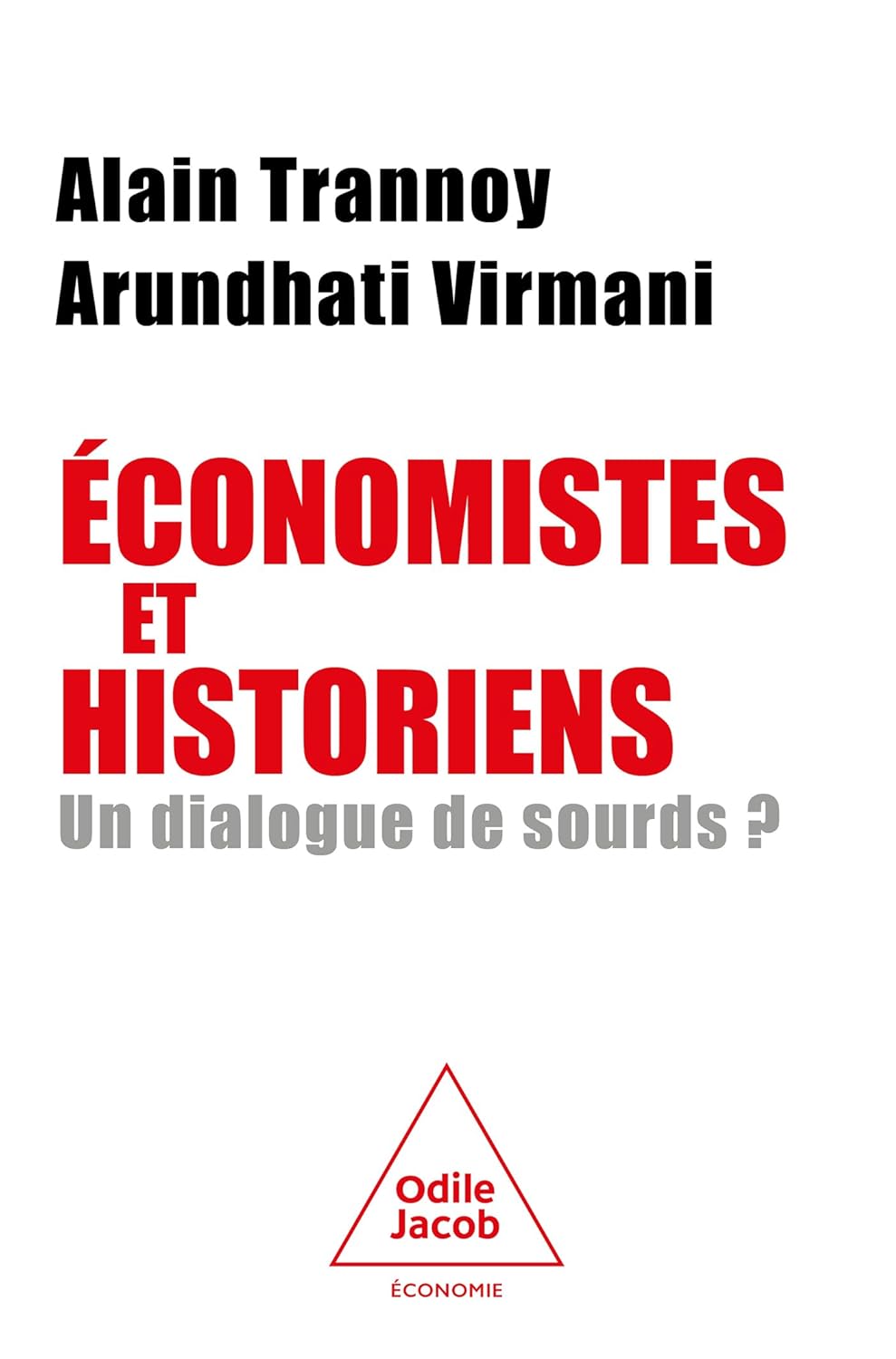
The essential question of whether economics is a science will not be resolved with this book, even if in the time of the physiocrats political economy allowed itself to claim this status. The 17 contributors, economists and historians, encouraged by the Fondation des Treilles (a site ‘at the end of the world’ created by Anne Gruner-Schlumberger) succeed in introducing us to a field where history and economics combine, with interactions that would make us doubt the exclusive rank of human sciences to which they are associated, if only because they are true ‘ogresses’: they both aspire to ‘envelop the entire social field’. The book is divided into 6 parts which illustrate their points of convergence (to the point of experiencing a mutual attraction), but also the paths that separate them (to better appropriate each other’s data). This is what leads Samuelson to say that the study of economic history is the raw material from which the economist can test any of his hypotheses. The most surprising aspect, when the reader delves into the different themes of the book, is the implementation of extremely sophisticated methods and tools in data processing (such as digitized relational databases) to deal with subjects as diverse as Masonic membership and therefore the evolution of the lines of force in the society of the Ancien régime, or statistical approaches intended to distinguish the different forms of causality, a notion that was believed to be reserved for the hard sciences, as Pierre Livet states. The various chapters also address the analysis of colonialism (which is not just a zero-sum game) and the network organization of universities in medieval and modern Europe. These themes constitute anchor points for the epistemological development of economic science. Alain Trannoy is Director of Studies at the EHESS and Professor at the Aix-Marseille School of Economics, specializing in public economics and taxation, and Arundhati Virmani is a teacher-researcher at the EHESS, specializing in colonial and contemporary history of India. Alain Brunet’s note

How to reindustrialize France
Column by Jean-Jacques Pluchart After 40 years of de-industrialization, the subject of “reindustrialization” has been making a comeback in public discourse, since 2009. Several initiatives have been taken by successive governments: the States General of Industry, the Gallois report on industrial competitiveness, France Relance, France 2030. The Lluansi Report In November 2023, the Ministry of Economy commissioned Olivier Lluansi, former interministerial delegate for Industrial Territories, to carry out a mission on the re-industrialization of France by 2035. His conclusions have not ultimately be made public, but they have been presented in a book analyzed by the Turgot Club (see clubturgot.com). The report reveals that France is one of the most de-industrialized countries in Europe and ranks among the lowest one in the European Union, ahead of Greece. The 10% share of GDP covered by industry has stagnated at 10% since 2009 and can only reach 12-13% by 2035. France would ensure at least a balanced trade balance on manufactured goods. To stem the €60 billion annual deficit, he advocates the creation of 60,000 industrial jobs per year, three times the 20,000 industrial jobs created per year in recent years. He notes that “50% of people trained in industrial trades will do something else”. According to the report, the industrial recovery presupposes a patriotic leap and a more massive recourse to public order. The “Made in France” is an under-exploited lever; it could bring in €15 billion more per year, or 25% of the trade deficit in manufactured goods. The report also recommends not to concentrate resources on breakthrough innovations and gigafactories, which represent only 20 to 30% of the re-industrialization potential, when SMEs and mid-caps make up two-thirds. This industrial fabric in the heart of medium-sized cities needs public support to regenerate. Re-industrialization also implies to reduc the depenedence of French supply chains and freeing up land, while remaining Climate Law compliant, which sets a target of zero net artificialization by 2050. The White paper “Everyone can make French industry shine” The Les Influstriels collective, which aims to promote the attractiveness of the French industry, published a White paper in December 2024 entitled “Everyone can make French industry shine”. It reveals that “83% of French people have considered it to be in decline for several years”. The authors question why the industry suffers from such a negative image. They note that France has many startups and SMEs engaged in new technologies and sustainable economies – including decarbonization – but that they lack public and private funding. However, since the green industry law, the French can participate in the ecological transition and rei-ndustrialization in various ways: life insurance, a Pension scheme (PER), private equity funds… In September 2024, Bpifrance launched the BE3 private equity fund, the 4th product of its retail range, accessible to the French from €500. In 2024, the government also launched the “turnkey sites-France 2030” system, selecting 55 industrial sites from around a hundred applicants. This system allows project leaders to access land in the short term, and allows developers and local authorities to enhance the value of the labelled sites. According to the Minister of Ecological Transition and Territorial Cohesion, the number of applications received from local authorities, private companies and various organizations, reflect an advance in reindustrialization. “France 2030 turnkey” sites have been created to accelerate the installation of factories. These sites will be decontaminated, equiped with access roads, connected to utility networks and will benefit from accelerated administrative procedures. With this concept, the government wants in particular to reduce the duration of industrial installations from 17 months on average to 9 months. The sites were chosen according to 5 criteria: economic attractiveness – location, accessibility, transport axes, employment area, differentiating ecosystem; limited environmental impact – land sobriety and rehabilitation of brownfield sites; site maturity – potential by 2030; relevance of the project to be integrated into the territory; land control of the site. The France Foncier+ portal already lists more than 600 sites available or in the process of being made available. The redevelopment of brownfield sites has become one of the priorities and land recycling appears to be a key measure, which falls within the context of the law on green industry. The 55 sites are spread over the entire territory, but if all the regions are represented, there are 1 to 8 sites per region, the best endowed being the PACA region, with 8 sites, followed by Normandy (7); Occitania and Île-de-France (6 each). The size of the chosen sites is very variable, since there are projects of 3 ha as well as 340 ha, the challenge being to give oneself the “means to attract all projects, from the industrial SME to the gigafactory.” [1] Olivier Lluansi, “Réindustrialiser, le défi d’une génération”, éditions La Déviation, 2024.

Alain Trannoy, Arundhati Virmani, Economistes et historiens- Un dialogue de sourds, Eds Odile Jacob,301 pages
History and economics are unavoidable disciplines, and in these troubled times, we’d like them to combine their respective geniuses, with history offering the long view, and economics drawing on the most up-to-date array of quantitative methods. This book is an attempt to bring history and economics into dialogue, and to combine their methods in a way that encourages them to work together, at a time when historians’ radical critique of the primacy of economic relations and representations partly explains their disaffection with economic history. Historians criticize the models used by economists as being too universalizing. This is not inaccurate, but the limits of the “historical-philosophical observations and prejudices” of pure and perfect competition, symmetry of information and rational expectations, have led economists to seek pragmatism by basing their hypotheses on real observations and clouds of data aimed at drawing conclusions about given periods, breaking, quite rightly, a certain historical continuum if there ever was one. What Paul Samuelson calls “the credibility revolution of empirical testing”! It’s not a question of studying a few subjects in parallel to compare conclusions, but rather of presenting the advantages, disadvantages and limits of the methods used. The discussion between economists and historians is organized around two major issues. The first concerns the methodological choices that structure the approaches of the two disciplines. The second issue concerns the fields and themes they now have in common, and on which their studies are currently focused. The first part is therefore devoted to data, sources and their shortcomings and imperfections. The second part tackles a theme that was thought to be obsolete: causal relations, the basis of scientific reasoning, but not necessarily in the social sciences. One author even deals frankly with a crisis of causality, distinguishing between “necessary causality and sufficient causality”, questions of scale, causality specific to the “hard” sciences (?) and the need for convergence in the causal approach. One section is provided by way of example, as it tackles the subject of colonialism: for historians, the weight of colonization remains heavy for the countries concerned, while the last two Nobel Prize winners in Economics have demonstrated the responsibility of successive governments in these countries for their insufficient economic development. Should we “believe” a story or a model? The final section confronts science and knowledge (a few pages mixing philosophy and technology) on the occasion of the current environmental turnaround and the use of network theory in the appreciation of information and its modes of access. On reading the book, it becomes clear that the dialogue between disciplines cannot be based on the idea that a single definition of causality is superior to the other and likely to prevail. The type of causality often depends on the question being asked and the researcher’s intellectual biases. Logical causality and temporal causality are often different. All economic research, beyond “numbers”, must integrate time into the definition of causality and the scope of the databases it uses. Dominique CHESNEAU

VERDIER-MOLINIE Agnès, Facing the wall. Debt, deindustrialization, standards, welfare, insecurity. The Observatory 2025, 195 pages
The director of the IFRAP Foundation, 10 years after her book On va dans le mur (We’re Headed for the Wall), has published a new book entitled Face au mur (Facing the Wall). Themes include: Debt, deindustrialization, standards, welfare, and insecurity. The approach is identical: French comparison with the European and Canadian environment, critical review of the highlights and finally proposal of corrective actions. The comparison with Western nations underlines the negative singularity of France on almost all the criteria used, more particularly the proliferation of standards, the excessive and ever-increasing weight of administration, the complexity of the territorial network, the high level of public debt and taxation, the particularly low volume of hours worked aggravated over time by the late entry into working life and the very low rate of seniors in activity, the explosion of strike days, the loss of competitiveness and its consequences on industry and agriculture, the degradation of public services… Uncontrolled immigration, growing insecurity, and a dilution of the National. Resolutely proactive, the author identifies and evaluates at each stage the actions to be carried out, the decisions to be taken to redress the economic and financial situation, likely to redesign a future. Inspired by the benchmarking approach, a chapter is devoted to the policies successfully undertaken by other European countries historically confronted with difficulties more or less similar to those experienced by France. The book is enriched with data and graphics that illustrate and reinforce the analyses. Agnès Verdier-Molinié’s book summarizes, the situation of France in an international context in full upheaval, proposes a set of actions already proven abroad, likely to raise the bar before it is too late. VERDIER-MOLINIE Agnès, Director of the IFRAP Foundation. Author of “On va dans le mur” (We’re going into the wall) at Albin Michel, “Le vrai état de la France” (The true state of France) and “Où va notre argent?” (Where does our money go?) Hubert Alcaraz’note

Gross Domestic Product and CO2 Growth: Reflections on Kaya’s Identity
Column by Sophie Friot Literature and studies on energy and ecological transitions regularly address Kaya’s identity, analyzing the human impact on the climate and understanding the link between changes in gross domestic product and carbon evolution. It would be too simple to correlate gross domestic product (GDP) increase with carbon growth, suggesting that the solution to rising greenhouse gases would simply be « de-growth ». This equation is a “tool” used in many research projects to better identify the levers to move towards an economically sustainable and less carbon-intensive world. It is used by the Intergovernmental Panel on Climate Change (IPCC) and the International Energy Agency, among others, to analyze changes in CO2 emissions from fossil fuels. This concept refers to the Japanese economist Yoichi KAYA, who specializes in energy and the environment, and wrote in 1993 his book : “Environment, Energy, and Economy: Strategies for Sustainability”. More than 30 years ago, it demonstrated that the increase in energy consumption associated with economic development can vary by population level, energy sources, and regions (Western versus developing countries). It is defined as follows: The energy intensity component of gross domestic product is the amount of energy required to achieve a result or a production. In Western countries, the energy intensity of the economy has followed a downward trend since the beginning of the industrial era. The sharp decline was caused after the two oil shocks by the development of nuclear energy and renewable energies. Notably, the decrease in energy consumption being smaller than the temporary drop in gross domestic product resulted in the anomaly of the 2020 health crisis period when energy intensity rebounded upwards. Another component of the equation, closely related to the previous one, is the carbon intensity, as the share of CO2 in total energy consumption. Carbon intensity has followed the same trend since the early 20th century with the increasing weight of oil and gas in the mix, which emit less CO2 than coal ; the movement has accelerated since the 1980s with the rise of nuclear and renewables, such as wind or photovoltaics. Following the effects of the 2 oil shocks of the 1970s, developments in gross domestic product and energy consumption needed to be separated. In this case, we are talking about: – Partial decoupling when emissions grow less rapidly than gross domestic product – Absolute decoupling is when emissions decrease while gross domestic product increases, which means green growth. With Trump making shale oil and gas a priority and China still relying on coal for the majority of its energy production, there is still scope to achieve full and global decoupling to meet Net Zero Emissions targets by 2050. In conclusion, let us remain optimistic because, without total decoupling, partial decoupling is possible by levers such as: – Improvement of technologies in construction – Energy renovation of buildings – Electrification of transport – Progress towards a less carbon-intensive energy mix: development of renewable energies and reduction in the use of coal in fossil fuels. In Germany, the closure of the remaining nuclear power plants has not curbed the decline of fossil fuels, such as lignite, in the face of the development of renewable energies.

WETS Pascal, Le nucléaire, une énergie d’avenir? (Nuclear energy, an energy of the future?) For a responsible energy transition, Eds Renaissance du Livre, 2024, 122 pages
This book raises awareness of the « damage caused by the dogmatism of elected environmentalists who want to replace nuclear energy with renewable energy (RE) at all costs, at the expense of colossal financial expenditures » whereas France, decades ago, had the cheapest energy cost thanks to its nuclear fleet. It first highlights the fact that most environmentalists are committed to mobilizing for the « anything but nuclear power » regardless of a rational ecological approach. To do so, they have « used fear », at the expense of a scientific rational proportion of low-carbon energy via the nuclear technology. It results in Germany relaunching polluting coal-fired power plants in 2022 (war in Ukraine), for compensating the effects of Angela Merkel’s 2011 decision to close nuclear power plants arguing for REs « allegedly creating jobs ». Illustrated by relevant figures, the author mentions that the subsidized REs destroy on average 2.2 “grey” jobs when creating one “green” job in the sector. The author emphasizes the « fearful demagogy of environmentalists », who have, for decades, pushed Europe towards an utopian energy future dominated by renewable energies. The consequences of this situation are the decline in competitiveness of European companies as well as companies relocating to the United States resulting ultimately in job losses. In the second part of the book, the author analyses the question of the optimum energy mix for the the ecological, economic and societal transitions. As expected, he recognises that with (1) a relative lower cost of a nuclear power plant compared to a wind power equivalent, (2) the extension of existing ones thanks to safety know-how, (3) a necessity to comply with the objectives of the 2050 plan, nuclear power remains unavoidable. For the author, the future of our economic future will depend above all on a rational (energy at controlled cost) rather than an emotional (fear) attitude. The ultimate goal of this book is to encourage politicians to take it up and make the right decisions. Pascal Wets (civil engineer) is a business consultant and former Professor at SUPELEC and at the post-graduate institute of the Technological University of Compiègne. Note written by Claude GEORGELET

Yuval Noah Harari , Nexus: A Brief History of Information Networks from the Stone Age to AI, Penguin Random House, pages 528
The universal best seller is structured into three parts, each of which focuses on a different aspect of the development of human networks. Part I: Human Networks’’. This section traces the historical origins of information networks, focusing on how primitive forms of communication, such as storytelling and myths, enabled large-scale human cooperation. Harari argues that myths are central to the evolution of human societies, allowing individuals who do not personally know one another to cooperate under shared beliefs and symbols. Chapter 1: What Is Information?’’: Harari begins by tackling the broad concept of information, explaining that information is the fundamental building block of both human societies and the natural world. He moves beyond traditional definitions, arguing that information is more than just human-made symbols or language—it encompasses everything from DNA to the movements of celestial bodies. Harari introduces the idea that information has always existed in nature, but what differentiates humans is how they have learned to store, process, and disseminate it through complex networks. He also introduces a philosophical dimension by engaging with the difficulty of defining information in fields like physics and biology. Rather than offering a universal definition, Harari focuses on the historical role of information as a tool for building networks of cooperation. One of his key arguments is that humans have historically relied on a combination of accurate information and fictions (such as myths and religions) to create large, cohesive societies. Chapter 2: Stories: Unlimited Connections’’: In this chapter, Harari dives into one of his key themes: the power of stories in shaping human societies. He explains that stories—myths, legends, and religious narratives—have acted as vital tools in creating social cohesion. Harari argues that these stories are not necessarily based on factual accuracy, but they are crucial in binding large groups of humans together under a shared belief system. For instance, the belief in divine figures or the legitimacy of kingship allowed early societies to mobilize resources, organize armies, and maintain social order. Stories, as Harari explains, were the first large-scale information networks, allowing humans to transcend the limitations of small, tribal groups and build empires and civilizations. Chapter 3: Documents: The Bite of the Paper Tigers’’: This chapter focuses on the role of written documents in human history, particularly as a tool for bureaucracy and governance. Harari argues that while stories create the emotional and ideological glue for societies, documents create the logistical framework that allows complex societies to function. He explores how early civilizations—such as Mesopotamia and Egypt—used writing not for poetry or history but for recording taxes, land ownership, and laws. The shift from oral to written culture marked a significant evolution in how societies managed information. Harari emphasizes that documents allowed for more accurate and long-term storage of information, making large bureaucracies possible. He also discusses the idea of “paper tigers”—bureaucratic systems that, while theoretically powerful, often collapse when they cannot adapt to new realities. In the 4th chapter « Errors: The Fantasy of Infallibility », Harari addresses one of the central issues with information networks: their tendency to fail due to errors, miscommunication, or the spread of misinformation. He argues that while humans rely on information networks to create order, these networks are often built on flawed assumptions or outright lies. Harari uses historical examples like the Catholic Church’s dogmas and the ideological extremes of Nazism and Stalinism to illustrate how powerful networks can spread erroneous or delusional information.One of the key themes here is that humans often overestimate the reliability of their information networks. Harari suggests that the fantasy of infallibility—whether in religious dogma, scientific knowledge, or political ideology—often leads to disastrous consequences when reality contradicts these beliefs. He also examines the role of self-correcting mechanisms, such as scientific peer review and independent courts, which help prevent the spread of misinformation in modern societies. Chapter 5: Decisions: A Brief History of Democracy and Totalitarianism’’ Here, Harari explores the evolution of political systems through the lens of information networks. He contrasts democratic and totalitarian systems, emphasizing that each represents a different approach to handling information. Democracies, according to Harari, rely on a decentralized information network, where ideas and opinions flow freely, allowing citizens to make informed decisions. Totalitarian regimes, on the other hand, seek to control and centralize information, often resorting to propaganda and censorship. Harari delves into the history of political systems, showing how democracy evolved as a response to the complexity of large societies, which required more sophisticated and distributed information networks. Totalitarian systems, while initially powerful, often collapse due to the inability to process and respond to complex information accurately. ‘‘Chapter 6: The New Members’’: In this chapter, Harari transitions to the modern era by exploring how computers and artificial intelligence differ from previous information technologies like the printing press. He argues that while previous technologies were tools for amplifying human capabilities, AI represents something entirely different. AI can process information independently, make decisions, and even create new forms of knowledge without human intervention. Harari emphasizes that this shift has profound implications for human society. AI is not just an extension of human intelligence but a new kind of intelligence that operates on fundamentally different principles. This new “member” in the information network is reshaping everything from economics to warfare. Chapter 7: Relentless: The Network Is Always On’’: In this chapter, Harari explores the relentless nature of modern information networks, particularly in the digital age. Unlike earlier networks, which operated at the speed of human communication, today’s networks are always active, processing data 24/7. Harari examines the psychological and social consequences of this shift, arguing that humans are biologically unprepared for the constant flow of information. He also touches on the issue of information overload, where individuals are bombarded with so much data that they struggle to make sense of it. This, Harari argues, leads to a paradox: despite having access to more information than ever before, people may become more misinformed or disconnected from reality. Chapter 8: Fallible: The Network Is Often Wrong’’: Building on the previous chapter,

THE ADVENT OF NON-FINANCIAL AUDITING
Jean-Jacques Pluchart The new European CSRD directive, published on December 16, 2022, constitutes a significant step forward in the practices of managers – in particular CFOs and CSR managers -, but also in the professions of accountancy and law. The CSRD directive will gradually impose “sustainability reporting” on all companies (excluding micro-enterprises) according to a staggered timetable from the reference years 2024 to 2028. The data published by the companies will have to be audited and certified by independent third parties (the PSAIs) including specialized compliance control firms, lawyers and auditors specially trained in the various disciplines (technical, legal, accounting) mobilized by CSR and sustainable development. These auditors, supervised by the French Audit Office (H3C), renamed the French Audit Authority (H2A), may be assisted by Chat GPT-type applications, informing them of the rules, standards or markers applicable or observable in the main sectors of activity. A few months later, on June 26, 2023, the ISSB, created in 2021 at COP 26, published two initial climate standards (IFRS S1 and IFRS S2) applicable internationally. The two repositories have notable differences. The sustainability reports published by European companies will display indicators divided into 4 types of ESG standards (cross-cutting, environmental, social and governance) and 13 sustainability standards (ESRS). While the European Union had aligned itself with the Anglo-Saxon financial accounting standards (IFRS), the European extra-financial framework (CSRD) differs from the American (RCRD) and international (ISSB) frameworks. The Commission recommends the application of dual materiality, both financial and material, of the “impacts, risks and opportunities” resulting from the activities of companies, while the Anglo-Saxon standards are limited to financial issues. The European approach has multiple implications: How to anticipate and measure the risks incurred by the company and its ecosystem? How to identify and classify the internal and external stakeholders included in the value creation chains of companies? How can we map the interactions between the company and its various stakeholders? How to detect and weigh their impacts, risks and opportunities? How can they present their strategies and business models concisely without revealing certain projects or business secrets? How to define the roles and responsibilities of the various governance and management bodies involved in achieving the 17 Sustainable Development Goals (SDGs) set by the Paris agreements in 2015? How can we ensure the traceability of the sources and the validity of the measures of the global and specific impacts, positive and negative, induced in the short, medium and long term by the activities of companies and their stakeholders, within the perimeters of their ecosystems? What metric should be adopted to make the indicators robust and comparable? How can the report be made understandable by the multiple actors and observers of the companies’ activities? How can indicators be made comparable between companies in the same sector and/or territory? How can all the indicators within the same group be weighted, aggregated and consolidated? The drafting of sustainability reports in accordance with the CSRD, which will replace the DPEF, raises issues that require the mobilization of managers, accountants, financiers, academics and experts from various disciplines, whose coordination falls under Impact, Risk and Opportunities (IRO) Management. This new mode of strategic and operational management of the company is still in its learning phase, because its concepts and models are not all stabilized and its implementation is the subject of debate in professional and scientific circles. Analyses of the NFPRs of French companies carried out in particular by the Autorité des Marchés Financiers (AMF) and by extra-financial rating agencies show that company data is not always sufficiently traced, monitored over time, and comparable within the same sector of activity. Last but not least, the application of the new CSRD standards should make public the strategic thinking process that was previously the domain of shareholders and company managers. This transparency should lead to the limitation of green and social washing and the revision of certain founding paradigms of management.

Christian de Boissieu et Marc Schwartz, La nouvelle guerre des monnaies, Odile Jacob, 2025, 294 pages.
Christian de Boissieu’s latest book, written with Marc Schwartz, is a timely response to the questions that enlightened citizens are asking about the so-called “unconventional” strategies that have been adopted by central banks in the face of the 2007-2010 financial crisis, the 2020-2021 pandemic, and the Ukrainian and Israeli-Palestinian wars since 2022. These events have revealed the multiple economic, socio-political and institutional dimensions of money. As is well known, money is an instrument of measurement, transaction and reserve, but it is also a common good and a coveted factor of sovereignty and power. The authors acknowledge the innovative and generally appropriate nature of the measures taken by central banks, but they deplore the lack of coordination on monetary matters between states, central banks and international financial institutions. The authors also analyze the reasons behind the resistance of cash to digital currencies, attributing it in particular to socio-cultural biases. They question the monetary or speculative nature of crypto-assets and the possible causes and effects of the adoption of central bank digital currencies. They question the current movement of de-dollarization of world trade and explore its possible long-term scenarios. They try to anticipate the outcome of the emerging war between public and private currencies. Finally, they endeavor to quantify and instrumentalize the financial effort to be made to ensure the energy and environmental transition. The book attests to the authors’ great mastery of one of the most complex and fundamental current economic issues. They draw their sources from their experiences and from the best scientific work on monetary economics. Christian de Boissieu is Professor Emeritus at the University of Paris I Panthéon-Sorbonne and Marc Schwartz is CEO of the Monnaie de Paris. note by J-J.Pluchart

Xavier Fontanet, Business Strategy, Conversation with Pierre Pupier, Manitoba, 260 pages.
“The key to making your business successful in an ultra-competitive world has a name: strategy.” This publication is above all proof of this, with the testimony of an eminent CEO. It is also the story of Xavier Fontanet’s exceptional career. He is the iconic leader of the ESSILOR group, which he brought, under his leadership, to 5 billionS € in turnover while increasing its market value a hundredfold. His interviewer, Pierre Pupier, himself an entrepreneur-investor and a leading figure in private equity, reveals each stage of Xavier’s professional life, which are all examples of “strategy” that “applies in the field in real situations and allows you to master changing and complex situations, or at least to adapt to them. The strategic concepts used and presented in this book “remain universal and apply equally to SMEs and mid-caps as to large companies… “ The major issues reviewed by the authors – profitability, growth, team motivation, etc. – will be of interest not only to business leaders, but also to economics students and executives looking for inspiration and a model of success in and through business. By closing this book, the reader will undoubtedly have understood that strategy can also be an exciting game and that choosing to become an entrepreneur, despite the many negative connotations that are too often attributed to these central figures of the economy and the risks that accompany them, can ultimately prove to be a “very happy” experience. This is what emerges from this “true novel” of the life of Xavier Fontanet, a great business leader, who continues to have fun by becoming a publisher, creating the game “STRATHENA” which allows the user to put himself in the shoes of a company’s CEO facing his competitors, which remains a good way to test and develop his knowledge of strategy. Education, Xavier Fontanet’s other great battle, “should start at the school level… as early as the fifth grade” Xavier Fontanet: CEO of Essilor for nearly 20 years. Director of major groups. Pierre PUPIER: 15 years of private equity, founder of several companies. Note by Jean Louis Chambon