

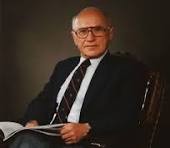
Jean-Jacques Pluchart There has been a renewed interest in Milton Friedman’s thinking in recent weeks, as the US economy is marked by a return of inflation, a stagnation of real wages and a rejection by the courts of the customs duties imposed by the new US presidency. After studying economics and mathematics, Milton Friedman (1914-2006) was the assistant to Simon Kuznets, the “father of GDP”, and then a lecturer and researcher at several American universities, notably Stanford. He was involved in the design of the Marshall Plan before receiving the Nobel Prize in Economics (1976). He was notably the inspiration behind the Chicago School and the anti-staginflationary policies initiated at the end of the post-war boom in the United States and the United Kingdom – and to a lesser extent in continental Europe – during the 1970s and 1980s. He has published numerous books, including A Monetary History of the United States, 1867–1910, Inflation and the Monetary System, and Capitalism and Freedom. His thinking is unfairly summarised by a few simple formulas according to which “business has an economic and not a social role”, or “the market is better than the State for the conduct of economic activity”. But he actually developed an original and prescient way of thinking on the “inflation-unemployment” dilemma, on the missions of central banks, on the trade-off between freedom and equality, and on the role of education in reducing inequalities. Milton Friedman became known for his analysis of the 1929 crisis and for his criticism of the “Fordian compromise” and especially of the Keynesian analysis of consumption. He argued that the latter did not depend on household income at a given time, but rather on the perception of their “permanent income” in the medium term, which he described as “adaptive anticipation”. If the future is perceived as stable, agents tend to consume, and if the economic situation is perceived as unstable, they tend to save. But above all, Milton Friedman is the “champion” of entrepreneurial freedom and market competition. He opposes all situations of monopoly, “free rider” or market dominance. He denounces Keynes’ “error”, according to which “inflation combats unemployment”, and he criticises the “Phillips curve”, according to which the unemployment rate is inversely related to nominal wages (“the greater the increase in wages, the lower the unemployment”). He considers that the key indicators are real wages and not nominal wages, as well as the “natural rate of unemployment”, that is to say the minimum rate below which a State cannot boost employment through purely cyclical measures. He thus criticises the “monetary illusion” whereby the unemployment rate does not depend in the short term on changes in nominal wages and prices, but rather in the long term on changes in real wages and employment. He thus inspired the famous NAIRU and NAWRU indicators (non-accelerating wage rate of unemployability), which arecurrently closely monitored due to the resurgence of unemployment and inflation in some countries. Friedman also argues that the “arbitrator state” must confine itself to exercising sovereign functions (justice, security, transport), guaranteeing competition in the markets and refraining from any regulation that might limit the efficiency of the markets. The state must avoid increasing the “compulsory expenditure” of businesses (which weighs on their investments) and households (which reduces their consumption). It must favour measures that promote the mobility of the factors of production, and in particular of talent, in order to “limit the simple reproduction of the elites”. Like Tocqueville, he considers that inequalities are “fair” when they are justified by talent and/or work and not by situations of rent. He is in favour of competition between public and private schools and universities in order to develop capacities and skills, and to reduce the costs of education. Milton Friedman is the champion of monetary orthodoxy. He denounces the “versatility” of governments and central banks in monetary matters, as well as the cult of the gold standard. He recommends applying a stable “rule”, believing that the role of a central bank is first and foremost to pursue an anti-inflationary policy (the inflation rate must, according to him, be between 2 and 2.5%) by setting interest rates to regulate credit and by providing forward guidance that gives indications on the future direction of monetary policy. On the fiscal front, he opposes progressive income taxation (with the exception of very high incomes), but he is in favour of low taxation of dividends and high taxation of inheritances, with the exception, however, of “fair inheritances” accumulated through talent and effort, his objective being to promote the efficiency of the financial markets and the equity financing of the most profitable investments. He is opposed to any universal income but is in favour of a “negative tax” for the lowest-income households and scholarships for the most deserving students. A reading or re-reading of Milton Friedman’s numerous publications and communications is therefore essential in the face of the “pressing national obligation” to restore fundamental economic balances
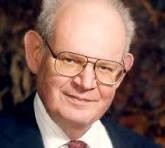
Benoît Mandelbrot or the rough geometry of financial markets
With Black, Scholes and Merton, modern finance had found one of its most powerful formulations. The price of an option could be deduced from arbitrage reasoning, a dynamic hedging strategy and a differential equation derived from Brownian diffusion. Financial randomness thus became an object that could be calculated, neutralised and almost domesticated. Where Bachelier had introduced the random movement of prices, where Wiener had given a rigorous structure to Brownian motion, where Markowitz had organised portfolio selection under uncertainty, Black, Scholes and Merton took a further step: they showed that a contingent right could be valued on the risk itself. But this construction was based on a particular representation of chance. Price changes are continuous, returns are assumed to be sufficiently close to a normal distribution, and volatility is considered constant or, at the very least, controllable within the framework of the model. The world thus described is unstable, but with a regular instability; uncertain, but with a disciplined uncertainty; random, but with a randomness that is sufficiently smooth to be integrated into an equation. It is precisely this representation that Benoît Mandelbrot disrupts. His contribution to finance does not consist in proposing a new valuation formula comparable to that of Black-Scholes. It is more profound and, in a way, more unsettling. Mandelbrot asserts that financial markets are not only uncertain: they are rough. They do not always fluctuate according to a smooth and continuous geometry; they experience breaks, accelerations, discontinuities, concentrations of volatility, and extreme events more frequently than the Gaussian model predicts. With him, finance can no longer be content with thinking of risk as a regular dispersion around an average. It must learn to think about irregularity itself. Benoît Mandelbrot was born in Warsaw on 20 November 1924 into a Jewish family of Lithuanian origin. His father was a businessman and his mother a doctor. The Mandelbrot family belonged to that world of Central Europe where scientific culture, languages, migration and historical uncertainty were closely intertwined. Very early on, the young Benoît was shaped by a demanding intellectual environment. His uncle, Szolem Mandelbrojt[1], was a renowned mathematician, a professor at the Collège de France, a specialist in analysis and close to the Bourbaki group[2]. This family presence played an important role in his intellectual orientation, even though Mandelbrot would always remain at a distance from established schools and mathematical orthodoxies. In 1936, faced with the growing dangers in Eastern Europe, the family left Poland for France. Benoît Mandelbrot arrived in Paris at the age of eleven. This geographical and cultural break was decisive. It exposed him both to the richness of the French intellectual system and to the violence of history. During the Second World War, the family had to take refuge in the provinces to escape persecution. These war years interrupted normal schooling, but they developed a very particular form of visual and intuitive intelligence in Mandelbrot. He would later say that he often learned better through images, shapes and geometric analogies than through traditional linear demonstrations. This uniqueness made him stand out very early on. After the war, he entered the École Polytechnique, where he benefited in particular from the teaching of Gaston Julia[3], one of the great names in the theory of complex functions. From the beginning of the 20th century, Julia had studied mathematical objects that would later become central to fractal theory. At the time, these shapes were still largely considered as analytical curiosities, or even as mathematical monsters: sets that were difficult to visualise, irregular, and beyond the reach of classical geometric intuition. Mandelbrot would later find in them one of the profound sources of his work. After the École Polytechnique, he continued his studies in the United States, notably at the California Institute of Technology, then returned to France before working at the CNRS. But he did not fully identify with the dominant style of post-war French mathematics. The Bourbaki group, to which his uncle was close, promoted very abstract, axiomatic, structural mathematics, detached from immediate applications. Mandelbrot, on the contrary, was attracted to concrete phenomena, irregular shapes, empirical data, and misclassified objects. He was interested in linguistics as much as in turbulence, the geography of coastlines, the distribution of income, transmission noise in telephone lines or variations in financial prices. He does not seek only to demonstrate; he seeks to see. This intellectual freedom explains his departure for the United States. In 1958, he joined the IBM laboratories, where he remained for several decades. This choice was fundamental. IBM offered him a rare environment: the opportunity to work at the frontier of mathematics, computer science, physics and economics, without being confined by the constraints of a traditional university department. Above all, IBM gave him access to powerful computers, which would play a decisive role in the visualisation of fractal objects. For Mandelbrot, the computer was not just a calculating machine; it became an instrument for geometric exploration. It made it possible to make visible shapes that classical mathematics had foreseen but could not yet fully represent. The word “fractal” would not appear until later, in the 1970s. Mandelbrot coined it from the Latin fractus, which means broken, fragmented, irregular. A fractal is a shape whose complexity is repeated at different scales. A coastline, a cloud, a mountain, a vascular network or a fern all have this property: when you zoom in on a part, you find patterns that resemble the overall structure. This is self-similarity or scale invariance. These shapes cannot be described correctly by classical Euclidean geometry. A line, a circle, a triangle or a sphere are suitable for representing an ideal, smooth and regular world; but the real world is often rough, fragmented and uneven. Mandelbrot’s great insight was to show that this roughness is not pure disorder. It has a structure. It can be measured, described, compared. The apparent chaos conceals a form of order, but an order that is different from that of classical geometry. Where Euclid describes simple shapes, Mandelbrot seeks to describe
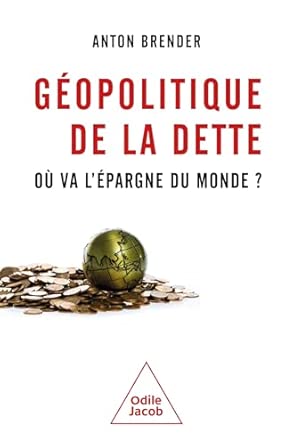
Anton BRENDER, Géopolitique de la dette, Eds Odile Jacob, 180 pages.
Around the world, debt is rising sharply and records keep being broken. The threshold of 300,000 billion, euros or dollars, the difference is no longer essential at this scale, in public and private debt has now been crossed. Speaking about France’s debt in the summer of 2025, François Bayrou referred to “an Everest of debt” during his time at Matignon. But Anton Brender reminds us of an often overlooked truth: “the debts of some are always the claims of others.” While there has never been so much debt, this is also because household financial wealth has never been so high. The “Everest of debt” therefore has its counterpart in an “Everest of global savings.” In a highly pedagogical manner, the author explains the fundamental mechanisms underpinning a financial economy. On one side are the natural borrowers: companies, which need to finance their production capacity, factories, warehouses and investments; and governments, which provide non-market services and must finance their deficits. On the other side are the natural savers: households, primarily, whose savings directly or indirectly meet the financing needs of the economy. The end of the Bretton Woods agreements, the oil shocks and the increasing opening of capital movements broadened the scope of savings and debt. They also contributed to the emergence of external imbalances, born from the interaction between the economic policies pursued by different countries. China’s entry into world trade in 2001 was, in this respect, a decisive moment. Chinese trade surpluses captured part of domestic demand in the United States and Europe. They contributed to the destruction of industrial jobs in Western countries and led central banks to respond by sharply lowering interest rates. American household debt thus enabled, as its mirror image, Chinese household saving. This dynamic helped prepare the ground for the financial crisis of 2008. In a quarter of a century, the United States became the borrower of last resort for the planet. It financed the development of emerging countries at the cost of a colossal debt and the loss of millions of industrial jobs. In January 2025, Donald Trump announced the end of what he called a “scam” and embarked on a policy of unprecedented tariff barriers, the largest since the 1930s, while largely disregarding existing rules. The dynamics of world trade, and therefore of global savings and debt, are profoundly affected by this shift. The world may therefore move from a situation characterized by a limited number of borrowers to one in which financing needs become far more numerous. Asian industrial powers, first and foremost China, will have to support their domestic markets. Japan will have to encourage its population to draw down savings. Europe will have to finance its defence, security and energy transition simultaneously. Emerging countries will also need capital to continue their development. Ph Alezard
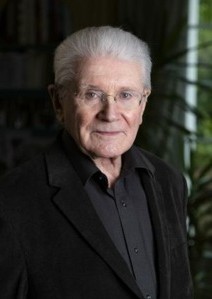
Tribute to Professor René Passet,
Founding member of CIRET Professor René Passet, a founding member of the Centre International de Recherches et Études Transdisciplinaires (CIRET), who has just passed away at the age of 99, is the French economist who succeeded in liberating economic discourse from its confinement in order to consider it within the infinitely broader context of life on Earth. Contemporary economic discourse has its origins in the image of the pin factory put forward by Adam Smith in his seminal work The Wealth of Nations. We are familiar with the principle. A craftsman, working alone in his workshop, can at best produce 10 pins in a day’s work. Therefore, ten craftsmen will produce around one hundred. However, ten workers working together in a machine-equipped factory and dividing the work between them may produce 10,000 pins, i.e., 1,000 each. This represents a 10,000% increase in productivity. National prosperity will therefore increase by the same amount. To this is added the principle of comparative advantage, which suggests that the English should manufacture and sell textiles to the Portuguese, in return for which the Portuguese will sell them Port wine. The entire contemporary economic system is based on this dual principle. The problem is that it oversimplifies reality. First question: Is a factory worker, who spends their time performing repetitive tasks that are imposed on them, more or less happy than a craftsman in their small workshop? Economists are more or less silent on this point. Second question: Is the desired abundance compatible with the quantity of raw materials and energy available in the Earth’s subsoil, and can the waste from industrial activity be absorbed by the Earth without causing damage? The classical economist is also silent on this point. And so it is René Passet who, in his best-known book, L’Economique et le Vivant, asks whether the principle of economic efficiency is indeed compatible with the principle of preserving and reproducing living organisms. However, this question has become fundamental to the very survival of humanity. Some people suggest that the ‘green economy’, ‘sustainable development’ and ‘renewable energies’ will make it possible to ensure compatibility between economic life and the preservation of living organisms. However, these are merely words. As Nicholas Georgescu-Roegen, who was an economist but also a physicist, clearly demonstrated, ‘economic development’ manifests itself as a local expression of negentropy. And energy consumption, in whatever form, cannot sustainably exceed the amount of energy available. And as soon as energy consumption on Earth exceeds the supply of solar energy, we have to draw on reserves, which are limited. We can see this clearly, for example, in the case of ‘rare earth elements’, which are now indispensable for electronics. The question, in line with the logic of the living world as espoused by René Passet, is how we got to this point. This is the subject of the comprehensive work he published under the title Les grandes représentations du monde et de l’économie à travers l’histoire (‘The Major Representations of the World and the Economy Throughout History’), which spans over 900 large-format pages. We will not attempt here to present a summary of this work, which would inevitably be incomplete. What we will take away from it is that the economic discourse, as it currently drives the majority of humanity, is an ideological construct. This ideological construct draws on philosophical currents that can be traced through history, and which have led to a worldview characteristic of the ‘modern world’. This worldview is leading humanity towards catastrophe, and that is why the assertion of a critical mindset is not only necessary but urgent, given the increasing effects of global warming and the poisoning of the biosphere. I will conclude with a personal reflection. In 1975, René Passet was the chair of my doctoral thesis examination board at what was then the University of Paris 1. I cannot imagine any professor of economics other than him who would have accepted a topic that fell more within the domain of anthropology than economics, and whose opening words were borrowed from Prof. Jacob Viner, ‘Economics is what economists say’. The passing of a man who will probably be recognised in the future as a pioneer therefore places a duty on us at CIRET to continue along the path he has thus charted. Hubert Landier René Passet, L’économique et le vivant, Petite bibliothèque Payot, 1983. René Passet, Les grandes représentations du monde et de l’économie à travers l’histoire, Les Liens qui Libèrent, 2010.
Tribute to Roger Guesnery (1943–2026)
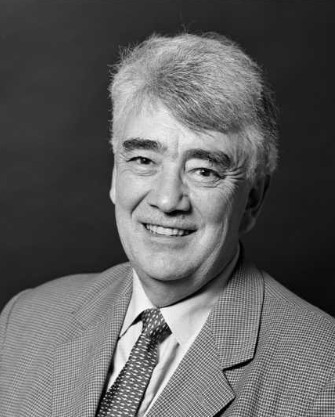
By Jean-Jacques Pluchart On Tuesday, 14 April 2026, a tribute will be paid to the memory of the economist Roger Guesnery, Honorary President of PSE-Paris School of Economics and Professor Emeritus at the Collège de France, holding the Chair in ‘Economic Theory and Social Organisation’. His work contributed to advances in research on the functioning of public services: asymmetric information between the State and citizens, international coordination in the fight against global warming, rational expectations of agents, and the ‘second-best’ equilibrium, among other topics. Roger Guesnery co-founded DELTA (Département et laboratoire d’économie théorique et appliquée – Department and Laboratory of Theoretical and Applied Economics) with François Bourguignon. At the request of François Furet, then President of the EHESS, he was also the first head of the doctoral programme ‘Economic Analysis and Policy’ from 1981 to 1991. He served as Chair of the Board of Governors of the Paris School of Economics, and was a member of the Conseil d’analyse économique (Economic Analysis Council) and of the editorial boards of several renowned professional journals. He was Co-Editor-in-Chief of Econometrica (from 1984 to 1989), President of the European Economic Association (1994), President of the Econometric Society (1996) and President of the Association Française de Sciences Économiques (2003). He was awarded the CNRS Silver Medal (1993) and appointed as an Honorary Foreign Member of the American Economic Association (since 1997) and as a member of the American Academy of Arts and Sciences. The event brought together, in the Daniel Cohen Amphitheatre of the Paris School of Economics, around forty economics researchers, including two Nobel Prize winners and several professors from the Collège de France, the EHESS and the world’s leading universities. The speeches, which were often moving, provided an opportunity to appreciate Roger Guesnery’s human qualities, as well as the vitality of French research in economics – and especially in econometrics – which has already been honoured with five Nobel Prizes. Roger Guesnery’s latest publications Guesnerie R. et Stern R., Deux économistes face aux enjeux climatiques, Paris, Le Pommier, coll. « Essais – Savoirs et débats économiques », 2013, 128 p. Guesnerie R., Pour une politique climatique globale. Blocages et ouvertures, Paris, Éditions Rue d’Ulm, collection du CEPREMAP, 2010. Geoffard P.-Y., Guesnerie R. et Le Grand J., La Santé par quels moyens et à quels prix ?, Paris, PUF, 2010.
Markowitz’s Portfolio Theory
By Philippe Alezard With Wiener, modern finance had found a way to give uncertainty a mathematical form. Brownian motion made it possible to conceive of price fluctuations as the cumulative effect of an infinite number of elementary shocks – random, unpredictable, yet nevertheless capable of being placed within a rigorous probabilistic framework. In other words, uncertainty ceased to be a mere market intuition and became a mathematical object. However, this initial breakthrough did not exhaust the issue. For knowing that prices fluctuate according to a stochastic dynamic does not yet tell us how an investor should behave in the face of this instability. Once uncertainty had been described, the next step was to structure how it was used. It is precisely at this point that Harry Markowitz enters the picture. Whereas Wiener provided finance with the probabilistic grammar of uncertainty, Markowitz developed its decision-making logic. His primary concern was no longer the evolution of a price over time, but rather the selection of a portfolio of assets in a world where the future remains irreducibly uncertain. With him, finance crossed a new threshold of formalisation: it no longer contented itself with modelling market movements, but sought to determine how a rational agent should allocate their capital within these movements. The only son of a Chicago grocery store owner couple, Harry Markowitz was born in Chicago on 24 August 1927. At secondary school, his first interests were physics and philosophy [1]. One of the arguments that particularly impressed him was David Hume’s claim that, even if we drop a ball a thousand times and it falls to the ground each time, we have no necessary proof that it will fall the thousand and first time. In 1947, he enrolled at the University of Chicago to study for a Bachelor of Philosophy degree on the OII (‘Observation, Interpretation and Integration’) programme, but by 1950, he was drawn to the economics of uncertainty. At that time, he was interested in the work of von Neumann [2] and Morgenstern on expected utility, as well as that of Milton Friedman and Leonard Savage on the utility function. Having never taken a single finance course and never bought a single share, he was invited to join the renowned Cowles Commission for Research in Economics [3], an institution that has produced twelve Nobel Prize winners in Economics to date, including Markowitz himself. At the time, its director was Tjalling Koopmans [4], who would go on to win the Nobel Prize in 1975 for his work on the theory of the optimal allocation of resources. Among the lecturers who would teach the young Markowitz were, notably, Milton Friedman and Leonard J. Savage [5]. For the record, it is to the latter that we owe the rediscovery of Louis Bachelier’s thesis, which he had Paul Samuelson read. It was also while reading John Burr Williams’ The Theory of Investment Value [6] that Markowitz came up with the idea for his doctoral thesis topic. As he himself recounts in his autobiography, published on the occasion of his Nobel Prize award, ‘Williams proposed that the value of a share should be equal to the present value of its future dividends. Since future dividends are uncertain, I interpreted Williams’ proposition as meaning that a share should be valued on the basis of its expected future dividends. But if the investor were concerned only with the expected values of securities, he or she would be concerned only with the expected value of the portfolio; and, to maximise the expected value of a portfolio, it would be sufficient to invest in a single security. I knew that this was neither how investors behaved nor how they should behave. Investors diversify because they are as concerned about risk as they are about return.” Markowitz’s insight [7], though seemingly simple, is in fact of considerable significance. Prior to him, financial analysis tended to assess investments primarily on an individual basis, based on their promised returns, their soundness or their reputation. Markowitz radically shifted the focus of the problem by demonstrating that, from the investor’s perspective, the relevant unit is not the individual asset, but the portfolio as a whole. In his seminal article, ‘Portfolio Selection’, published in the March 1952 issue of the Journal of Finance, he proposed representing a portfolio not as the simple sum of several securities, but as an overall structure resulting from their combination. This is because what matters is not only the intrinsic quality of each asset, but the combination of their behaviours, since the risk of a portfolio depends not only on the risk inherent in each security, but also on how these securities vary in relation to one another. The financial decision thus ceases to be a simple matter of selecting good securities and becomes a question of portfolio composition. This shift is decisive, as it reveals that risk itself cannot be considered in a purely individual manner. An asset may be highly volatile when considered in isolation, but it can become fully acceptable within a portfolio if, through its relationships with other assets, it helps to stabilise the whole. Conversely, apparently safe securities, if they all react in the same way to the same events, can collectively generate greater fragility than one might imagine. In this way, Markowitz introduces the idea that financial rationality is not a property of individual instruments, but of the way they are combined. This idea is formulated through the distinction between expected return and risk. According to Markowitz, the investor optimises this return–risk pair at the portfolio level, either by seeking the highest return for a given risk or by seeking the lowest risk for a given return. It thus becomes possible to represent the portfolio using utility functions that depend solely on the expected return, i.e., the mathematical expectation, and on a measure of risk, i.e., variance. In Markowitz’s work, variance derives its legitimacy not from its common use in statistics, but from its economic relevance. It is justified by the
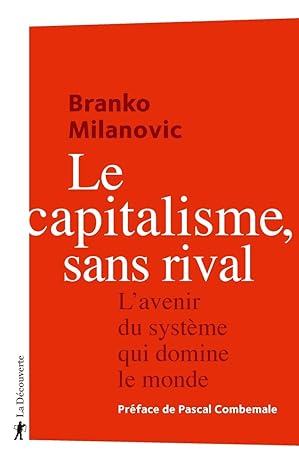
CAPITALISM, ALONE: The Future of the System That Rules the World, Harvard University Press , 2019, 300 pages.
Since his book entitled Global Inequalities, Branko Milanovic has asserted himself as one of the champions of the fight against socio-economic inequalities. He deepens the reflection initiated by Fukuyama on “the end of history”, by trying to show that capitalism now reigns supreme in Europe, the United States and Asia (in an authoritarian form). The capitalist system presents the same three principles in these three areas: production dictated by profit, a mostly salaried workforce, and private capital with rather decentralized governance. However, it distinguishes two forms of capitalism: liberal and meritocratic, authoritarian and state-run. He shows that the spread of capitalism has contributed to raising the average standard of living, but also to widening inequalities, as the share of capital in global income has increased by 4 to 5% at the expense of labor, both in rich and poor countries. The author also analyzes the evolution of forms of work and predicts a development of remote work, and therefore, a decline in population migration. He finally wonders about the alternatives to the current capitalism, concluding that they can only be worse. Notes by Jean-Jacques Pluchart
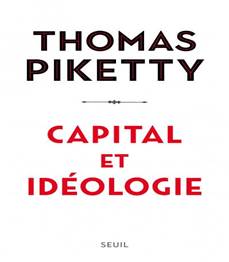
CAPITAL AND IDEOLOGY, Editions du Seuil, 2019, 1024 pages
In his latest monumental book, Thomas Piketty continues his reflection on social inequalities on a global scale, trying to show, contrary to popular belief, that they are not natural but are generated by “conservative ideologies and discourses”. According to him, the legitimacy of these inequalities throughout history is based on simulacra of objectification. He denounces in particular the “proprietary ideology” based on the right of ownership inherited from the French Revolution, which is supposed to guarantee the stability of institutions and avoid “generalized chaos”. He perceives in individual property a “particular form of social domination”. He formulates proposals aimed at eradicating the concentration of wealth and promoting “the circulation of capital”: confiscatory tax on capital of up to 90% of income; universal endowment of capital to each citizen… Opening up a 3rd way between capitalism and collectivism, he finally advocates a development of co-management of companies between shareholders and employees. Thomas Piketty’s previous book (“Capital in the 21st Century”) had been criticized by economists for its methods and sometimes questionable statistical sources. This latest book meets the skepticism of political economists for its sometimes questionable scientific ethics, because the author “is careful not to measure the economic and social consequences of “going beyond private property”. The book raises various questions about the reasons for its success. Is it a provocation to neo-liberal economists? Does it call for the advent of a new crypto-collectivist system? Is it trying to launch a new movement of “French theory” on American campuses? Is it a new encyclopedic curiosity? review by J-J.Pluchart

ANTI-PIKETTY. LONG LIVE CAPITAL IN THE TWENTY-FIRST CENTURY, Jean-Philippe Delsol, Nicolas Lecaussin and Emmanuel Martin (coord.), Librechange Editions, 2015, 380 pages.
A bestseller in economic literature, Thomas Piketty’s book Capital in the 21st Century (sold nearly 2.5 million copies) attempts to demonstrate the fundamental inequality that generates a return on capital higher than the growth rate of the economy (r> g), but it has been the subject of much criticism. French liberal economists – such as Alain Madelin, Henri Lepage and Nicolas Baverez – have challenged the assumptions, reasoning, figures and graphs presented by the author. The collective led by Nicolas Lecaussin and Jean-Philippe Delsol – which includes twenty economists, historians and tax experts, including Daron Acemoglu, Martin Feldstein and James A. Robinson – argues that Thomas Piketty’s thesis is more political than economic. The authors claim that economic and social inequalities have not exploded, but rather have been reduced in several areas (including education and health). They consider that “the rich do not eat the bread of the poor”, but that they give it to them, taking risks and creating millions of jobs. Wealth cannot indefinitely grow faster than economic growth, and excessive taxation does not solve problems but rather exacerbates them. According to the authors, Thomas Piketty’s data seem to be used for essentially ideological purposes. The collective proposes “a reasoned and reasonable argument” opposed to the ideology qualified as “Marxist essence” by Thomas Piketty, by opposing academic criticism and contradictory facts. They recall the main scientific criticisms against “Pikettymania” and denounce its simplistic and populist theses. Jean-Philippe Delsol is a director of the Association for Economic Freedom and Social Progress (ALEPS). Nicolas Lecaussin is the Director of Development at the Institute for Economic and Fiscal Research (IREF).
CAPITAL IN THE TWENTY-FIRST CENTURY, Éditions du Seuil, 2013.
The author observes, like Tocqueville, an increasingly unequal distribution of income from capital and labor. His thesis is based on the hypothesis of a return on capital (consisting of natural resources, infrastructure and public and private facilities, net of debt) always higher than the economic growth rate (covering in particular changes in wages), since the beginning of history, except during periods of war and economic depression (as in the 1930s). The unequal relationship between rentiers and workers should, according to him, grow rapidly in the twenty-first century. This structural inequality (denoted r> g) between the return on capital (including the “top 1%” in the income scale) and the return on labor is a potential source of social conflict and threat to modern capitalism. This gap is mainly explained by the rapid increase in savings of the wealthiest households. Thomas Piketty advocates the introduction of a more progressive tax and the establishment of a new global tax on capital. The publication of Thomas Piketty’s latest book has had a global impact. It was considered by some Anglo-Saxon economists as a turning point in economic thought. This thesis has sparked mixed reactions in all Western countries. The author was notably accused of revisiting the Marxist approach to the “class struggle between bourgeois and proletarians.” The work of Thomas Piketty has been the subject of much criticism of an ideological and methodological nature, summarized in the following book, reviewed by the Turgot Club.