

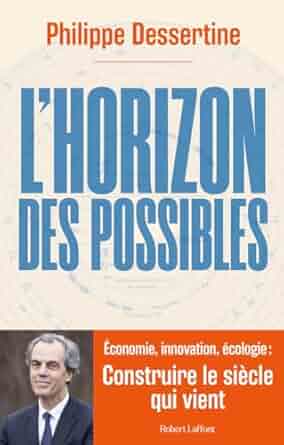
The author’s objective is to highlight the logic linking the successive shocks – of a financial, economic, health and geopolitical nature – that have occurred since the beginning of the century, then to open avenues of progress for the future, advocating, if necessary, a break with the previous industrial or post-industrial model. The author strives to reconcile history and modernity, transversality and depth, culture and creativity. He presents the French as a case study. He believes that they are victims of their fantasized past, but that as heirs of Montaigne and Descartes, they are able to overcome their fear of tomorrow and to show both logical sense, responsiveness, and above all creativity to build their future. The book is organized into nine chapters raising (meta) issues that are both transversal and complex: new economic and social models; the disruption of the old world; immobility and mobility; growth and algorithms; the geopolitics of influence and brains; hyper-innovation and hyper-intelligence; new values and new growth; extra-monetary impact. The book stands out from the conventional academic work of economists, historians, and political scientists. Its writing alternates between concepts and narratives, quotes and contemporary examples. It is part of the narrative economy, illustrated by the work of several Nobel Prize winners in economics, such as Acemoglu, Johnson, and Robinson. It reflects a phenomenological approach to economic and social facts, which have most marked Western enlightened minds. These phenomena are not presented in chronological order or geographical logic, but according to the occurrences of the events that have most marked the consciousness of consumers and producers. This reading of history is served by a style that is both educational and creative, with a sense of the formula – especially based on paradoxes – which is illustrated in particular in the titles of chapters and paragraphs. Philippe Dessertine (professor at the University of Paris I, director of the IHFI and lecturer) delivers in his book a masterful lesson in economics, a message of optimism and a call to the awakening of disillusioned citizens. J-J.Pluchart’s note
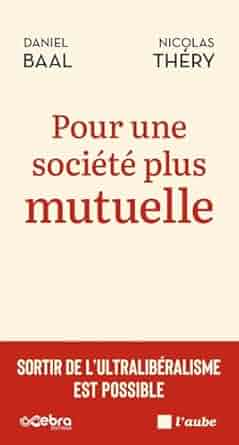
BAAL Daniel, THERY Nicolas. Pour une société plus mutuelle – Sortir de l’ultralibéralisme, L’aube Eds De, 168 pages.
Mutualism is by definition a long-term process, and one could almost praise it for its patience. How can it be the solution to a fragmented society, to the rise of individualism, and where each decision accelerates at the pace of AI, … What remains of the legacy of Raiffeisen, one of the founders of mutualism and its raison d’être of the “Help and Serve” era? This is the subject of the essay written by Daniel Baal and Nicolas Thery, who wish to convince readers that mutualism is anything but out of time and that it has never been more modern in the face of the challenges that lie ahead. Through their experiments as Presidents within Crédit Mutuel Alliance Fédérale, they present their decisions and strategies, particularly since the adoption of the status of a company with a mission in 2020. The essay promotes mutualism through evidence from its stakeholders. Mutualism is only effective if it is nourished by the diversity of its elected representatives and employees around a common vision. It is the commitment of the collective that takes precedence over the interest of the individual, by putting society and its needs at the heart of attention. The authors remain objective, however, because for this mutualism to remain true to its values and ambitions, there is still some way to go to improve the diversity of profiles and the feminization of management and supervisory bodies. “Stairs are cleaned from the top”: the exemplarity imposed by the function is essential to engage all stakeholders. Faced with the consequences of global warming, an interesting parallel is described in the essay between a financial crisis and a climate crisis. The accumulation of speculative wealth or greenhouse gases eventually gives way. Mutualism, by being centered on the needs of its territory, responds to the urgency of environmental and solidarity issues. The authors defend the societal dividend announced in 2023. By allocating 15% of its net income to the benefit of society each year, it wishes to act and support the territories in the ecological transition. Not to mention that Crédit Mutuel, like its 2 competing mutual banks (Crédit Agricole and BPCE), are the first contributors to corporate tax in France and thus to the financing of public services and investments necessary for energy and societal transitions. Coincidentally, this essay is published in the “International Year of Cooperatives 2025” decreed by the UN. One more argument, so that the foundations and values of mutualism must be taken up by all companies in the social and solidarity economy; and all citizens who wish to act “for a more mutual society”. Note by Sophie FRIOT

Anne LAUVERGEON, Un secret si bien gardé, Grasset, 2025,201 pages
A graduate in physical sciences and chief engineer of Mines, she founded Areva and made it the world leader in nuclear power. Today, as head of ALP, she advises companies, governments and entrepreneurs on their strategies. The author, a privileged witness of the French nuclear industry, offers her reading on the “Saga” of nuclear power in France, delivers her diagnosis on the existing situation and finally proposes avenues for reflection for the future. Energy has been the determining factor in the evolution of humanity. It was so with the domestication of fire about 400,000 years ago, wind and solar in the Bronze Age, and then in the late 18th century with coal and hydraulics, joined by oil and gas at the beginning of the modern era. Profound social, political and economic changes accompany each energy transformation. From the end of the 19th century, France, a major consumer of fossil fuels, developed the desire to reduce its dependency by moving towards an energy mix and diversifying its supplies. The wars in the Middle East and the loss of gas and oil fields in Algeria reinforced this orientation, which, from 1974, included a nuclear energy component. The official announcement, in 1974, of a vast nuclear program, subject of a political and trade union consensus, was based on the mastery of a good technology. The announcement allowed the sector to accelerate and, above all, be financed. In the late 1990s, France had five global giants (Total, GDF Suez, Alstom Power, Areva, EDF), in a context of security and global recognition. From the 2000s, this building was challenged by environementalist movements, suffered the European doxa, was deconstructed by a national policy largely influenced by the choices of personalities from most anti-nuclear movements, by the virtual abandonment of hydroelectric energy, by environmental activism, by the growing weight of Germany, a coal subscriber, in European decision-making process. These factors added together explain the downgrading of France in the ranking of the level of payload (Ratio of actual production/theoretical capacity), from over 90% to less than 70%, which relegated it from the top to the last of the 32 countries that have developed nuclear energy. As a result, French electricity, once the cheapest in Europe, has become more expensive with its industrial consequences and the impoverishment of the country, Europe having indexed the KWh on the marginal price of the last KWH produced by natural gas plant ie in Germany… In addition to this observation, there are many French specificities: voluntary limitation of the nuclear energy production from 20 to 80% depending on the efficiency of renewable energies, which would partly explain the erosion of the circuits; a pause time of 100 days every 12 months in France compared to 38 days every 18 months in the United States. This difference is all the more remarkable since the fuel loading in the United States is provided by Framatome. It is necessary to underline the absence of a universal parameter, the payload, referring instead to the TWh taken as a ceiling, corresponding to a maximum payload of 70% whereas elsewhere, the latter is between 93 and 88%! Finally, is the current structure (EDF, RTE, and Enedis) a guarantee of transparency, efficiency, and economy? In conclusion, the author highlights the shortcomings of our industry and the means, without colossal investments, to remedy them by giving back to nuclear and hydraulic energy their preeminence, the urgent need for a policy based on ambitious objectives to halt the decline of our industries and give purchasing power to consumers, communicate to make our decisions understandable, avoid about-turns without impact studies, and finally introduce more professionalism to avoid amateurism in conflicts of national and European interests. A very dense work, documented with a widely developed European part (ECSC, Brussels) which allows us to better understand the underside of Franco-European decisions and the state of France. Anne LAUVERGEON, to whom we owe “The Promise” (Grasset) Note by Hubert ALCARAZ

Landing BLAYE, Les nouveaux défis du panafricanisme, L’Harmattan, l35 pages.
The book exposes the new hopes of African youth, which covers 40% of the continent’s population. It is written by the president of the Pan-African Movement of Leaders (MPL), which is represented in 47 countries in Africa and the African diaspora. The MPL is a political and cultural movement for the emancipation of Africans and African-Americans, respectful of democratic values and open to international cooperation. It was created in 1900 at the London conference by Sylvester Williams and Marcus Garvey. It accompanied the decolonization of African countries, especially after the 1958 referendum on membership in the French Community. It became known through the writings of Senghor, Césaire, and Diop, and the actions of the Black Lives Panthers. The author notes that Africa has experienced many vicissitudes since the post-war period that have compromised its unity despite the creation of the Organization of African Unity (OAU). The governments of the states have divided into two main movements, the “Casablanca bloc”, of rather ideological obedience, and the “Monrovia bloc” of rather economic tendency, which the MPL claims. In 2023, the latter took stock of its (uneven) action since 2013 and set an ambitious “Agenda 2063”. Its project aims primarily to avoid the “African brain drain” and to promote employment on the continent. It advocates the development of youth skills in technologies and the digital and computer economy (AI, robotics, blockchain, etc.), as well as in industries and services oriented towards sustainable development. The “2063 Agenda” includes a financial component. The author proposes to capture – through various financial instruments and financial and fiscal incentives – a fraction of the savings of African households, transfers from the diaspora (about $40 billion per year) and international investments, in order to develop education and the creation of companies (start-ups, platforms, consulting, etc.). The author analyzes AI applications that could be useful to African states in health, agriculture, education, defense, and security. Reading the book helps to shed light on the current debate on wokism and woke culture through concrete proposals, both economic and social in nature. Landing BLAYE is a teacher-researcher in geo-strategy and president of the MPL. He was a parliamentary assistant in Senegal. Note by Jean-Jacques Pluchart

Dominique Foray, Innovations – Une économie pour les temps à venir, La Découverte, mai 2025, 320 pages
“Death Valley”! This is the first notion that appears in a randomly found figure entitled: The life cycle of a start-up. It is all the more striking that the said “valley” does not end up extending over a period that we imagine to be leading to all dangers. This may be an explanation for the fact that, while they have experience, a network, and capital, executives of large groups invest little in start-ups, as shown in a recent study by Forvis Mazars. These are two different worlds (The word “risk” in venture capital is certainly not foreign). Beyond this anecdotal knowledge, we have in our hands a book that does not deny Schumpeter and his creative destruction, but introduces a number of concepts that are sometimes well established (such as positive externalities of all kinds or spillovers) but also less known (such as innovatization) to explain how large programs like Apollo can be great technological successes, but without marked innovation. The difference with SpaceX is that it is centered on innovation driven by a change in value, a reduction in costs, where business opportunities explode. The three parts of the book focus with the microeconomics of innovation, macroeconomic and historical analysis up to the end of the twentieth century. The last part, very ambitious (if we refer to the traditional use of the idea of innovation) has no other purpose than to define an economy capable of “contributing to the solutions of major societal problems”. Incidentally, Dominique Foray, a member of the Swiss Science Council, does not fail to point out how Europe would – according to him – have already lost access to space, despite a Brussels agenda tinged with technological sovereignty and strategic autonomy, as well as his “dissection” of the curious animal that is the CNRS, which is particularly cruel when comparing this noble institution to the Swiss system. Dominique Foray is Professor Emeritus at the Swiss Federal Institute of Technology in Lausanne and a member of the Swiss Science Council. His work focuses on the knowledge economy, the economy and innovation policies. His work on smart specialization has strongly influenced the regional policies of the European Union. Alain BRUNET

Fanny HENRIET , L’Economie peut-elle sauver le climat ? PUF . 2025
This is a very interesting book that succeeds in addressing an essential and complex subject in an educational and simple way to stimulate the reader’s reflection; after recalling the unavoidable nature of reducing the carbon footprint if we want to control climate change, the author demonstrates the complexity of the problem. This includes problems of measuring the actual carbon consumption of a given entity; for example, how to assess the impact of a company’s decisions on the carbon footprint of its subcontractors? Conversely, who should bear the carbon cost or benefit of a change in specifications, at the initiative of a subcontractor? The complexity of the problem also lies in the collection of data necessary to measure carbon consumption, which covers a vast and varied field such as paper consumption and its link with deforestation, business trips by plane, etc. The list would be long if we wanted to be exhaustive. Faced with this complexity, what concrete actions can be taken? Here, too, the author highlights the difficulty of measuring the “ROI” of a given investment in reducing the carbon footprint. An investment in energy transition to electricity can miss its target, if overconsumption leads to the reactivation of coal-fired power plants. Experiments to reduce the energy consumption of a population show, in many cases, an increase in energy consumption, contrary to the desired objective. The explanation is that the gains in energy efficiency can be offset by an increase in consumption, with prices remaining stable. The author’s general conclusion is that the battle will not be won by isolated actions within “small” nations and that it requires a multitude of actions framed in a global geopolitical scheme leading to a thorough review of business models, behaviors, and habits. Note by Denis MOLHO

DAGORRET Guillaume et DE VESINNE-LARÜE Thibault. L’esprit ludique du capitalisme, CLIMATS, 216 pages
In this book, Guillaume DAGORRET Guillaume and Thibault DE VESINNE-LARÜE tackle the foundations of capitalism and its future. The essay approaches the subject from a highly original angle, through games, and specifically through video games. In a playful way, the authors invite us to reflect deeply on the question: does capitalism still have a future, and can it meet the economic, environmental and social challenges of the 21st century? In order to understand the link between video games and capitalism, the authors look at the definition of games, what makes them successful and what makes them addictive. What defines the game is the conjunction of the “core” and the “meta”, notions that will be the common thread running through the entire essay. Core” refers to a set of elementary actions that a player repeats over and over again. It is essentially an iterative loop of simple actions. The “Meta” refers to the incentive system that drives the player to repeat the basic actions of the “Core” over and over again. Once the debate is over, opposing visions collide. For some, capitalism cannot be a game; in the sense that it is not entertainment, free choice or outside reality. For capitalism to be a game, it must satisfy the “core” and “meta” formula. In a capitalist world, economic players exchange goods and services between themselves. For several decades now, productivity gains have been slowing down in developed countries due to the evolution of economies: they are more difficult to achieve in the service sector, innovation is lagging behind, household consumption is also at half-mast, the ageing of the population raises questions about the financing of social services, etc…. In line with these observations, capitalism could collapse as a result of social inequalities or global warming: “capitalism is dying from a lack of growth, not an excess of growth”. The authors then propose 3 possible scenarios for the future of capitalism: 1- Capitalism could regain its former vitality thanks to dynamic, sustainable growth. Hopes are pinned, for example, on the development of AI. Productivity gains could match those generated in previous industrial revolutions: by automating complex, repetitive tasks and speeding up decision-making. 2- The rebirth of the old games: in this section, the authors associate war with a game. This parallel may seem far-fetched, but on closer examination they demonstrate that war respects the rules of the game: the “core” is the repetition of human and material destruction; the “meta” is the conquest of territories. 3- The emergence of new games, such as the fame game, with the development of social networks: this means repeatedly posting photos, videos, etc., with the aim of getting more and more “likes”. This accumulation has become the “new gross domestic product” of influencers. This essay is an invitation to take a fresh look at capitalism, through the metaphor of the “game”. Readers will be able to form their own opinion: what is obvious and natural for some, can also be absurd and senseless for others. Guillaume DAGORRET is a graduate of HEC Paris, where he teaches. He is Project Director in an international consulting firm. Thibault de Vésinne-Larüe is vice-president and head of game production at Voodoo, world leader in the mobile video game industry. He is a graduate of Centrale Paris. by Sophie Friot

Philippe MARCHESIN, Coopération internationale et enjeux du développement en Afrique, L’Harmattan, 2025,, 217 pages.
The book deals with a topical issue due to the questioning of development aid initiated by the United States and the reorientation of the French policy of cooperation and development aid. The author has mainly tried to objectively analyze the strengths and weaknesses of the development aid policy. The author declines this problem in its multiple dimensions, historical, economic, cultural, geopolitical, and philosophical. It shows in particular that it responds to the principles of “donation -against donation” theorized by Marcel Mauss. Development aid for developing and emerging countries covers various actions that meet the 3D principles (Diplomacy, Defense, Development). It comes in the form of donations, loans to states and companies in the countries that issue and benefit from industrial projects, infrastructure and services, including health and cultural services, teaching and research missions (especially related to the Francophonie), but also the protection of nationals, the reception of migrants, military interventions, etc. France’s policy has evolved a lot since 1945, depending on diplomatic relations with the countries of the French Community and then with all the countries of the global South. It was first devoted to the establishment of institutions (on the French model), basic industrial equipment (accompanied by “national champions”) and infrastructure in the former colonies, then gradually oriented towards multilateral projects in favor of emerging economies, including China, Turkey, Brazil, etc. The share of donations has been reduced in favor of subsidized loans that now cover more than 80% of aid. The “Françafrique” system set up by Jacques Foccart, under the presidencies of General de Gaulle and Georges Pompidou, has been replaced by various forms of cooperation and partnership: “aid-sanction”, “aid-blackmail”, but above all, “aid-compensation”, with counterparts in the form of access to natural and/or food resources, but also votes in the UN and the WTO. France, like most other industrial states, has sought to establish “win-win” relationships with the beneficiary countries, based on acceptable return on investment times. The French budget for cooperation has varied according to the political parties in power, to settle on average at 1% of GDP (excluding overseas departments and territories). The “evaporation rate” of aid (for the benefit of local elites and consulting firms) fluctuated between 40% and… 100%. The implementation of the projects has mobilized a growing number of actors: heads of state (cooperation is a reserved presidential domain), ministries of cooperation, foreign affairs, economy, industry, cultural affairs, the French Development Agency, COFACE, large companies, engineering firms, banks, NGOs, etc. Their coordination was mainly provided by former students of the National School of France Overseas, then the ENA and the INSP. The book is well structured, documented, and written. It is enriched with case studies and dialogues (sometimes tragicomic) between heads of state. Reading it allows us to better understand the decline of France’s influence in Africa, invested by diplomats, commercial advisers and/or the armies of the United States, Russia, China, and India. It indirectly allows a better understanding of the facade strategy adopted by the new American presidency. Philippe MARCHESIN is a teacher – researcher at the University of Paris I and author of numerous books and articles on international cooperation. Note by J-J. Pluchart

European industrial policies relaunched by the American isolationist shift
Jean-Jacques Pluchart By favoring competition, the Council and the Commission of the European Union have not engaged in a real industrial strategy in most sectors of activity, and in particular in those of production and electric mobility. This gap is revealed in particular by the new industrial ambitions displayed in these areas by the United States and China. The policy of technological neutrality applied by the 27 EU governments highlights their differences on the fundamental subject of the industrial competitiveness of the Old Continent. EU leaders have set mainly environmental objectives in certain sectors, without adequate regulation and financing. Thus, from 2020, the desired sharp reduction in CO₂ emissions has forced manufacturers to urgently convert to electric mobility, without sufficient mastery of technologies (particularly hybrids), sources of supply (batteries), recharging infrastructures, dedicated financing, accounting frameworks and training channels. In the absence of concerted directives, European car manufacturers have favored the production of high-end electric vehicles with very mixed success, while Chinese manufacturers have embarked on the mass production of small electric vehicles. It seems that the Parliament lacks industrial culture and the European Commission lacks experts capable of controlling the manufacturers’ lobbies. The “Draghi report”, made public in September 2024, denounced the European deficit of competitiveness over the United States and China in several key industrial sectors. The report recommends stimulating innovation, particularly in the field of artificial intelligence. It estimates the cumulative investment to be made over 10 years at €800 billion… the same amount as that allocated to defence by the “Rearm plan”. The “Draghi report” also proposed the launch of a joint plan for the decarbonization of industrial activities, security of supply and a reduction in Europe’s dependence on critical resources. The report extends its recommendations in particular to the hydrogen, space launchers and micro-nuclear sectors. It appeals to Europeans’ economic patriotism and urges them to overcome their divisions in the face of the pooling of sensitive resources, the orientation of investments and the taking of protectionist measures (in particular through ecological standards). But there are still some weak signals. Directly confronted with Chinese competition in the automotive sector, Germany has recently questioned its dogma of budgetary austerity, and has shown its willingness to build a sector dedicated to electric mobility. France anticipated this movement by committing in October 2021 to its “France 2030” plan, the objective of which is to strengthen the country’s industrial and technological sovereignty. With an investment envelope of €54 billion (half of which is dedicated to SMEs), this plan sets 10 objectives and activates 6 levers to support the transformation of the French economy, focusing on sectors of the future such as digital, hydrogen, batteries, space, health and decarbonisation. 14 of the 16 indicators are in line with the set trajectory. By the end of 2024, funding has supported 7,457 projects, 6,103 patent applications, and mobilized 196,824 jobs, including 156,009 jobs after project implementation, demonstrating their lasting impact. Several results have been made public in terms of GHG emissions, bio-drugs, new modes of transport, the electronics industry, robotics, new materials, quantum computers, hydrogen development and training in new technologies. The “France 2030” plan also aims to ensure the emergence, industrialization and growth of start-ups. More than €7 billion in aid has been allocated to support 925 projects and finance 130 venture capital funds by early 2025. However, as in most other European countries, the continued implementation of this plan involves harmonizing and simplifying the regulatory, financial and tax frameworks. Will Europe seize the opportunity offered by the global geopolitical reconfiguration initiated by the United States? The European Union has long favored a policy of competition rather than a real industrial strategy, which has left continental manufacturers relatively unarmed in the face of competitors benefiting from stronger state support. The difficulties of the electric transition, political hesitations, the lack of clarity of European directives and the need to develop a strong European industrial sector, including battery production, are the challenges ahead for the European electric mobility industry. Moreover, this is in an immediate context of great uncertainty related to recent announcements by President Trump. If Europe has in the past and until very recently refused to assume a strategic role to guide the development of a competitive industrial sector along the entire value chain of electric vehicles, as is happening in Asia and the United States, the situation may be changing. Especially under the German impulse. Bernard Julien is a lecturer in economics at the University of Bordeaux. Director of the Permanent Study and Research on the Industry and the Employees of the Automobile (Gerpisa) until 2015, he then founded a research firm, FERIA, dedicated to training, research and studies on the automotive industry. He explained to Techniques de l’Ingénieur the difficulty for Europe to assume a real industrial policy in the automotive field, and how this state of affairs could evolve with the current period. Techniques de l’Ingénieur: Can we really talk about a European industrial policy in the automotive sector? Bernard Julien: Not really. Historically, Europe has never implemented an explicit industrial policy for the automobile. More generally, Europe has never even implemented an industrial policy worthy of the name. Brussels has instead relied on a liberal vision, in the sense that the European institutions have allowed both competition to take its course between large European firms, and the industrialists themselves to decide their technological orientations.
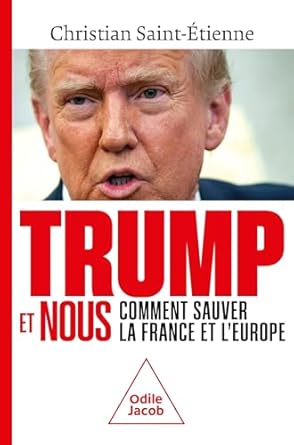
Christian Saint-Etienne, Trump et Nous, comment sauver la France et l’Europe, Eds Odile Jacob, 211 pages.
Is a new world order being created? China and Russia want to de-dollarize the world, the race for economic, military, and financial supremacy is open. Since the re-election of Donald Trump, the United States does not really seem to want to build alliances with democratic countries. The 47th President initiated his new mandate with a declaration of commercial war, ending 70 years of multilateralism. On April 2, during his announcement on “Liberation Day”, Trump locked the United States in a customs citadel. Faced with this upheaval in the hierarchy of nations, Europe seems to be in dire straits. It has failed to enter the digital world and is lagging behind in processors, it faces productivity problems, it is over-regulated with constrained funding, and is in a delicate geostrategic situation. The Draghi report made a scathing observation of all the shortcomings of this European bureaucratic world. For the author, Europe has become “a bureaucratic machine powerless against the United States, China, and Russia”, governed by regulations and prohibitions rather than by a clear strategic vision. While this Europe, which made economic, social, and moral progress possible in the 17th and 18th centuries through the competition of useful knowledge, has many assets. To do this, it will be necessary to review the role and missions of the European Commission, which were established in another world 7 decades ago. An entrepreneurial and decentralized approach must be adopted, fostering innovation. It must have a real capacity to control imports, an obligation to act in the service of European sovereignty, simplify bureaucratic procedures, encourage the development of AI, promote research infrastructures, and relaunch industry while maintaining the decarbonization trajectory by boosting its productivity. But can we entrust the Brussels bureaucracy with the mission of de-bureaucratizing? The answer is obviously no, we must develop agencies such as DARPA or BARDA, which are at the origin of major innovations in the United States, within an intergovernmental European alliance for research and technology. The European Union must focus on three objectives: building an integrated market with reciprocal openness and therefore closure with our trading partners, enforcing the foundations of liberal democracy, and promoting sustainable growth. At the same time, we must create a cooperative of nations with a qualified majority, built on the principle of strategic power and not bureaucracy, which will be in charge of industry, defense, research, and innovation. This core would be the third world power, contributing to international geostrategic stabilization. Christian Saint-Etienne, est universitaire ayant enseigné à Science Po, Dauphine et au CNAM Philippe Alezard