


“The 20th century was the century of abundance. The 21st will be one of limits.” We frequently discuss energy transition, relocalization and sobriety, but partly as if they were simple options. The author leads us to see that these are no longer options, but realities. This book makes this perfectly clear, and not by hyperbole or by trying to scare the reader. It’s not a doomsday story, nor is it about eternal progress. It simply welcomes the fact that we’ve reached the limits. Scarcity is no longer the exception and is now becoming the norm. Oil is at the heart of his analysis. He reminds us of a little-known fact: Energy Returned on Energy Invested (EROEI). From 100:1 at the beginning of the twentieth century, it now stands at 11:1, a figure that threatens our entire equilibrium. Nothing can be done without abundant, cheap energy. Electricity is not a silver bullet, just a vector. It’s a means of transporting energy. The author also mentions minerals and raw materials. We depend disproportionately on scarce resources, often from unstable countries. We use them for everything: telephones, batteries, infrastructure. But if one link breaks, we have no plan B. Freight transport is under pressure worldwide. It has a very low profit margin. One small thing can paralyze an entire production operation. Even industrial agriculture depends on it: fertilizers, machinery, transport… in reality, nothing is autonomous. It’s a system we’ve built ourselves. Over-specialization, globalization and the cult of efficiency have left us unable to cope when things go wrong. We’ve pursued efficiency and forgotten resilience. Renaud Duterme links this to the economic logic handed down by Ricardo and the rise of neoliberalism. The issue is not just technological; it’s a political vision. In the final section, he is less alarmist, but just as serious. He says we’re going to suffer shortages, and the question is really this: do we want to suffer them or be prepared for them? It’s not a question of stopping everything or going backwards. It’s an invitation to reconsider what we make, why and for whom. Relocate where it really counts. To overcome this system of unlimited growth and recognize that this century will have limits – physical and environmental, as well as social. In other words, this is not a technical manual or a political tract. It’s a clear, honest text. It confronts us with reality. It doesn’t try to scare us; it tries to convince us, by giving us the facts, and it succeeds. It’s a book to read not so much for what you can learn from it, but for what you can prepare yourself for. Because, in the future, it won’t just be a question of technologies, but of choices, compromises and even collective thinking. Renaud Duterme holds a degree in development sciences from the Université Libre de Bruxelles, where he also teaches geography. Attentive to questions of inequality and ecology, he is the author of De quoi l’effondrement est-il le nom? (2016, foreword by Pablo Servigne), Petit manuel pour une géographie de combat (2020) and Nos mythologies écologiques (2021). Florence Anglès

Jean-Charles GALLI et Alexandre STACHTCENKO, Bitcoin, Le choc géopolitique, Armand Colin, 2025, 250 pages.
The book raises useful questions about the development of bitcoin, which was designed in 2009 by Satoshe Nakamoto and relaunched in 2025 by the new American presidency. Bitcoin is both a cryptographic asset and an alternative currency under shadow banking. It performs the three functions of an official currency: unit of account, transaction vector, and store of value. The bitcoin system is decentralized and self-managed. It exploits blockchain technology, based on the encapsulation of transactions in blocks whose digital footprint (the hash) in the form of complex probabilistic equations, is verified by mining farms (Proof of Work).The control of the system – which is increasingly used by states, administrations, businesses, and households – now presents strategic challenges for governments, central banks, and commercial banks. Transactions financed by bitcoins are subject to regulation by the Financial Stability Board, the Basel Committee, the Bank for International Settlements, the Financial Action Task Force, at the international level, and the MICA regulation, within the framework of the European Union. Despite this increasingly restrictive framework, since the failure of Facebook’s libra, bitcoin continues to raise questions and concerns among monetary institutions, financial institutions, and the general public. Bitcoin also raises ecological problems, being a consumer of electricity and contributing to global warming.The authors of the book expose the dilemmas faced by governments, some of which (Salvador, Nigeria) have adopted it as an official currency, others (like China) have banned it, and most tolerate its use under certain conditions. The European Central Bank has relegated it to the rank of “pseudo-currency”. It seems that bitcoin is now considered a “safe haven” (the “bitcoin-gold”), a way to circumvent international sanctions (for Russia), an alternative to the dollar (for the BRICS), or “a digital value reserve”.Reading the book requires sustained attention because of its conceptual and technical nature, but it contributes to a better understanding of the strengths and weaknesses of the current international monetary system.Jean-Charles Galli is a teacher-researcher and advisor to start-ups. Alexandre Stachtcenko is a strategy director at Paymium. Jean-Jacques Pluchart

Agnès VERDIER-MOLINIE, Face au Mur, Editions de l’Observatoire, 193 pages, 2025
This well-documented book deals with a highly topical issue for the current economic situation in France. Indeed, it offers many quantified solutions to overcome 5 problematic issues: the walls of debt, deindustrialization, standards, welfare, and insecurity.After a diagnosis of the level of France’s deficit, Ms. Verdier-Molinié immediately confronts us with the significant risks of a drift in the deficit and therefore of the debt, which already exceeds 3,300 billion euros. The discrediting of France for the non-control of its deficit could harm its ability to finance this debt and could even lead to the takeover of public finances by the International Monetary Fund as happened in Greece.To find a positive trajectory and save 110 billion euros by 2029, Ms. Verdier Molinié shares a dozen extremely concrete solutions on each of the 5 themes mentioned above.To reduce the debt, immediate common sense measures are centered around the reduction of public spending through their increased efficiency as well as the elimination of duplicates. A reform of unemployment insurance, as well as a new reform of pensions and the health system, are clearly described as priorities.To get out of the deindustrialization that has largely begun, we find a recommendation strongly pushed by companies in recent years on the reduction of production taxes, which weigh nearly 20 billion euros per year, to improve competitiveness, as well as to take advantage of the significant benefit through abundant and cheap electrical and nuclear energy. She also proposes to severely limit environmental standards, which is obviously less of a consensus in the current context of CSR.Ms. Verdier Molinié also draws up a damning assessment of the Standards often resulting from entry into Europe, which constitute a very significant competitive disadvantage compared to some of our American or Chinese competitors in particular. She proposes to make a diagnosis of the administrative burden on companies, knowing that the already existing indices show a doubling of these standards for companies in recent years, and particularly heavy for SMEs. The recommended solutions are quite classic in style: a standard created, a standard deleted, but also to constitute indices for monitoring normative complexity.The subject of the Assistantship, known to all but rarely quantified, is the subject of an interesting analysis (number of hours actually worked, number of strike days, facial gratuity because there is always a payer behind, consumer or taxpayer). She also insists on the rehabilitation of the value of Work (training to be carried out) and takes a firm position on immigration, which can only be granted in exchange for work.The subject of Insecurity is also documented because Ms. Verdier Molinié, rather expected on the economic subject, makes an assessment of its impact. She tries to quantify the cost of riots and the recidivism of offenders, for example. The proposals she makes range from the effective execution of sentences to the construction of prisons and also, in general, to the cessation of social rights for offenders.This book contains many proposals, sometimes consensual, sometimes less so, with a priority given to the economy and therefore to the treatment of the debt wall and public finances. She believes that political and non-ecological measures are necessary to get out of the current situation by 2029.But often in France, it is not because we have a clear vision of the measures to be taken that the human and political context are now united to put them in place. But this book can be a “building block” for the construction of the future. Agnès VERDIER-MOLINIE is Director of the IFRAP Foundation, a THINK Tank that evaluates public policies. Olivier STEPHAN
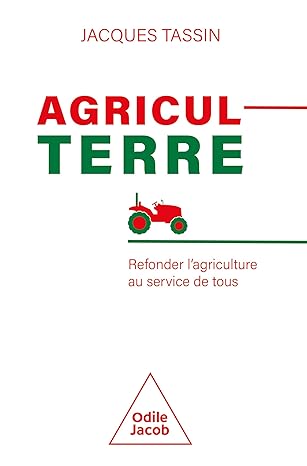
Jacques TASSIN, AgriculTerre Refonder l’agriculture au service de tous, Eds Odile Jacob, 220 pages.
In the definition formulated by César-Pierre Richelet, author in 1680 of the first French dictionary, agriculture means “the art of cultivating the land”. But the word agriculture is a kind of linguistic laziness and “suffers from the use of the third person singular” as the author points out because agriculture is a composite emanation of social complexities.Meat drying techniques, seed conservation, and the rise of storage contributed to the sedentarization of hunter-gatherers. This sedentarization freed the hands and minds, favoring other forms of production of goods, especially with the birth of crafts. Agriculture has gone from a relationship with the animist world, part of the continuity of life, to a world in which nature and humans have separated. Agriculture and nature become shaped by man. This is the first major transition, the Neolithic mutation.The second transition will appear with the eighteenth century and will take a decisive turn with the discovery of the great oil fields in Texas. The industrial revolution and extractive productivism provided agriculture with new, extremely powerful means of production, agrochemicals, and motorization.This new era, the Anthropocene, with agricultural intensification, indebtedness, soil de-fertilization, atmospheric pollution, and pesticide pollution has led to a collapse of biodiversity. Certainly, this collapse is multifactorial and its constituents are very difficult to isolate from each other. Nevertheless, it is clear that a reduction in pesticide consumption is possible without affecting yield. This reduction in pesticides can only be done with an intensification of the agricultural workforce and plant association rather than monoculture.We must revive symbiosis, this is the author’s proposal: agroecology.Since the recent discovery of the holobiont, we know that the massive use of inputs weakens the microbiota of the earth. This will not only involve new agricultural practices but also a change in our eating habits, first and foremost, our meat consumption. It will also be necessary to restore coherence and networking between territories, rebalance decision-making powers towards more local scales, and finally, reinstate the sharing of water resources.The indispensable restoration of the agricultural community will pass through its politicization. Ecology, initially based on this restoration, has gone astray. It has become a forum for discourse overlooking realities, highly publicized, which contributes to the radicalization of positions. Agroecology must not follow the same path of protest and demand. It must be accompanied by the public authorities. It must convince of this humanistic and ecological transformation, to influence the course of the world but without shaking it.Jacques Tassin is an agronomist and ecologist at CIRAD (Center for International Cooperation in Agronomic Research for Development) and a corresponding member of the French Academy of Agriculture. Ph Alezard

Amadou Sarr DIOP, Repenser les savoirs sur les conflits en Afrique , Eds L’Harmattan , 2025, 226 pages.
The author engages in a critical and ambitious re-reading – or rather a “deconstruction” in the sense of Derrida and Elias – of the main discourses and narratives devoted to ethnic conflicts in Africa since the 1960s. He challenges both the concepts and the logic that he considers too anchored in the Western epistemology inherited from the colonization of African countries by European countries. He shows the complexity and diversity of the crises and wars that have opposed the countries, regions, and ethnic groups of Africa. He places them in their historical, social, and geopolitical contexts. He reveals some unknown distant origins. Economically, it reveals the importance of the struggles between governments (rarely democratic) but especially between local elites for the appropriation of rents from the exploitation of natural resources. He attributes responsibility for certain crises to Western (less and less European) and Asian (more and more Chinese) multinational groups. The main originality of the work lies in the scientific approach of the author, who strives to free himself from Western methodological protocols, based in particular on the principles and paradigms laid down by Karl Popper and Thomas Kuhn. He argues that these are not universal and timeless, but that they are specific to each civilization. It is therefore necessary to integrate regional particularities and post-colonial contingencies in the scientific approaches applied to African economic and social facts. He proposes to deconstruct their representations by multidisciplinary methodologies dominated by anthropology and combining philosophical, sociological, and economic approaches. Amadou Sarr Diop was particularly influenced by the work of sociologist Georges Balandier, a French university professor, who was director of several African studies centers and the author of the book Ambiguous Africa (1957). Georges Balandier is the initiator of the concept of “detour” by which it is necessary to “decolonize knowledge”. Amadou Sarr Diop, associate professor at the Cheikh Anta Diop University of Dakar, is director of the laboratory of the Interdisciplinary Research Group on Education and Knowledge attached to the ET.HO.S Doctoral School (Studies on Man and Society). He has published several books on the theme of Africa’s development. Jean-Jacques PLUCHART

Edouard DOLLEY, Vers une finance durable, Eds A.Franel, 2025, 312 pages.
This collective work deals with a subject currently much debated among researchers and practitioners, focusing on the adaptation of finance to ESG (Environmental, Social, and Governance) principles. It presents a scholarly and original construction in four parts and 16 chapters, in which the authors alternate interviews with recognized experts, answers to questions, and avenues for progress. It skillfully combines theoretical developments and practical considerations. The first part recalls the fundamental concepts of finance – the notions of time and interest, yield and profitability, risk, extra-financial value – and it shows how to adapt them to the constraints imposed by the protection of the environment, social protection, and better governance. The second part is devoted to microfinance. It covers the analysis of margins (“the scissor effect”), the break-even point, the internal rates of return and profitability required by shareholders, the valuation of the company and its buyback. The third part deals with macro-finance and deals with market law, portfolio management, arbitrage, options and derivatives, crypto-assets and blockchain. The last part presents CARE environmental accounting. The answers to the questions are both nuanced and documented. They show the extent of the adaptations already made by the scientific community and by professional circles, as well as the progress still to be made in order to find a relative consensus on these practices and on these concepts. Reflections on the profitability of projects and companies, discount rates, valuation methods, portfolio management and arbitration, as well as the contributions of crypto-assets, are particularly illuminating. The author-coordinator (telecom engineer) is a financial analyst in the telecommunications sector. Jean-Jacques Pluchart
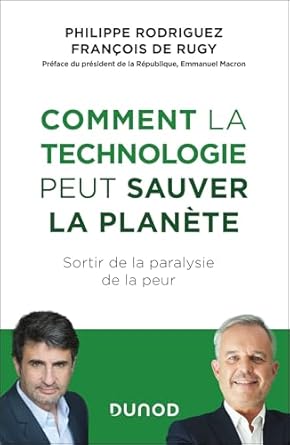
Philippe RODRIGUEZ & François de RUGY, Comment la technologie peut sauver la Planète, Dunod, 180 pages, 2025
After a very catchy title and a preface by the President of the Republic, the authors want to demonstrate that France can play a leading role in the development of energy solutions, allowing it to play its part in its future development. In the first part, the authors study the energy sources that can enable an energy transition: solar, wind, and hydrogen. The issues of storage and digital technology to streamline their production and use are also studied. In the second part, the authors make a documented inventory of the main sources of energy worldwide and their recent dynamics, largely dominated by oil, gas and coal. They deplore the scluding shale gas in the United States. The part on rare earths is particularly interesting and less known. The distribution of control and processing, as well as the recycling of the 17 elements, is fascinating. It also includes an analysis of the sovereignty associated with these rare earths. The third part focuses on France. The authors emphasize in particular the strong part of virtuous nuclear power in terms of ecological transition but also independence. They return in particular to the recent French turnaround towards nuclear power after a period of strong ecological trends. Nuclear power is also an area in which France probably has technological advantages. The authors consider that a change in the relationship to the energy of citizens can combine growth and sobriety. Many companies voluntarily participate in this change. Politicians and citizens must also do more and with consistency in change. Generally in the fourth part, the authors insist on the need to accelerate the change of uses in the face of climate emergency. They note that France is lagging behind on investments in this area, whether by the public or too many individual initiatives of companies, but also by an insufficient tax incentive for the use of French savings. In the last part, the authors present 8 ways to succeed in this energy transformation, relatively generic and political, which probably deserve a precise action plan for each stakeholder (politicians, companies, citizens) and probably on a European scale to fight against the two world leaders, the United States and China. Philippe RODRIGUEZ has experience as an Entrepreneur and François de RUGY was, in particular, Minister of Energy Transition. Olivier Stephan
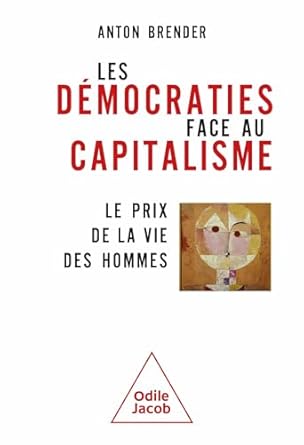
Anton Brender, Les démocraties face au capitalisme, Eds Odile Jacob, 175 pages.
Capitalism, through entrepreneurial innovation, has played a crucial role in social progress for two centuries. Mass-produced goods and services have contributed to the constant improvement of our living conditions. Societies have used the productive efficiency of capitalism to impose the direction in which they wanted to move forward. The law has strengthened the bargaining power of employees so that the relationship with the employer is no longer solely in the commercial framework. Democracies have forced capitalism to be a driving force of progress. The development of a non-market sphere was made possible by capitalism. The increase in the productivity of those it employs has made it possible to meet the needs of those it does not employ: teachers, judges, police, nurses, etc. It is up to society to decide how its state is organized and it is up to democracy to be concerned with the effectiveness of this state. The forces implemented have acted differently from one country to another. In the United States, where capitalism is largely left to itself, the state strives to stabilize full employment, to maintain and increase wages, through its monetary policy. Europe, for its part, favors social transfers and employment aid, even if it means supporting unemployment, for the maintenance and increase of wages. Russia and China, while relying on capitalism, have abandoned the democratic model such as ours and have begun a return to imperialism. At the end of the 19th and 20th centuries, the merchant exchange and its corollary, the circulation of money, will create two waves of globalization. The first will result in an unprecedented migration from the least industrialized countries, Sweden, Spain, Italy, Portugal, Poland, Ireland to the most industrialized countries, France, England, Germany, Belgium, and the United States. The second will see a migration, not of people, but of factories and capital to “low-wage” countries. The contrast between these two globalizations is total. In the first wave, capitalism remained national, whereas in the second wave, it became globalized, through the emergence of low-cost countries, creating waves of layoffs in the relocating countries, as well as interdependencies that could become sources of threat. The rise of inequalities of all kinds, climate change, threats to civil peace, compromise the functioning of democracies. The sustainability of Western social models is at stake. These models are based on the majority support of the population, unlike China and Russia, which can use repression to ensure their stability. The challenge of democracies to regain social cohesion is colossal. The State must become a strategist again, consolidate its integration capacities, and for this, redefine its educational system, its health, police, and justice systems, but also rethink development aid to curb migratory pressure. Democracy and capitalism are not two sides of the same coin. China has shown us this. Capitalism has generated a tremendous amount of savings. Governments must now use it to “rebuild the base of solidarity that is the foundation of democratic societies”. Anton Brender is an economist at Candriam and an honorary associate professor at Paris Dauphine. He was Director of CEPII (Center for Prospective Studies and International Information). Ph Alezard

David Lisnard, Ainsi va la France : Manifeste libéral, L’Observatoire, 432 pages
The author signs with Ainsi va la France: Manifeste libéral an incisive diagnosis of the ills that paralyze France. Carried by a lively pen, with sometimes pamphleteering accents, tempered by the clinical and concrete analysis of a local practitioner, he traces a clear path to avert this decline. Beginning his demonstration by focusing on “seeing what we see”, as Péguy wrote, the author draws a twilight observation. France, once a beacon of the Enlightenment, is withering under a centralized, hypertrophied state, captive to an out-of-control debt. Its republican universalism is buckling under the blows of a separatist communitarianism, fueled by mass immigration. The nation fails to guarantee the absolute rights of the social pact: public order, the sister of freedom, is undermined by a criminal policy deemed complacent; public education is lost in wokism, to the detriment of basic learning; entrepreneurship is asphyxiated by hypernormativity and crushing production taxes; the competitiveness of agriculture and industries is hampered by punitive technocratic environmentalism, erratic energy policy and Kafkaesque administration. Having made this observation, the author sets out to draw up a recovery plan for the country. He calls for the modernization of the state through bold decentralization, based on subsidiarity, where mayors, artisans of reality, become levers of innovation. An implacable fight against delinquency and Islamism with a return to assimilationism is advocated. He calls for the revitalization of culture and education to reconnect with universal values, an antidote to identity tensions. He pleads for a civic leap, which requires reforms to save the social pact weakened by a health system in crisis, a declining demography and a school collapse: partial capitalization of pensions, overhaul of unemployment insurance, natalist policy, and a school refocused on fundamental knowledge, in opposition to wokism and racialism, scourges of a “decivilization” that the author fights with obstinacy. He encourages an ecological market economy, with nuclear power, an essentially carbon-free energy, as a strategic pivot, and sustainable and competitive agriculture, freed from absurd regulatory rigidities. He advocates an industrial reconquest in the automotive, space and AI sectors, made possible by a reduction in public spending and a massive reduction in production taxes. His manifesto continues with a partisan analysis of the 2024 European elections, marked by the rise of the National Rally and the resilience of the Republican right led by François-Xavier Bellamy, which led the President of the Republic to dissolve the National Assembly. However, in a France often resistant to change, if his observation is shared by the majority of commentators and public opinion, his vision, radical in the etymological sense, could come up against the administrative technostructure and intermediary bodies, with unions at the forefront. We are then entitled to question the improbable adherence to this ambitious project by a high administration whose ethics of conviction risks crumbling in the face of the demands of the ethics of responsibility dear to Max Weber. David Lisnard, born in 1969 in Limoges and a graduate of Sciences Po Bordeaux, is a French politician and member of the Republicans. Founder of the Nouvelle Énergie movement and mayor of Cannes since 2014, he has been president of the Association of Mayors of France since 2021. Yoann Lopez

Yannick COULON, Finance comportementale et gestion du patrimoine. Guide de la finance comportementale à l’usage des professionnels du patrimoine, Eds Arnaud Franel, 2025, 169 pages.
The author answers questions shared by the French in need of investment of their savings in an uncertain financial market, but also by their banking or independent advisers, faced with the development of Artificial Intelligence. His latest book focuses on behavioral finance, which introduces the psychology of actors in financial decisions, and wealth management, which has become difficult due to the diversification of types of transactions and financial products. He recalls the fundamentals of classical finance, based on the rationality of investors, on the notion of fundamental value, and on the principle of market efficiency (defended by Fama), then he poses the hypotheses of behavioral finance, based on the (relative) irrationality of the actors, the notion of market value, and the sub-efficiency of the market (supported by Minsky and Thaler). After explaining the main models of classical and behavioral finance, Yannick Coulon analyzes at length, after Tversky and Kahneman, the multiple psychological biases – perceptual, cognitive, and emotional – as well as collective, which affect the arbitrations of investors and their advisers. He demonstrates the value of active and passive portfolio management. He shows the limits of AI management and graphical analysis. He recalls the regulatory framework for financial investments (MIFID 1 and 2) and real estate. The book is accompanied by quotes, diagrams, tests, and illuminating examples. The reader will regret that it does not sufficiently explore the issues related to structured products and crypto-assets. The author has a long experience as a banker and is currently a professor in a management school. Jean-Jacques Pluchart