

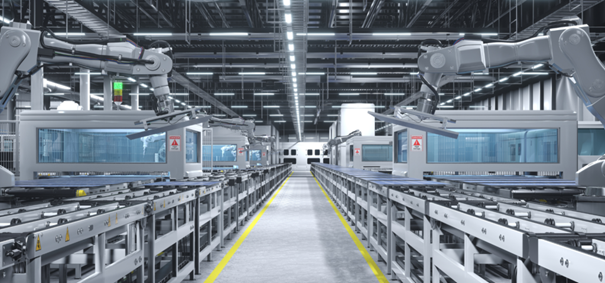
Jean-Jacques Pluchart The digital transformation of the industry involves mobilizing innovative artificial intelligence techniques. These techniques use the Internet of Things (IoT), cloud computing, data exchange, prescriptive analysis, new business models, etc. They apply advanced methods to manage data flows from heterogeneous systems. They aimto achieve greater energy efficiency, more efficient maintenance, protection against breakdowns or intrusions, etc. In principle, they enable better safety, productivity, quality and profitability of industrial systems. They operate on three levels: that of capturing operational data from suppliers and customers; that of connecting stakeholders; that of transforming data into decision-making aids and valuable actions. AI offers continuous analysis capabilities dedicated to the collection of sensory data, fault diagnosis, flow modelling and the prescription of valid solutions. Current research focuses in particular on the integration of critical maintenance, safety and cybersecurity processes. They strive to improve the performance of systems without compromising their security. Systems engineers must choose the most suitable learning, optimization or prediction methods for the machines’ fields of application. This is particularly the case in the electrical energy sector. The digital management of the processes of generation, transport, distribution and consumption of energy resources helps to reduce the mechanical inertia of the electricity network and to better ensure the balance of power between production and consumption. AI makes it possible to capture, store and process an increasingly large mass of data in order to make “the network smarter”. In the nuclear industry, AI makes it possible to improve predictive maintenance (by means of vibration sensors, real-time alerts), anti-collision detection and monitoring of sensitive sites. Among the digital techniques implemented in all industrial sectors, that of digital twins is emerging as a major lever for operational optimization. The digital twin is an interconnected system, powered by data from IoT systems, supervision platforms and simulation software. By building a virtual model of real objects, this technique offers companies increased visibility into their processes, better predictive maintenance and faster development of new products, without impacting production. However, it creates cybersecurity problems, as it reveals the “trade secrets” and “industrial comparative advantages” of innovative companies. It exposes them to espionage, sabotage, manipulation of optimization parameters and/or destruction of critical data. The complexity of digital twins makes them difficult to secure, as they combine heterogeneous software from a variety of vendors, integrating different IoT sensors, AI layers, physical simulators, edge tools and, above all, cloud computing. In the current context of software between advanced industrial states, these actions constitute major threats to their strategic resources. Thus, the digitization of industrial processes raises questions of national sovereignty that invite public and private decision-makers to extend the European directives on IT security, and in particular, and to adapt the personal data protection regulation (GDPR) to the industrial environment 4.0. In 2016, the Turgot club chronicled one of the first works devoted to the birth of “Industry 4.0 “. Kohler D., Weisz J-D. (2016), Ambition industrie 4.0. The challenges of the digital transformation of the German industrial model, Eds Eyrolles. Since the 1990s, German industry has been engaged in a “cobotics” or collaborative robotics approach combining robotics, mechanics, electronics and cognitive sciences to assist the operator of a machine. Since the 2000s, it has also initiated a process of “globotics” or globalization of resources thanks to AI. The latter makes it possible to shorten value creation chains and decision-making circuits within organizations and their ecosystems, but it also accelerates the phenomenon of job relocation in laboratories, offshore factories or call centres. It also promotes the emergence of new forms of open organizational innovation based on free software, co-working and distance working, in principle more agile and less expensive, which extend from research and development (living labs, fablabs, etc.) to cooperative production (digital micro-manufacturing, do-it-yourself, maker spaces, etc.), and collaborative consumption (peer-to-peer accommodation, car sharing, etc.).

GNESOTTO Nicole. Fractures dans l’Occident, Editions Odile Jacob, 2025, 176 pages
The foundations of Western democracies are faltering, and Europe is struggling to react to the surge of protectionist measures from Donald Trump, the threats of war from Russia, and the rise of populism. Protectionism, authoritarianism and force have replaced liberalism, democracy and law. The aim of Nicole Gnesotto’s latest essay is to understand this rupture in the world order and to try to provide answers for a European revival. Since 1945, the West has been dominated by the United States. They are the only ones to have the right of veto in all cases within the major international bodies. For more than 60 years, Europe has developed in an environment of growth, openness, globalization and peace. But for the past two decades, the scenario has been quite different. China has joined the WTO, George W. Bush introduced the Patriot Act after the 2001 attacks, Vladimir Putin reigns over Russia, and advances in AI and technology have virtualized trade. Information is oriented and the press is less and less independent: “The idea of a surveillance capitalism, which would replace industrial capitalism and then financial capitalism, and whose aim would be to shape our thoughts and our personal preferences to make the most of it.” The author draws an interesting parallel between the political hyper-control of the citizens in the Chinese communist regime and an equivalent control of Western citizens by the platforms and algorithms that guide beliefs, positions and desires. In this context, can Europe still count on its American ally to defend its territories and democracy? The Old Continent, still asleep with good post-war resolutions, did not realize the evolution of American society towards more isolationism, and that trade was no longer a factor of peace. So, in June 2025, Europe wakes up and acts to increase its military spending to defend its territories, because the great wars may be revived. To explain the rise of populism, the author describes globalization as the main cause linked to massive deindustrialization in Western countries. While globalization has had significant effects on the decline in the global rate of extreme poverty, the fact remains that it has increased inequalities within rich countries, no longer allowing the coveted social elevator; social redistribution is struggling. The picture painted by the author is serious and realistic. The essay is enlightening, pleasant to read and well documented. It invites us to reflect as European citizens on our role in maintaining liberalism in our societies. Nicole GNESOTTO, historian, is vice-president of the Jacques Delors Institute, Professor Emeritus at the National Conservatory of Arts and Crafts. Sophie FRIOT

Benoit BAZIN et Laurent BERGER, Voies de Passage, L’aube, 2025.
The reader may be afraid to tackle an unstructured – even superficial – exchange of views between two personalities from the business world and social partnership. Benoit Bazin is the current CEO of Saint Gobain and Laurent Berger is the former Secretary General of the CFDT. From the first pages, this initial impression dissipates because the book, which is easy to read, follows a common thread that facilitates reading and forces us to reflect on the causes of French social unrest and the remedies to be applied to allow a smooth transition in a disturbed world requiring great adaptability. From the outset, the colour is announced; successful transitions are made with the staff of the companies, who must perceive opportunities in them. To do this, rather than being threatened with job losses, employees must participate, as early as possible, in the evaluation of the expected benefits and the implementation of the necessary organizational changes. The authors insist on the humanist values that support the “passageways” allowing the control of the conflicting slippages that are always present, but which can be mitigated by a permanent dialogue in the company, which must face exacerbated competition and increasingly demanding shareholders. Effective communication requires solid strategic thinking at all levels of the company. This strategy must be applied to all areas of the company, both operational and functional. It is essential, as it supports both performance management and social dialogue, and allows for the sharing of the “meaning” of the company, with everyone having a clear view of their contribution to the overall strategic project. ESG objectives are part of the strategic deployment in the same way as financial or commercial objectives. Denis Molho

LAGANE Guillaume. Géopolitique de l’Europe, Eds PUF, 205 pages.
Europe has been experiencing chaotic times for several years, particularly since the rise to power of an American president whose behavior is unpredictable and indecipherable within the traditional framework of global relations. What has become of Europe’s geopolitical influence in recent years? Russia’s outbreak of war against Ukraine has shaken the entire geopolitical landscape. How can Europe respond to the strategic shift of its historical ally, the United States? The author examines Europe’s geographical origins, its specific culture, and its economy. With a global GDP of 15%, the EU attracts international investment: the euro guarantees monetary stability, and the institution’s functioning is designed to be reassuring in order to ensure its security. However, its model, which promotes “unity in diversity,” does not currently allow it to play a leading role on the world stage. Long before the arrival of the American president in the red cap, some of his predecessors had taken very radical positions regarding Europe. One can cite President Washington, who advised Americans in 1796 not to get involved in European affairs. As for Monroe, he expressed a very strong idea: “America for the Americans.” These slogans and powerful ideas resonate with us constantly these days. It’s as if we are in the process of dismantling the UN to create a world divided into spheres of influence. To address this situation, President Macron mentioned, in 2017, a path toward “European strategic autonomy.” But where do we really stand? How can Europe be militarily independent when a large number of its member states are buying American F-35 fighter jets? The answer may lie in building a more integrated and powerful European military industry in the coming decades. In conclusion, the author outlines various hypotheses: his scenarios range from pessimism to a degree of optimism. We will also consider a possible scenario of a European resurgence. Analysts have often observed that Europe manages to overcome its divisions in the face of severe crises. Will it succeed in forging a consensus position to make its voice heard on the world stage and influence the course of history? Guillaume Lagane is a senior civil servant and lecturer at Sciences Po Paris. He is a specialist in defense issues. Renzo BORSATO.

ASSOUN Paul-Laurent, Psychanalyse de l’administration. Le symptome kafkaien, PUF, 2025, 256 pages
The book bears witness to the many talents of the author, who observes the conscious and unconscious dimensions of public administration. In the first part, the author presents himself as a historian and linguist. He traces the genealogy of the concept of “administration”, initiated by Bonnin in the eighteenth century and inspired by the spirit of Montesquieu’s laws and the practical spirit of Turgot, then enriched by the positivism of Auguste Comte. He recalls with Mirabeau that “administration is both a science and an art”. He redefines the “secular ethics” of the administration, oriented towards the “good of the service”, the author of the rights and duties of the citizen and the initiator of a “disembodied social bond”. He analyses administrative language, marked by a certain “verbal fetishism” and charged with “symbolic violence”. In a second part, the author engages in a psychoanalysis of the public administration, which he considers to be affected by the “Kafkaesque symptom”. He likens the rule to an “administrative superego” and the repetition compulsion of the official to a Freudian “id”. The employee is driven by a passion for regulation and impulses of control. The administrative body therefore has a disciplinary character, which causes the citizen, lost in the “bureaucratic labyrinth”, to feel “social anxiety” and “disturbing strangeness”. He shows that any administrative deregulation – including space-time – causes affects in administrators and the administered. He shows that the “lost file” is a missed act. Through a striking analysis, he transposes the clinical case of “the man with the rat”, analyzed by Freud, to the “administrative body”. In a third part, he becomes a literary critic, recalling the portraits – most often in charge – of administrative customs, which were drawn up by Courteline, Feydeau, Mirbeau, Melville, Gogol, but also Balzac, Flaubert and Camus. The French complain that France is “under-governed and over-administered”. They are calling for a simplification of procedures and a reduction of standards. They will understand by reading this book that it is simple to complicate and difficult to simplify, especially since the civil servant and the citizen are increasingly enslaved to their impulses and to Artificial Intelligence. Paul-Laurent Assoun (ENS Saint Cloud) is a psychoanalyst and university professor. He has written numerous books and articles in the various fields of social sciences. Jean-Jacques Pluchart

Antoine FOUCHER, Sortir du travail qui ne paie plus, Eds L’Aube, 2025, 138 pages.
The reader will not find in this booklet “the means to earn more by working less”, but he will know how to rebuild a society based on work, allowing both to live better and acquire wealth. The author notes that labor productivity has declined since the 1980s, due to the country’s de-industrialization and the weakening of skills due to educational downgrading. He recalls that France was downgraded from the 6th to the 27th place in the world ranking of GDP per capita. He notes that the purchasing power of the French is no longer progressing and that two-thirds of their wealth comes from inheritance. The French who do not work live better than those who do. Work only supports purchasing power through social assistance in all forms. The progressivity of taxes and contributions financing these aids also discourages employees from working overtime and employers from recruiting and/or increasing the wages of their employees. Workers retain, on average, only half of their gross earnings, while annuitants receive a third, retirees a sixth, and heirs less than a tenth. This results in different forms of resistance to work, which mobilize more protesters than other social conflicts, encourage sick leave, “silent resignations” and/or rejections of “bullshit jobs”. In 2025, the working population must also support twice as many retirees as in 1980. According to the author, this phenomenon is due to an unequal distribution of the value created by labor, which favors both financial and real estate capital. The French no longer believe in the “collective discourse” that orders them to get back to work. The author therefore strives to propose a new “social contract” aimed at bridging the gap between the living standards of workers, rentiers, retirees, and heirs. He proposes measures to enhance the value of work and the purchasing power of assets through a better remuneration, thanks to more professional training, a revival of innovation (especially through AI), a reindustrialization of the country associated with a limitation of imports of dumped products, a more flexible employment and a greater professional mobility. He advocates a “revenge of employees on customers”, by redistributing VAT rates in favor of basic necessities. He advises building a “new ideal of work”, based on the values of responsibility, respect, and empathy. The author engages in a rigorous and educational exercise of analyzing the French evil of professional attrition and puts forward coherent proposals to address it.Antoine Foucher was the Chief of staff of a labor Secretary. He currently heads the consulting firm Quintet. Jean-Jacques Pluchart

F. SONG-NABA, S. David ILBOUDO et W. A. BEYI (dir), L’Afrique et la modernité. Des sciences ou des consciences, L’Harmattan, 2025.
This collective book, written by African academics, raises the issue of the adaptation of African economies and societies to the technological, economic and social changes of the contemporary world. They question the place that the African continent could – or should – occupy in relation to Western countries, Europe, China and other countries of the global south. The authors strive to ease the tension that has existed for more than half a century between the legacy of post-colonial traditions and the post-modern imperatives based on innovation, individualism and freedoms. They define modernity as “a historical construct aimed at freeing the individual from social and cultural constraints” and they question the ability of African populations to adapt to technical and social progress, through coordinated collective actions and institutional and structural reforms. They consider it imperative to think of “active African modernity” not as an imitation of Western models, but as a plural construction, combining science and conscience, specific to the realities of the continent. To answer their questions, the authors apply a mainly ethnomethodological approach, combining theoretical analyses and practical observations. Several chapters deserve careful reading. Mbembe conceives of “post-traditional modernity” as characterised by a loosening of social practices and a reconfiguration of space-time, a differentiation of social spheres and a better institutional reflexivity, according to a perspective opened by the British sociologist Gidden. W-A. Beyi and S-D. O. Ilboudo reflect on the appropriation of AI technologies, which constitutes one of the main technological, economic and ethical challenges for African countries. B. Yampa and N.C. Tiemtoré show the massive adherence of populations to digital currencies for practical uses. S. J. Ouédraogo is interested in the difficulty of transmitting knowledge about new technologies. He strives to “rethink the epistemology of science in Africa, considering African cultures as strategies for well-being”. K. Wiebke notes an opposition between the ethnological and anthropological approaches adopted in “African Studies“, while W. Keim notes the paradoxical dimensions in social science between the North and the South of Africa. N. Kokouvi-Edem and A. Kouméalo question the practices of collective action in Africa and, in particular, the management of environmentally friendly development projects. The work therefore reflects the expectations of the African elite and youth faced with a promising but uncertain future. Jean-Jacques Pluchart

Clément CARBONNIER, Toujours moins. L’obsession du coût du travail ou l’impasse stratégique du capitalisme français, Eds La découverte, 2025, 180 pages.
Clément Carbonnier traces the history of French labour policy since the post-war period. He argues that there is no economic relationship between the cost of labour and productive employment. He shows the diversity and complexity of the mechanisms implemented to transfer the financing of social protection, limit its cost and ensure wage moderation. He analyses the side effects of these policies, such as the development of private protection, the introduction of social minima and the taxation of wage supplements. These measures have all been inefficient since the French employment rate – especially among young people and senior citizens – is one of the lowest in Europe. These policies have, however, been justified by the prevailing belief that public jobs are unproductive and that only private employment is efficient. The current imbalances are due to an uncontrolled decline in compulsory levies, taxes on companies and income from assets and reductions in contributions on salary supplements and contributions. The revision of these measures would generate a wave of discontent because it would only have long-term effects, which has dissuaded elected officials from reforming. The author is convinced that in the absence of political courage, the French state will be forced to comply with the rules imposed by international institutions and markets. The author therefore tries to show the inextricable nature of the social problem and the inevitability of international economic sanctions in the absence of reform. He reveals the extent of the impasses facing French society and the difficulty of emerging from them through neo-liberal or post-Keynesian policies. Measures to restore fiscal balance, social equality and business competitiveness, are a “squaring of the circle” because they involve structural reforms and a radical revision of the current social regulation mechanisms. The main interest of the book lies in its analysis of the scope and limitations of successive social policies and the reasoning held by neo-liberal and post-Keynesian policymakers to avoid a widening of deficits and an increase in social debt. Clément Carbonnier is a Professor of economics at the University of Paris I and the author of numerous books. Jean-Jacques Pluchart

From symbolic AI to connectionist AI
From symbolic AI to connectionist AI Jean – Jacques Pluchart The history of AI is marked by a tension between two approaches, alternately symbolic and connectionist, as observed by Cardon, Cointet and Mazières (2018). The researchers, following Lecun (2015), relaunched AI by processing massive data using so-called “deep neural” models (deep learning) and following a logic borrowed from cybernetics. This approach, described as “generative”, “inductive” or “connectionist”, has long been marginalised after the launch of symbolic AI in 1956 at Dartmouth by John McCarthy and Marvin Minsky, followed by the development of expert systems before the emergence of machine learning in the 1980s. Symbolic models were developed by a limited number of heavy league researchers, composed of a group of MIT (Minsky, Papert), Carnegie Mellon (Simon, Newell) and Stanford University (McCarthy), which mainly responded to public tenders and engaged in more or less playful experiments: chess or go games, dynamic simplified spaces, simulation of sets, semantic networks, truth functions, robotisation of behaviours, creation of new languages, etc. While symbolic AI applies a model to data following a hypothetical-deductive reasoning, connectionist AI follows an inductive logic by applying a learning method that makes it possible to make predictions by iteration of massive data. While symbolic AI applies a model (a theory or a heuristic) to structured data in order to verify a result at a given horizon, connectionist AI produces original content by “learning data” through appropriate questioning. While symbolic AI attempts to solve a predefined problem, connectionist AI induces meaningful representations from the interactions between social actors. This approach follows the logic of cybernetics initiated in 1948 by Norbert Wiener. The renaissance of connectionist AI is attributed in particular to the Parallel Distributed Processing research group led by Rumelhart et al. (1986). The work of the PDP explores the deep mechanisms of knowledge by exploiting the metaphor of neurons (a network of connections) and assuming that it is constructed by a binary activation mechanism. For more than 60 years, this controversy between researchers on AI has given rise to countless scientific works since, according to Cardon, Cointet and Mazières (2018), the “symbolic” corpus totalled 65,522 publications between 1956 and 2018, while the “connectionist” corpus gathered 106,278 publications. This vast debate is part of a process of scientific construction and deconstruction theorised in particular by Latour (1988). Références CARDON D, COINTET J-P. et Mazières A. (2018), « La revanche des neurones. L’invention des machines inductives et la controverse de l’intelligence artificielle », Réseaux 2018/5 (n° 211). LATOUR B. (1988) , Science in Action: How to Follow Scientists and Engineers Through Society , Harvard University Press. LECUN Y., BENGIO Y., HINTON G. (2015), « Deep learning », Nature, vol. 521, n° 7553. RUMELHART D. E., McCLELLAND J. L. (1986), « PDP Models and General Issues in Cognitive Science », in PDP RESEARCH GROUP (1986), Parallel Distributed Processing. Explorations in the Microstructure of Cognition, Cambridge MA, MIT Press. WIENER N. (2014), La cybernétique : Information et régulation dans le vivant et la machine, Seuil

Patrick Artus & Marie-Paul Virard, La France réinventée, Eds Odile Jacob, 170 pages.
In this latest opus, the authors, who are not at their first book together, look at some long-term proposals to reinvent a social model for France and Europe at the end of the history in the face of the ambitions of the United States and China. This first quarter of the 21st century has been marked by a spectacular drop in the European economy and even more so in the French economy. Since 2002, the US GDP has grown twice as fast as the European GDP. And this slide continues regardless of the elements of analysis used, productivity, R&D, investment, employment rate, trade balance, training, etc. France has even fallen behind on its own continent compared to its neighbors. The irresistible French de-industrialization has not been offset by the development of a significant technological sector, the debt and the trade deficit are abyssal, the quality of public services is deteriorating despite an ever-increasing budget deficit, and finally, the wealth per capita is 15% lower than that of Germany. Europe is at odds with Schumpeter and is paying a high price for its risk aversion. 54% of American R&D is devoted to new technologies compared to 15% in Europe, which prefers to continue investing in its old industry. Nine of the top ten European capitalizations are in traditional sectors, while nine out of ten of the American ones are related to technology and AI. The major asset of the American model lies in an ecosystem favorable to innovation and investment, which contrasts with the European model, hampered by a restrictive fiscal, legislative and regulatory frameworks. It could be summarized in a slogan: the taste for risk versus the “precautionary principle”. But this very “business friendly” American model hides weaknesses. Inequalities and impoverishment continue to grow, the exorbitant cost of care is a factor of indebtedness, and the financial situation of the Federal State, despite or because of the dollar, is catastrophic. While Donald Trump has promised the Americans to return to the golden age of the McKinley period, will a weakened and demoralized Europe be able to react? To do so, it will have to get out of the trap of weak growth, regain its dynamism, and defend its positions in the global struggle. The authors make concrete proposals at both the national and European levels. The urgent needs of French reforms are known, as well as the solutions. Choices will be imposed on us if we want to perpetuate our social model. But above all, we must find consent and active involvement in a context where exasperation, deadly dialectics, and mistrust of our leaders prevent all necessary reforms implementation and fuel the ineffectiveness of democratic models. Patrick Artus is an economic advisor to Ossiam and a member of the Cercle des économistes. Marie-Paule Virard is an economic journalist Ph Alezard