

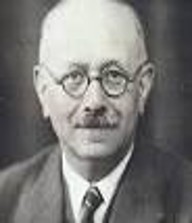
Jean-Jacques Pluchart
Now that Marc Bloch has just been interred in the Panthéon and is thus held up as an example to the French, it is advisable to read or reread his book entitled “L’étrange défaite” (The Strange Defeat), in which he examines the reasons for the debacle of the French army and the discouragement of the French in 1940. The reader cannot help but be confused by the current resonance of his observation. The France of yesterday, invaded by German mechanical force, seems to foreshadow the Europe of today, threatened by American digital supremacy and Chinese commercial domination.
As a captain in the 1st Army in 1939, Marc Bloch clearly observes the errors of the strategists, the indecision of the tacticians and the disarray of the troops. He notes that the general staff, which is surrounded by “too many agencies”, retains, in the face of the enemy, “the cult of beautiful paper” and “bureaucratic reflexes”. He observes “a whole network of cronies around the rulers who redouble their devotion and intrigue”. He confesses “the bitter aftertaste left by this war, which was badly conducted and ended even worse”. After criticising the “diplomacy of the Treaty of Versailles and the invasion of the Ruhr”, he deplores the spirit of Munich and the political instability that drives the French political class. He welcomed “the attempt of the Popular Front”, but regretted “that it succumbed because of the follies of some of its supporters”. He criticised the role of the press, dominated by a “bourgeois elite concerned with its own interests”. He mocked the “old “preachers, who over time have amassed a whole arsenal of verbal patterns to which their intelligence clings like rusty nails”. He lamented a “resignation of the elites” and a renunciation of effort by the French.
Marc Bloch went further by attributing the cause of the defeat to the “government of old men” in France in the 1930s. He attributed much of the country’s ills to the teaching at the École de Guerre, which focused on the tactics of Napoleon’s armies and the trench plans of the Great War. He advised his sons to “reflect on the faults of their elders”, adding “that he would not have the presumption to draw up a programme for them”. He criticises the Vichy government for proposing “only a return to the land and to the values of yesteryear, elevated to the status of virtue”. like the amercan Republicans, the reader of Marc Bloch cannot help but think that today’s Europe, the “land of arts and culture”, is perpetuating the Europe of the 1930s, which Marc Bloch described as a “museum of antiquities”.
Marc Bloch, a history professor at the Sorbonne, argued that countries in difficulty should learn from the past. Through his book, 83 years after his death, he gives us his final lesson.