

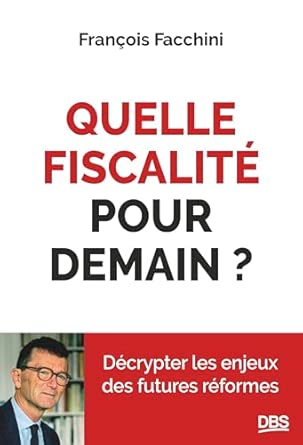
This book deserves the attention of elected officials and election candidates, as well as that of all taxpayers. It traces the history of the taxes, duties and contributions that increasingly affect the French population. While presented as a textbook on comparative taxation, it encompasses an in-depth examination of the theoretical foundations, the triggering events, the positive and negative externalities, and, above all, the possible avenues for reform of the French socio-tax system. The book is structured into five chapters covering taxes on expenditure (VAT), personal income, corporations, inheritance and property wealth. The book is rounded off by two chapters on the full cost of public funds and on the ‘Laffer effect’. The evolution of the CSG (contribution sociale généralisée – general social contribution) illustrates the entire history of French taxation: a contribution that initially had a broad base and a reduced rate has, for electoral reasons, become a complex tax with numerous exemptions. The author analyses the causes of the inefficiency of public services, demonstrating that demand for most public services has more negative effects than demand for equivalent private services, since, in a market, everyone must pay the price of what they consume. He identifies the inactivity traps created by certain taxes. He deconstructs certain claims advanced by the ‘egalitarian economists’, who developed the numerous theories underpinning France’s socio-tax systems. He distinguishes between economic taxes and ideological (or ‘clientelist’) taxes, and observes that the latter are increasingly dominating the former. His analysis of the Laffer curve is original. In principle, the curve, or the theorem, makes it possible to determine the rate at which taxation becomes inefficient, as it is perceived as excessive by the taxpayer and leads to deviant behavior. The author observes that the effects of over-taxation are unpredictable due to the differences between countries in the elasticity of income and/or profits in relation to taxation. The author concludes by arguing that the taxation of the future must be fair and efficient. To achieve this, it is necessary to shift the tax burden as far as possible onto consumption, to introduce a proportional rate of income tax, to set corporate tax at 15%, and to abolish inheritance tax and property wealth tax. Priority should be given to broad-based, low-rate taxes. Taxation must not hinder the functioning of markets, which generate productive jobs and create value. Every citizen must take responsibility for themselves. Taxation is not intended to be redistributive. To achieve this objective, the tax structure must be fundamentally reformed. The main economic handicaps are of fiscal origin. If the French do not abandon their utopian egalitarian ideal, France will come under the control of other nations and the financial markets. François Facchini is professeur in économics at Paris I Panthéon Sorbonne University. Jean-Jacques Pluchart
CHIRAT, A., IVALDI, G., SARTRE, E., L’économie politique du populisme, La découverte, 2026, 127 pages.
This short book has the merit of presenting the numerous scholarly works devoted to the themes and practices related to populist economics and cultures around the world. The authors outline the numerous ideological, discursive, socio-cultural and economic definitions and approaches to populism. They review the histories and analyze the agendas of the three main currents: the left (LFI in France), the right (RN) and the center (the ‘Gilets Jaunes’). The first group bases its program on a critique of neoliberalism, a fight against inequality, and a form of communitarianism. The second focuses its actions on an identity-based withdrawal and on sovereignty. The third group criticizes the elites and the tax system. In particular, the authors present the work of Downs, who argues that populism is based on ‘rational ignorance and irrationality’, as populist agendas rely on reasoning that is both superficial and biased. They seek a ‘minimal democratic consensus’. Overall, populist economists seek to demonstrate that technological progress favours capital and destroys labour, and that deindustrialization – a factor in unemployment and inequality – results from insufficient control of imports (which do not comply with national and international standards). Socio-cultural research attributes the rise of right-wing populism to fears of the decline of traditional or religious values and, above all, of social decline. The authors also highlight the partisan role played by certain media outlets and social networks. Both right- and left-wing movements are engaging in ‘platform populism’ through the use of AI. In a final section, the authors present a map of populist movements in the Americas (North and South) and Europe (West and East), categorized according to their more or less non-aligned ideologies. They analyze the findings of key scientific studies (including those by Nobel Prize-winning economists), demonstrating that all radical populist agendas have failed and have led to a decline of at least 10% in the GDP of the country under populist rule over a 10-year period. The authors consider whether ‘illiberal democracies’ are viable in the long term. Alexandre Chirat is a lecturer and researcher at the University of Besançon. Gilles Ivaldi is a researcher at the CNRS, and Emilie Sartre is a lecturer at the University of Nottingham. Jean-Jacques Pluchart
Hippolyte D’Albis, Économie des âges de la vie, Eds Odile Jacob, 296 pages.
The idea of a generational conflict has now become a recurring framework through which public debate in France is interpreted. Baby boomers, born in the immediate post-war period and now largely retired, are often portrayed as the beneficiaries of a system whose advantages they are said to have appropriated at the expense of subsequent generations, whose future prospects and retirement security have thereby been undermined. Should this indictment be regarded as an objective reality, or rather as the product of a contemporary myth sustained by clichés? Hippolyte d’Albis invites us to move beyond such oversimplified representations by drawing on the economics of age, now established as an autonomous field of economic analysis, grounded in the use of statistical data and national transfer accounts. The value of this method lies in its ability to capture all the flows that contribute to individuals’ well-being throughout the course of life, whether these derive from the family, the market, or the state. In this respect, it departs from traditional approaches based on rigid administrative age categories—children, working-age adults, retirees—in order to privilege a functional reading of life trajectories. What matters is no longer belonging to a given age category, but rather the actual capacity of individuals to generate sufficient income to cover their current consumption, or conversely, the extent to which they find themselves in a situation of deficit or surplus. Such an approach makes it possible to better understand how generations are articulated with one another within the broader framework of collective production and redistribution. Since national transfer accounts have been available since 1979, it is possible to observe over the long term the transformations of these equilibria. Two major lessons emerge from this analysis. The first concerns the evolution of the economic life cycle. Contrary to what one might expect, the age at which individuals enter the surplus phase has not been postponed. It remains fixed at 24, despite the lengthening of higher education. This apparently paradoxical result can be explained by the low incomes earned at the beginning of careers in the 1980s, which at the time delayed full economic autonomy. By contrast, the age at which individuals enter the second deficit phase has shifted markedly upward, rising from 58 in 1980 to 60 today, a change explained primarily by the increase in senior employment rates. Far from freezing generational positions, the analysis thus highlights the plasticity of economic ages. The second lesson concerns the structure of well-being transfers. Since the late 1970s, the state has remained the principal provider of resources, with a relatively stable share of around 70 percent. At the same time, the role of the family has declined considerably, its contribution having been cut in half, while that of the market has tripled. This reconfiguration has not, however, taken place uniformly across age groups. The role of the state has strengthened in favor of the young, partly offsetting the erosion of family support, while it has diminished for older people, among whom market-based resources—especially those derived from assets and wealth—have come to occupy a growing place. Such an evolution directly contradicts the idea that baby boomers systematically benefit from more favorable treatment than younger generations. In reality, solidarity mechanisms benefit the young first and foremost, through spending on education, training, and labor-market integration. Older generations rely more heavily on capital income than on increased public support. The real source of tension therefore lies less in any supposed intergenerational appropriation of collective resources than in the effects of a particular demographic structure: the numerical weight of the baby-boom cohorts places specific pressure on the balance of the social protection system. But can one reasonably blame a generation for being numerous ? Still, this clarification does not settle the normative question. For while it would be absurd to hold a generation responsible for its own demographic weight, it does not follow that current generations should bear alone the cost of the resulting imbalance. The demographic argument cannot suffice to justify an unequal distribution of effort. This is why some rebalancing appears inevitable—not in order to condemn past generations, but to restore a measure of justice between those that succeed one another. Hippolyte d’Albis, Professor at ESSEC and Vice-President of the Cercle des économistes. Ph Alezard

Clément Carbonnier, Nathalie Morel, Bruno Palier, Michaël Zemmour (dir.), Les politiques publiques par la défiscalisation, Presses de Sciences Po, 2024, 333 pages.
In Public Policies through Tax Expenditures, the authors analyse a phenomenon that has become central to French public action: the growing use of taxation as a tool to steer economic and social behaviour. The book focuses on tax expenditures — often referred to as “tax loopholes” — and assesses their rationale, cost and effectiveness. The main argument is clear: tax incentives are a form of public policy in their own right. Even when they do not appear as visible budgetary spending, they mobilise collective resources and shape the decisions of households and firms. Over time, this instrument has expanded into many areas, including employment, health, family policy, long-term care, research and development, housing, and philanthropy. The authors show that this trend follows a strong political logic. Tax measures are easier to introduce than direct spending programmes and often appear less costly, since they take the form of foregone revenue rather than explicit expenditure. Yet their multiplication makes the system more complex and increasingly difficult to manage. A recurring finding of the book is that the effectiveness of these measures is uneven. In several cases, evaluations highlight windfall effects or benefits concentrated among higher-income households. Family policies, certain long-term care measures and housing-related tax incentives illustrate the gap that can emerge between stated objectives and actual outcomes. Once implemented, these mechanisms also become difficult to reverse, which encourages their accumulation over time. Employment policy provides a particularly telling example. France has relied heavily on tax and social contribution reductions to lower labour costs. While these measures have produced some positive effects, their overall cost raises questions about their real efficiency and about the opportunity cost compared with direct investment or training policies. The chapter on research and development points to another limitation: despite significant tax incentives, innovation performance remains below that of several comparable economies. Here again, the authors highlight issues of targeting and uneven effectiveness across programmes. The analysis of housing and philanthropy extends this diagnosis. Tax incentives can contribute to inflationary effects or indirectly steer public resources towards the preferences of wealthier taxpayers. The debate therefore goes beyond financial cost and raises broader questions about governance and policy coherence. The book does not reject tax incentives as a whole. Instead, it reminds readers that a tax advantage remains a form of public spending and should be assessed accordingly. As governments increasingly rely on taxation to implement policy, the risk is that public action becomes less transparent and harder to control. The book ultimately raises a simple question: when is fiscal incentive the right tool, and when should governments rely on direct, clearly debated public spending? Clément Carbonnier is an economist (Paris 1, CES, LIEPP),Nathalie Morel is a political scientist (Sciences Po-CEE, LIEPP),Bruno Palier is a political scientist (CNRS, Sciences Po-CEE, LIEPP),Michaël Zemmour is an economist (Lyon 2, Triangle, LIEPP). Benoit FRAYER
L’état du management 2026, Dauphine Recherches en Management, La découverte, Repères, Série Gestion, 128 pages
Were it not for the current circumstances, we would be tempted to say that, just like Beaujolais Nouveau, the Dauphine Recherches en Management (DRM) laboratory is publishing its annual overview of new management practices. This year is special, as 2026 marks the 50th anniversary of Paris-Dauphine University’s involvement in management science research. This 17th edition of a publication previously entitled L’Etat des entreprises (2009–2017) and then L’Etat du management (2018–2026) reflects DRM’s commitment to collaborating with businesses while advancing academic research.The 2026 edition is set against a backdrop where the key word is ‘uncertainty’: political instability, economic crises, climate issues and the challenges posed by artificial intelligence. The rather optimistic views held by authors such as Aghion are far from widely shared (see Acemoglu), which fuels a debate that decision-makers and business leaders cannot avoid when economic activities are considered over the long term. The first chapter of the book is therefore dedicated to the long term, specifically to a brand’s intangible heritage, where the development of historical resources forms an integral part of the value chain. With this in mind, reputation, which is the subject of the second chapter, is exposed to multiple threats (online reputation, compliance, media coverage, etc.). It is also one of the most fragile intangible assets. Dealing with a crisis situation becomes a major challenge, and in this case, silence is most certainly not golden. Chapter 3, which takes us back to the early 1980s with a reflection on the concept of leadership, is reassuring: ‘To achieve great things, one does not need to be a great genius; one does not need to be above people; one needs to be with them’ (Montesquieu). Phew! Here at last is an area where the threat of artificial intelligence is reduced – by definition. Chapter 4 focuses on the ‘taboo’ that needs to be broken in order for a sector as highly charged as sextech not to act as a self-limiting factor for female entrepreneurs determined to develop a project that transcends social barriers. In this context, where norms sometimes become fleeting and the boundaries between work and pleasure blur, Chapter 5 shows that co-working spaces are places of work, consumption and socialisation all at once. Digital transformation does not only affect processes associated with the world of work, as demonstrated by Chapter 6, which focuses on new modes of music production that are inexorably leading to a form of homogenisation of production. Digitalisation also affects sporting events, as detailed in the final chapter, through over-mediatisation and a dilution of their original authenticity, even though it enables spectators to be ‘co-creators of value’. As we can see, the wealth of information contained in this ‘State of Management 2026’ paints a panorama of work that extends well beyond the boundaries of the traditional company. Dauphine Recherches en Management (DRM – CNRS Joint Research Unit 7088), established on 1 January 2005, is one of the leading French research centres in management sciences. This publication was produced under the supervision of Sarah Lasri, Céline Michaïlesco and Sébastien Damart. Alain Brunet

WEIL, Eric. Retraites, un blocage français, Editions PLON, 2025, 208 pages
Ultimately, taking a close interest in the pension system is not a question of age. As he approaches the age of 30, and in contrast to his peers, Eric Weil has made pensions his favourite subject and, in this book, offers us an in-depth reflection on the system. His aim is to help us see things more clearly, so that we can exercise greater discernment in the often heated debates on the subject. First, he explains, in an accessible manner and supported by statistical evidence, how the current system works and its history. Reforming the system often brings the French out onto the streets, although most of them do not always know exactly what it is all about. Indeed, he points out that while one-third of French people say they know how the system works, only 8% truly understand it. He highlights the principles and rules of the system, in particular the differences between the statutory retirement age / the age at which entitlement begins (AOD), the required insurance period (DAR) and the age at which the reduction in pension entitlement is cancelled (AAD): whether poorly understood or imprecise, these concepts often cause confusion among working people. A chapter is dedicated to the ten misconceptions about pensions and offers the reader a useful overview. All the sticking points that divide the French public and politicians are addressed: the status of civil servants, long working lives, the points-based system and retirement at 60, among others. As for the perspective on the financing of the pension system, the book clarifies that the issue of the pension deficit cannot be separated from that of the overall balance of public finances. While deductions are necessary to finance the largest item of the public deficit, increasing contributions is not an end in itself, as this will have an impact on employees’ net pay and on the competitiveness of businesses. Subsequently, a second section seeks to demonstrate that, although the system is inequitable, complex and difficult to manage, it is far more generous than elsewhere and represents an exception among OECD countries. Finally, the author takes the debate further by proposing reforms that could be implemented in the short and medium term. Our ‘good old pay-as-you-go system’ has become less cost-effective over time. It cannot be continuously pitted against the funded system. The author believes that a mixed system would be more appropriate, for example by encouraging retirement savings through voluntary personal pension accounts (PERs). In addition, he advocates the creation of a ‘single pension account’, which would eventually enable the transition from around forty schemes with disparate rules to a single scheme. In summary, he believes that, among all the proposed solutions, it seems difficult not to ask current pensioners to make an effort and to encourage them to work longer. In any event, the reform will have to be implemented gradually in order to be accepted by the French public, with the support of at least one major trade union. This book is recommended for all readers seeking a better understanding of our system and the issues it faces, and above all, for all young people who are convinced that they will not have a retirement pension in 30 or 40 years’ time. Eric Weil is a former ministerial adviser responsible for pensions. A graduate of ESSEC, he has also provided strategy consultancy services to French and foreign companies. Book review by Sophie FRIOT

RAVEAUD Gilles. Inflation. La Grande Arnaque, Editions Les échappés, 2025, 170 pages
What is the level of inflation that allows each citizen to live at an adequate standard of living? What are the causes of inflation that is too high or too low? In this study, Gilles RAVEAUD provides answers on the “Very High Inflation” observed in France over the period 2022-2024; leading to a sharp decline in the standard of living of the French. First of all, he questions the measurement of inflation by INSEE, which seems to underestimate the rise in prices and overestimate the rise in income. INSEE uses the CPI (consumer price index) but should use the European HICP index (harmonized index of consumer prices), which would be more faithful to the real structure of household consumption although it would mean a sharp increase in public spending. The latest price increases have mainly concerned food and energy, following the Russian invasion of Ukraine in 2022. In addition, he also believes that inflation is due to excessive profits over the period and not to wage increases. Indeed, according to the author, the “Very Great Inflation” in Europe over the period can be explained by corporate profits, which account for almost half of the increase. The latter are accused of having taken advantage of the energy shock on their costs to increase their margins. This was also observed by the IMF, which posted in June 2023: “the increasing profits of companies have been the main contributor to inflation in Europe over the last 2 years “. The author then focuses on the centralization of the European electricity market and the setting of its price. He criticises the fact that the sharp rise in electricity prices in 2022 is linked to the sharp rise in gas prices in Europe. Mario Draghi also made the observation: “gas produces only 20% of European electricity, but it dictates prices 63% of the time” The ECB saw inflation as a serious and immediate danger that it had to fight. The ECB therefore raised its interest rates in order to penalize credit and consumption. This monetary tightening has had a major impact on the real estate sector. ”In 2024, only 250,000 homes were built in France, an unprecedented level since …1960 “. The victory over inflation has reduced access to property for many first-time buyers. In summary, the author presents 7 proposals to allow France to take its destiny back into its own hands and to be more in control of its public debt, its industry and its agriculture, with the guarantee of a minimum purchase price, among other things. He does not hesitate to reshuffle the cards of the great principles that govern our economy and those of the central bankers. The reader will be able to find well-defined opinions through reasoned analyses and thus continue the perpetual debate on inflation. Gilles RAVEAUD is a lecturer in economics atthe Institute of European Studies of the University of Paris 8-Saint-Denis. Sophie FRIOT

Aurélien RAGAIGNE, Jean-Laurent VIVIANI, Hélène RAINLELLI-WEISS coord., Evaluer l’impact extra-financier des organisations, Eds EMS, 2026, 288 pages.
This work is eminently collective: no less than 21 contributors, most of them from the University of Rennes (Accounting – Finance of the IGR-IAE Rennes) to analyse the extra-financial impact of organisations.Despite institutionalised extra-financial evaluation practices and systematic reporting by large companies, ambiguity and tension seem to determine the evaluation of the extra-financial impact of organisations. Ambiguity of the place given to evaluations by beneficiary organisations when the activities of the Vigéo agency (social and environmental rating agency created in 2002 with Nicole Notat, former secretary general of the CFDT) were bought by Moody’s in 2019. Therefore, it becomes difficult not to underline the link of subordination that exists between the financial and the extra-financial. We already know that finance is a long-term process. The authors highlight the recurring tensions between financial and extra-financial performance, two objectives that are at the heart of sustainable finance. Three avenues of reflection are envisaged: (i) promotion of a new balance between these two objectives, leaving more room for the expression of stakeholders, (ii) implementation of a more relevant regulation, replacing the relative ESG measures with absolute measures of extra-financial performance, (iii) determination of the real level of stakeholder involvement to support more sustainable business models. If the authors’ stated ambition is to provide a structuring support for the development of partnerships dedicated to the study of contemporary issues of overall performance and responsibility of organizations, it can be said that the book has arrived at the right time. Indeed, Patrick d’Humières, author of “Entreprise et géopolitique” (Business and Geopolitics) does not fail to point out that the request for ESG information first came from investors and that we can only be surprised that this lever is not used against the Chinese manufacturing submersion to “stop illegitimate dumping in the name of social, environmental and loyalty differentials, contrary to the values that constitute the foundation of our model of society”. Aurélien Ragaigne works on the subject of extra-financial indicators and managerial situationssubject to tensions and paradoxes. Jean-Laurent Viviani’s research focuses oncorporate finance, risk management and sustainable finance. HélèneRAINELLI-WEISS is Director of the Master’s in Finance, Treasury course, and is interestedin how organisational theories can help to understand thefunctioning of the financial industry. Alain Brunet

Gilles Lipovetsky, L’odyssée de la surpuissance, Eds Odile Jacob, 380 pages.
Power, or superpower, has been asserting itself since the dawn of time. It is rooted in all civilizations. From the Dogons of Mali to the Tukanos of the Amazon, and the Australian Aborigines, people believe in creators, gods, mythical figures of superpower whose extraordinary powers far exceed those of human beings. This advent of superpower is affirmed with monotheism and the idea that there exists one single creator. God reigns without rival, and His power is absolute over the entire universe. With the emergence of states, around the third millennium BCE, and of god-kings, superpower entered the human world. Modernity took shape in Europe from the eighteenth century onwards. Although democratic in essence, it nevertheless remained archaic in many ways, and the centralized, militarized, and organized state constituted the core element of modern superpower. For the author, this state-centered superpower is no longer ours. The hypertrophy of law, supranational institutions, external constraints, financial markets, and hyper-individualism have reduced the room for manoeuver of nation-states. Politics is receding in favor of polycentric systems organized around technology and economy. Technoscience and hyper-capitalism have become the driving forces of a technical superpower that seems to go hand in hand with political impotence. Liberal democracies are weakened by excessive media coverage and fake news; new technologies are taking over and posing unprecedented challenges to political leaders. Social media is shaping a citizen into consumers of immediate, fragmented information.The hypermodern uniformity of a Western civilization sharing the same values was a myth. Europe, deemed too “woke,” too regulated, too bureaucratic, too liberal in terms of values, is no longer considered a partner by D. Trump. We are living in a time of the West against the West, of the “de-Europeanization” of the world; economically, it is the opposition between market capitalism and state capitalism. Democracies are retreating while authoritarian regimes are on the rise.Today’s superpower, with its ts capabilities, speed, and intensity, has nothing in common with anything humanity has ever known before. It is an anthropotechnical metamorphosis whose limits we do not know. And this absence of limits generates fear and insecurity. This is the paradox of boundless superpower: the feeling of insecurity extends to all spheres of daily life — the air we breathe, GMOs, 5G, the erosion of biodiversity, climate change, gluten, pesticides. Everything is perceived as threatening. This heightened sensitivity to risk intensifies a demand for protection that becomes obsessive. And yet, never before has humanity possessed so many means to transform the world; never before have measurable indicators of living standards, life expectancy, access to healthcare, and human rights been so high.We undeniably live better today than we did yesterday. However, what about our quality of life? Is happiness faltering, or have we lost the ability to appreciate moments of intense joy? Much is still to be expected from advances in technoscience; but it would be an illusiory to believe that these could domesticate happiness into scientific laws or algorithms. Perhaps therein lies the limit of the superpowered society: this anthropological, faceless and unmasterable limit — the inappropriable happiness of each individual. Gilles Lipovetsky is a philosopher and essayist. Ph Alezard
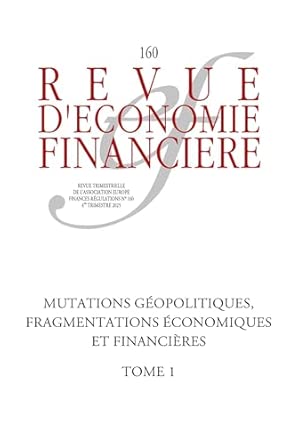
Bruno CABRILLAC, Pierre JAILLET (dir), Revue d’économie financière, n°160, Mutation géopolitiques, fragmentations économiques et financières.
So-called “happy” globalisation is now a thing of the past. With it, the promise of continuous growth based on the indefinite intensification of international trade has faded. The turn of the 2020s marks a profound rupture in the global economic and geopolitical order, under the combined effect of major shocks — the Covid-19 pandemic, the war in Ukraine, the rise of economic sanctions, the resurgence of inflation, the resurgence of protectionism — as well as the rise of the fourth industrial revolution driven by digital technology and artificial intelligence. In this context, the transformations brought about by technological giants with unprecedented capitalisation are reshaping the economic, social and political balance on a global scale. This volume of the Revue d’économie financière analyses these recompositions through the contributions of thirteen experts, articulated around three structuring axes. The first part examines the questioning of the international order. Geopolitical tensions have led to an increasing fragmentation of world trade, which is now structured around strategic blocs. Security is emerging as an organising principle of international relations, reconfiguring economic interdependencies. The asymmetries resulting from globalisation, formerly vectors of integration, are becoming instruments of power and coercion. In this context, Europe is faced with an imperative to strengthen its strategic autonomy, both militarily and energetically, as well as financially and digitally. The second part analyses the changes in contemporary capitalism in an environment marked by systemic crises since 2008. The hypothesis of convergence towards a single model has given way to a plurality of trajectories. American market capitalism and Chinese state capitalism now structure the global economy, while Europe is developing its own path, based on normative framework and the search for a balance between innovation and protection. These differences are particularly evident in the development of artificial intelligence, which has become a major strategic issue. The third part deals with monetary and financial fragmentation. It recalls, from a historical perspective, the constant intertwining of finance and geopolitics, characteristic of the great economic powers. The question of monetary sovereignty is addressed in close connection with that of the sovereignty of payments. While Europe has a sovereign currency, it remains dependent on largely extraterritorial payment infrastructures. This vulnerability is a major strategic issue in a context where financial instruments can become levers of economic pressure. Through these analyses, this volume aims to contribute to the debate on the new dynamics of power and the conditions for European strategic autonomy in a permanently fragmented world. Philippe Alezard