

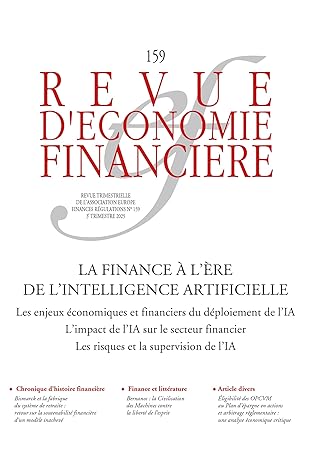
Artificial intelligence has become a cross-cutting technology that concerns all economic sectors and has applications in all use cases as soon as there is a layer of analysis. AI has the potential for systemic transformation by simultaneously changing the way the entire economy produces, organizes and innovates. The financial sector is, of course, not exempt from these changes. Computers in the 1970s enabled the emergence of quantitative finance and the development of sophisticated mathematical models to assess risk and optimize portfolios. But AI is specific by its autonomy, its ability to interact in natural language, to adapt its decisions through learning, to process and analyze huge volumes of data in real time, and to convert textual information into investment strategies. These few examples, already adopted in daily operations, suggest disruptive upheavals in the sector. This issue of the “Revue financière d’économie,” edited by Marie Brière, explores the issues as well as the economic, financial and ethical challenges, and the impacts and risks associated with the increasing integration of AI in the financial sector. Thirteen leading contributors, such as Cédric Villani, Philippe Aghion, Agnès Bénassy-Quéré, to name but a few, provide a valuable synthesis around three main themes. The first is devoted to the economic and financial challenges of deploying AI. It addresses the strategic needs in terms of funding and research related to AI, ethical issues, recalling that humanity invests ten times more in AI and digital technology than in the ecological transition, the impacts on the dissemination of innovation and productivity and finally digital currencies and the role of fintechs as well as central banks. The second part addresses some use cases of AI and generative AI in finance. The various contributors revisit integration strategies in scoring, payment default, loan applications, insurance claims management, and cyber risk prevention, but show that these productivity gains can be offset by new, less visible risks. In the last part of this issue, the experts focus on the risks and the different regulatory approaches, and in particular on the ability of regulatory authorities to use AI to assist them in their control mission.This issue of the “Revue d’économie financière” offers us a rather comprehensive approach to the current debates on the complex issues of the use of AI in the financial sector. Marie Brière, is Head of Investor Research at Amundi Investment Institute, Associate Researcher at Dauphine and ULB and President of Inquire Europe. Ph Alezard

Alain GRANDJEAN, Claude HENRY, Jean JOUZEL, Les orphelins de la planète, Eds Grasset, 186 pages.
The authors respond to the main questions raised over the past thirty years by the impacts of global warming and the energy and ecological transitions. They recall the warnings issued since 1990 by the IPCC and other official bodies, as well as the (often disappointed) ambitions set out at the 29 Conferences of the Parties (COP) organized since 1995. They emphasize the importance of COP 21, held in Paris in 2015, which set a target of limiting global warming since the 19th century to 1.5°C by 2030 and achieving carbon neutrality by 2050. The authors reveal that IPCC reports have been the target of a veritable climategate, orchestrated by energy companies, which have sought to discredit the IPCC’s data, processing, and conclusions through biased studies. They also denounce banks that continue to finance projects that harm the environment. They point out that the multiple consequences (particularly on human health) of greenhouse gas (GHG) emissions are increasingly well documented and that a warming of 3°C or even 4°C would be catastrophic for the planet and humanity. They warn of the severity and simultaneity of recent natural disasters (droughts, floods, etc.). The authors are optimistic, however: they identify the devices to be implemented in order to achieve the objectives set by the COP: new instruments of “green finance”, alternative systems of heating, transportation and production, ecological materials… They show the progress of agroecology to preserve the soil and absorb GHGs, as well as the emergence of geoengineering that extracts carbon monoxide from the atmosphere. They hold up European countries as examples for nation states that are less economical with fossil fuels, such as China and the United States. Alain GRANDJEAN is the co-founder of the firm Carbon 4. Claude HENRY is an honorary professor at the Ecole Polytechnique and the University of Colombia.Jean Jouzel was a member of the IPCC. Jean-Jacques Pluchart

Patrick Artus & Marie-Paul Virard, La France réinventée, Eds Odile Jacob, 170 pages.
In this latest opus, the authors, who are not at their first book together, look at some long-term proposals to reinvent a social model for France and Europe vis-à-vis the ambitions of the United States and China. This first quarter of the 21st century has been marked by a spectacular drop in the European economy and even more so in the French economy. Since 2002, the US GDP has grown twice as fast as the European GDP. And this slide continues regardless of the elements of analysis: productivity, R&D, investment, employment rate, trade balance, training, etc. France has even fallen behind on its own continent compared to its neighbors. The irresistible French de-industrialization has not been offset by the development of a significant technological sector, the debt and the trade deficit are abyssal, the quality of public services is deteriorating despite an ever-increasing budget deficit, and finally, the wealth per capita is 15% lower than that of Germany. Europe is at odds with Schumpeter and is paying a high price for its risk aversion. 54% of American R&D is devoted to new technologies compared to 15% in Europe, which prefers to continue investing in its old industry. Nine of the top ten European capitalizations are in traditional sectors, while nine out of ten of the American ones are related to new technology and AI. The major advantage of the American model lies in an ecosystem that is conducive to innovation and investment, in stark contrast to the European model, which is hampered by a restrictive fiscal, legislative, and regulatory framework. It could be summed up in a slogan: risk appetite versus the “precautionary principle.”But this very “business friendly” American model hides weaknesses. Inequalities and impoverishment continue to grow, the exorbitant cost of care is a factor of indebtedness, and the financial situation of the Federal State, despite or because of the dollar, is catastrophic. While Donald Trump has promised the Americans to return to the golden age of the McKinley period, will a weakened and demoralized Europe be able to react? To achieve this, it will need to escape the trap of weak growth, regain its dynamism, and defend its position in the global arena. The authors make concrete proposals at both the national and European levels. The urgent reforms needed in France are well known, as are the solutions. Choices will have to be made if we want to preserve our social model. But above all, we will need to find consensus and active involvement in a context where exasperation, deadly dialectics, and mistrust of our leaders are preventing necessary reforms and fueling accusations of democratic models’ inefficiency. Patrick Artus is an economic advisor to Ossiam and a member of the Cercle des économistes Marie-Paule Virard is an economic journalist Ph Alezard
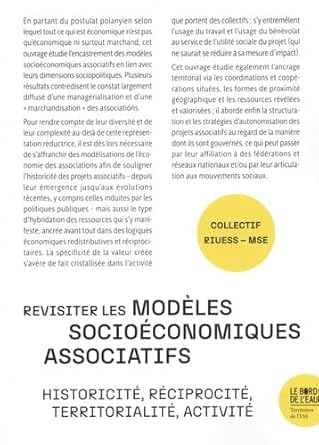
Collectif RIUESS – MSE. Revisiter les modèles socioéconomiques associatifs, Le Bord de l’Eau, 2025, 282 pages
Based on an extensive research program described in the book, the authors’ collective provides a precise overview of the different forms of associations and their resources; with, among other things, the extent of their dependence on public funding.The first part of the book is devoted to setting the framework of associations in the broad sense and to understanding their functioning as well as the plurality of market and non-market financial resources. The analysis of monetary resources shows that associations continue to drain public funding that is decisive for their socio-economic model in order to achieve their budgetary balance. The role of volunteering also remains major in the emergence of projects and in the functioning of associations, although some of them are becoming professionalized.The second part of the book focuses on the socio-economic models of associative social centers. The latter developed at the end of the 19th century in bourgeois circles. Their initial objective was to strengthen family and neighborhood ties during this period of industrial and urban development. Today, according to their purpose, social centers share the goal of fostering links and exchanges. The authors raise the issue of the monetary valuation of volunteering in the accounting balance sheets of this type of association, due to a lack of method.In a third part, the authors present the socio-economic model of “third-places”. This category is defined as a “space of sociability, of citizen initiative, where a community can meet, gather, exchange and share resources, skills and knowledge”. Whatever their actions, “third-places” claim autonomy by relying on non-monetary resources but still remain dependent on public funding.The fourth part of the book focuses on socio-economic models in the field of integration. The authors present their research and analysis in the IAE (Insertion par l’Activité Economique) sector and on the TZC (Territoires Zéro Chômeurs) experiment.In conclusion, the authors highlight three avenues for reflection: the mobilization of work and volunteering, access to capital, and the evaluation of social utility towards social impact.This book is very widely documented and makes it a collection that can serve as a reference in their field. With a very academic style, a technical and specialized vocabulary, this book is aimed at seasoned readers.The Inter-University Network of the Social and Solidarity Economy (RIUESS) was established in the year 2000. Today, it brings together around twenty French universities around its objective: to promote training and research in the social and solidarity economy and to encourage exchanges and shared initiatives between SSE actors. This book was produced by a multidisciplinary team composed of members of the network, economists, sociologists, and a philosopher, constituting the RIUESS-MSE collective.With contributions from Mariagrazia Cairo Crocco, Melaine Cervera, Cyrille Ferraton, Anne Fretel, Laurent Gardin, Patrick Gianfaldoni, Florence Jany-Catrice, Vincent Lhuillier, Pierre Robert, Delphine Vallade.Reading note by Sophie FRIOT
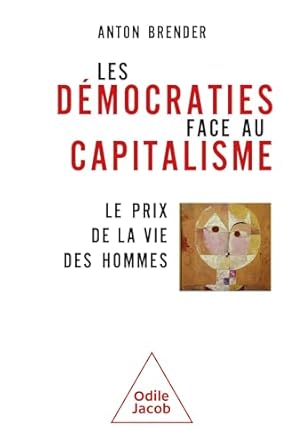
Anton BRENDER, Les démocraties face au capitalisme, Eds Odile JACOB, 2024 , 173 pages.
This book was published in 2024, but current parliamentary debates, steeped in ideology, make it highly relevant today. Capitalism has been left to its own devices since the 1980s, and is no longer relied upon to improve living conditions for all. Successive governments seem to have neglected social infrastructure—hospitals, schools, the justice system, etc.—either out of convenience or conviction, even though the quality of such infrastructure reflects the value that a democracy places on the lives of its citizens. Western economies in general, and ours in particular, are in the situation we are all familiar with, attempting to resolve a conflict of horizons, a concept that emerged about ten years ago to characterize the difficulties of managing energy and environmental transitions, and which can be extended to current societal transitions. The author, a renowned economist who has worked in banking and asset management, is an advocate of capitalism focused on the common good, corrected for the excesses that are making the world increasingly threatening. The book is therefore a plea for our societies to use the drivers of capitalism to invest once again in “improving people’s lives; and this cannot be taken for granted.” While democracy has made capitalism a factor for progress, laissez-faire has led to numerous excesses; these are the themes of the first two chapters. This is followed by two illustrations that “globalization has not made the Earth flatter” and that “the end of the USSR did not mark the end of history.” Finally, the last two ideas developed are injunctions to “take back the helm” and “look more closely at the future”; ideas that have been repeated by many, but which are treated with finesse, outside the paths usually taken by columnists… because Anton BRENDER is not a columnist but a field economist who, with his experience and his personal and professional cultures, tackles what are sometimes taken as clichés such as: forgetting GDP? Getting into more debt? Absurd budgetary rules? the challenge of sustainability, placing greater value on the future, democracy under threat, the influence of platforms, the weakening of traditional information channels, etc. The approach is therefore to objectify these themes by attempting to distinguish between fact and opinion, reality and perception. The conclusion is that global chaos, climate change, and the increasingly acute tensions manifesting themselves in our country make the need for action urgent. Rebuilding the foundations of solidarity that underpin a democratic society should be a priority for governments…and citizens. This requires consolidating the physical and social infrastructure that reflects the value a society places on the life of each individual. It may also involve considering a redistribution of income to reduce some of the inequalities naturally generated by capitalism; and above all, it requires the mobilization of as many people as possible. Only widespread awareness can make this happen. The current debates on whether to increase taxes to finance increased spending—or vice versa—without any consideration for the future of society show that we are still a long way from this. There are 18 months to go before the next presidential election, and this awareness, leading to the setting of a course that is acceptable to the majority. It is not much time ! Dominique CHESNEAU

Mathieu COUTTENIER, L’économie de la violence, A qui profite la guerre ? Enjeux et solutions, Eds Les Léonides, 2025, 251 pages.
In his latest book, Mathieu Couttenier strives “to shed light on the incentives that fuel violence and to illuminate the policies likely to mitigate its effects”. In particular, he questions the rather circular or cyclical nature of violence. His observations cover the latest internal civil conflicts in countries mainly in Africa, the Maghreb, South America and Asia, as well as Russia’s invasion of Ukraine and the war between Israel and Palestine. The book is organized in three parts, devoted respectively to the determinants of violence (poverty, inequalities, the monopolization of natural resources, personal ambitions, etc.), then to the mechanisms favoring conflicts, and finally, to the policies and mechanisms implemented to put an end to them. The originality of the book lies in the analysis of the role of the media and social networks, in the triggering and continuation of conflicts, as well as in the sometimes indirect or implicit dimensions of their implications: psychological traumae, impacts on families, tearing of the social fabric, destruction of value chains, decline in the development of a country. The author reveals the complexity of mediation between belligerents, the diversity of forms of intervention by third countries and international organizations (UN, NATO, etc.), the inequality of sanctions imposed on those responsible for abuses, the hidden nature of war financed by industrial groups or neighboring states, the variety of possible aids for reconstruction, etc. The author draws his sources from the many academic research works and journalistic testimonies devoted to armed conflicts, and he illustrates his analyses with quotations denouncing the misdeeds of violence, particularly collective violence. It provides useful keys to understanding, both theoretical and practical, current conflicts. The author is a professor at the ENS Lyon and director of research in economics on governance, inequality and conflict (CERGIC). Jean – Jacques Pluchart

Nouvelles réflexions sur la Richesse des Nations
Les leçons de Turgot et de Smith Cette semaine, le club Turgot publie aux éditions Arnaud Franel,son 3e livre (158 pages)dont la rédaction a été coordonnée par Jean-Jacques Pluchart : This collective book, whose title is borrowed from the two most famous works of Turgot and Smith, was written by the Turgot club, which for 40 years has been organizing the Turgot Prize awarded to Bercy for the best books on economics and finance. It strives to find in contemporary works the spirit that animated, 250 years ago, the founders of economic liberalism, the French Anne-Jacques-Robert Turgot and the Scottish Adam Smith. It brings together 50 original reviews of works published during the years 2024 and 2025 by 80 researchers, entrepreneurs, and managers attentive to economic phenomena and social facts. The reader of this book will discover that between the end of the 18 th century and the beginning of the 21 st century, “wealth creation systems” have been transformed into “models of growth and decline”, “principles of government” have been replaced by “modes of governance and management”, “laws of nature” have been renamed “environmental standards”, the Encyclopedia of Diderot and d’Alembert has become “big data”, and the Siècle des Lumières has become an alternation of shadows and lights. Contributors to the writing of the book: Hubert Alcaraz, Philippe Alezard, Florence Anglès, Renzo Borsato, Alain Brunet, Jean-Louis Chambon, Dominique Chesneau, Benoit Frayer, Sophie Friot, Michel Gabet, Claude Georgelet, Freddi Godet Desmarais, Loïc Le Menn, Denis Molho, Jean-Jacques Pluchart (direction of the book), Pona Samnik, Olivier Stephan, Kathleen Wantz O’Rourke.

Nicolas DUFOURCQ, La dette sociale de la France, -Eds Odile Jacob, Octobre 2025, 525 pages.
In keeping with what has now become a well-established habit, Nicolas DUFOURCQ lays down truths about the French economy that are objectified by a large number of statistics and his own analyses, and “justified” in the second part of the book by testimonials and interviews. His conclusion is as follows: “The family secret of French society is not debt. Everyone knows it exists. But it is social debt. Two-thirds of French public debt finances social benefits. It is consumer credit, not an investment in the future. It pays the monthly bills of millions of our fellow citizens.” This “flaw” in the French economy is not new, but rather the result of a slow decline spanning 11 periods since 1969, from the era of “new rights and heavy taxation” to the “misfortunes of COVID,” via “the beginnings of the strong franc,” “markets turning to the left,” the “financial crisis” of 2007-2012, and two “missed opportunities” in 1988-1993 and 1997-2002. It should be noted that these responsibilities are not specifically linked to right-wing or left-wing programs as such, but rather to a series of concessions and misguided ambitions. However, it seems that there have been many decisions that went against the grain: the introduction of numerous rights during the first oil crisis, the 35-hour working week during the global recovery in 1997 and China’s active entry into world trade, and the “bad luck” of the 2007 crisis and COVID in 2020. Bad luck or insufficient preparation by the country for endogenous resilience in the face of global turmoil. It was then necessary to rely “on others,” a European plan, “quasi-guaranteed” support from the ECB, a recovery in Germany since 2024, all signs of France’s loss of control over its destiny! And the current debate in Parliament is focused on a quarter of a year of retirement and taxation. The nature of social debt addiction is linked to the fact that “the state failed to protect its citizens in 1939-45” and that the National Council of the Resistance decided to “correct” this mistake…ad vitam, regardless of developments in the world. This led to the perpetuation of a fiction whereby, on the one hand, there was Social Security with contributions considered as insurance premiums, and on the other, what was called “welfare.” Except that, at the same time, the state created “new forms of solidarity and a continent of social rights, unrelated to work,” with transfers in all directions, leading to 58% of public spending being social in nature. Thus, “the social horse gallops ahead of the economic horse because it is doped with the white powder of debt.” A few quotes illustrate the point. “The social partners will not hesitate to systematically increase social security contributions, leading to a rise in labor costs that will herald the mass unemployment of the 1980s and 1990s.” “Raymond Barre himself did not believe it was possible to reduce compulsory levies.” “It can be said that today, part of the €80 billion in social security relief in the state budget compensates for the decisions to increase contributions taken in the 1970s by Raymond Barre.” All are responsible, but none are guilty; yet without awareness of responsibilities, no systemic solution can be validly conceived, let alone implemented. A welfare state requires a mature democracy, and ours has not been one. We are paying for our slowness and delays. We must assert the right of tomorrow’s French citizens not to be burdened with repaying their grandparents’ consumer debt. “According to the author, minds are ripe for an iron rule” and “if there is no other way than to impose a rule of balance on social spending, then we will have to propose to the French people that it be imposed by decree the day after a presidential election.” Dominique CHESNEAU

Didier CAHEN, L’Euro en danger, Eds Odile Jacob, 351 pages.
On January 1, 1999, eleven countries would replace their respective currencies with one. The Euro became the single currency of 300 million Europeans, an unprecedented undertaking. Another unparalleled precedent: the very model of the Euro, a currency without a sovereign state. The common monetary policy is entrusted to a federal institution, but economic and fiscal policies are left to the discretion of the states. To meet this challenge of collective management, a common discipline was put in place with fiscal rules, a deficit of less than 3% of GDP and a public debt of less than 60% of GDP, to which all states committed to, in the Stability and Growth Pact. Nine countries have joined the eleven founding members, and the Euro, the second most important currency in the global monetary system, has played a role in protecting and developing the European economy both internally and externally, and has withstood four major crises (2008, sovereign debt 2010-2012, Covid and inflation from 2021). But it did not bring all the expected benefits because some member states refused the required economic discipline. Worse, some states took advantage of the protection of the Euro to let deteriorating their public finances, thus weakening their productive apparatus, destroying their credibility and fueling the mistrust of their partners. These economic disparities emerged as soon as the Euro was created, with the countries of the North focusing on strengthening their industrial base and controlling public finances, while the countries of the South favored credit, consumption, and social redistribution without worrying about the budgetary consequences and inflation. These two “models” coexisted until reality took revenge and led to the sovereign debt crisis. As a result of this crisis, the countries of the South, with the notable exception of France, improved their fundamentals, greatly helped by the exceptionally accommodating and long policy of the ECB. While inflation reached levels never seen since the creation of the monetary union, the ECB continued this policy, creating adverse effects on productive investment, now zombie companies, dependent on productivity, creating speculative bubbles and promoting State indebtedness. The monetary Union is at a decisive turning point. But what to do? The author first tells us what not to do. Structural problems cannot be solved by an increase in debt. We must stop easing the money creation, the monetization of debt is not the solution, there is no European magic money. Budgetary discipline is essential, we must lower current spending, and revive productive investment. Reviving the European economy will require improving financing conditions, creating pension funds to drain savings into corporate equity to encourage innovation, revive securitization, and achieve a true banking Union. And finally, we must stop considering the violation of common budgetary rules by a number of states as an acceptable and credible solution. Dider Cahen, PhD in Economics, is the General Delegate of Eurofi, a think tank that promotes the single market for banking and financial services in Europe. Ph Alezard

Marie-Laure BARUT-ETHERINGTON et Pierre BOLLON (dir), Où va l’épargne ? Revue d’Economie Financière , n°158, 2e trim 2025
In these times of investment needs, in order to respond to energy, environmental, economic, and budgetary transitions, public opinion is tempted to seek answers (culprits?) among the so-called “wealthy” members of society and “big business.” Nothing new in itself, except for the inclusion of savings in this never-ending quest for new scapegoats. The age-old debate that divides economists is back in the news, with the question of whether savings (described in France as excessive) – but immutable as a republican virtue – could become a brake on investment, growth, employment and, ultimately, demand itself. This new publication from the REF, which draws on a host of prestigious economists, is timely. In three richly documented chapters, the authors contribute factual elements, context, and a long-term strategic vision to the debate. The first chapter provides an overview of savings trends in France compared with Europe, while the second chapter examines the heterogeneity of savings behavior in several dimensions (in relation to the holding of risky assets, household characteristics, product life cycles, and the role of public policy). Finally, the third part sheds light on the important issue of mobilizing private savings to benefit the French and European economies. It should be noted that in France, although individuals save a lot (15% of their income on average, which is higher than in most OECD countries), they do so rather poorly, favoring liquid and less risky assets. Low stock ownership and the increase in foreign stock holdings have negative consequences in terms of sovereignty and competitiveness for our country. The need for regulations that place less emphasis on “safe and liquid” assets is being called for by all financial players and insurers, banks, and asset managers. The authors argue for accelerating the implementation of a genuine “Savings and Investment Union,” identifying four priority areas: redesigning market infrastructure to reduce costs, unifying capital market supervision for better risk sharing, reviving securitization, financing the green transition, and promoting the European venture capital industry that finances innovative companies. As this remarkable publication shows, the new path that seems to be opening up for savings is full of great promises… no doubt still accompanied for a long time to come by the popular saying: “If you don’t save a penny, you’ll never have two.” Marie-Laure BARUT-ETHERINGTON is a Deputy GM at the Banque de France. Pierre BOLLON is Director of European Affairs at the EIF. Jean-louis CHAMBON