

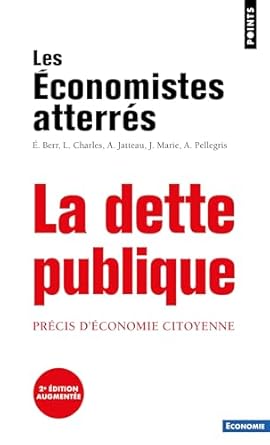
This “citizen’s economic primer” is a second edition [1] with an additional chapter devoted to inflation. In the first part of the book, the authors argue, as opposed to the popular belief, that debt is not a burden for the future generations since the current generation already benefits from it through investments in infrastructure and public services. They also promote the idea that, in times of crisis, one should not tighten the belt, since an increase in public spending will lead to a greater increase in activity through the effect of the fiscal multiplier: the ratio between the rate change in GDP and the rate of public spending. Public deficits are thus necessary to achieve full employment or to finance collectively useful investments, but they are harmful in times of full employment where they have an inflationary potential. This ideology goes against neoliberal politics, which argues that it is by producing more wealth that we can finance the social model, by working more (unemployment insurance reform) and longer (pension reform). The second part is dedicated to the trajectory of the French debt in order to understand its evolution since 1945, and more precisely, the dependence on financial markets observed since the 1980s. Some economists believe that the increase of debt contributes to raising interest rates, which discourages private investment. This raises the question of the public debt sustainability . The authors believe that a State’s reimbursement ability is linked to the strength and reliability of its tax system, as well as to the possibility of borrowing from banks and financial markets. They believe that the French public debt is sustainable, especially since more than 50% of French debt holders are not French resident. This level proves the attractiveness of the French public debt on a global scale. Finally, the third part is a presentation of the solutions and manoeuvers to make public debt acceptable to all. Since the COVID crisis and the return of inflation, the ECB has increased its key rates 10 times (between July 2022 and September 2023) aiming reduce inflation at the cost of an economic slowdown and a rising unemployment, thus limiting the ability of the states to collect tax revenues. As a remedy, the authors recommend a comprehensive tax reform, focusing on three major areas: 1- Restoring the progressivity of income tax 2- Implementing an effective fight against tax evasion 3- Focusing on a better consideration of ecology, with the evocation of a Green New Deal In conclusion, this book calls to get out of catastrophism, since public debt can be part of the solution and not the problem. They go against the grain of the policies applied for decades by successive governments and confront current political debates in the midst of the 2025 budget vote and the issue of financing the energy transition. The concepts are rather pedagogically approached and accompanied by technical sheets allowing each reader to understand all the contours of public debt and thus form their own opinion. Éric Berr (University of Bordeaux), Léo Charles (University of Rennes 2), Arthur Jatteau (University of Lille), Jonathan Marie (Sorbonne Paris North University) and Alban Pellegris (University of Rennes 2) are members of the Économistes Atterrés. Sophie Friot’s note
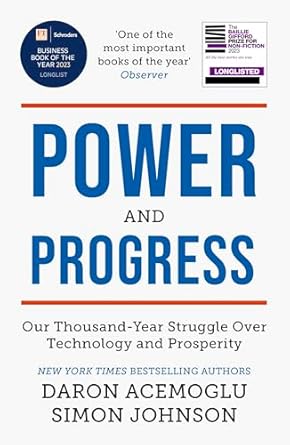
Daron Acemoglu and Simon Johnson, Power and Progress. Technology and Prosperity, Our Millennial Struggle, Peason, 2024, 610 pages.
The book presents the research work of two Nobel Prize winners in Economics awarded in 2024. It takes the form of a monumental review of scientific literature on the factors, forms, and combined effects of technological innovation and institutional change throughout the ages. It focuses in particular on the interactions between the digital revolution and the globalization of the markets since the 1980s. The book begins with a discussion around the notions of progress, which is at the same time technical, institutional, as well as ideological. It continues with a review of the debates on the mechanization of agriculture and then of industrial processes, leading to several waves of “technological unemployment”. The two authors compare in particular the sometimes contradictory positions adopted by the greatest economists on these phenomena, which resulted in a concentration of wealth and a widening of inequalities between labor and capital. They show in particular that these technological and socio-economic changes have been favored by institutions and ideologies, first Keynesian and then neo-liberal, which have been increasingly adapted to social groups the power of which is based more on capital than on labor. They analyze in particular the decline of unions and political parties influence in the fight against social inequalities. The two Nobel Prize winners also observe that AI, especially in its generative form, generates low productivity gains, but stimulates creativity in all its forms and develops human relationships, which are both sources of economic growth and social well-being. They argue that humanity should seek to improve the usefulness of machines rather than perceive only their dangers. They deplore in particular the use of AI to misinform and manipulate opinion. They denounce the current trend of considering AI as being at the service of a society of surveillance and control of citizens in the name of an ideology. They compare the ethical frameworks established by different countries and propose a new form of global AI governance promoting both technological innovation and the common good. One of the main interests of the book is therefore to present in a didactic form the main Anglo-Saxon research devoted to the evolution of the relationship between technical progress and the institutions of Western countries, but also to contribute to the current thought leadership on the supervision of AI. Daron Acimoglu and Simon Johnson are professors at the MIT and co-winners of the 2024 Nobel Prize in Economics. Note by J-J.Pluchart

Christine KERDELLANT, Ces milliardaires plus forts que les Etats, L’observatoire, 2024, 284 pages.
This book seems surreal, but it is not unrealistic. Doesn’t its subject matter cover an ultimate dream? That of an absolute freedom of action, without conditions or pressure, of an education centered on creativity and imagination stimulated on all types of screens (television, platforms, apps, etc.), of a development of projects illustrating the most unusual passions without great competition, of fortunes exceeding the GDP of several Western countries thanks to tax optimizations in all legality, of a power defying the States, of a disruptive model of a new world at the antipodes of the current world order. In a concise and lively style, Christine Kerdellant engages in an audit of the futuristic visions of a handful of influencers who are both billionaires and Americans. Their actions could undermine the very foundations of capitalism. Their common denominator: their vision as a vector of social change with an extra-planetary scope. Opportunities for humanity or threats to democracy? Their power does not only come from the immensity of their fortune, but for some, from their high-tech activities in a monopolistic situation, and for others, from their dissemination of sensitive data to a fraction of humanity. For the author, this poses a problem of ethics and responsibility of the States. In her book, she arouses the reader’s curiosity in order to warn about the absence of limits and controls of these projects, resulting in a takeover of more than a third of satellites impacting military strategies, the deployment of implants on humans in a medical setting, the exploitation of billions of data for political purposes… These science fiction-passionate dreamers are not far from supplanting the State which, in their opinion, is content to tax them excessively. Is state control pure fiction? Is the Chinese pattern, where the state takes control of the activities of billionaires, more appropriate? Could the European model, where the state regulates by heavily taxing large fortunes, be an alternative? Doesn’t American capitalism, which includes the notion of economic freedom, reflect the American dream that offers the opportunity to prosper in complete freedom? Ideally, in all types of models, there should be safeguards (“wise men”). With a governmental support, the “billionaires stronger than the states” therefore continue to live their American dream. Christine KERDELLANT is an essayist and economic journalist. She studied economics at the University of Caen and joined HEC. Alongside her career as a journalist, she has written more than fifteen essays and novels. Chronicle by Pona SAMNIK

Rudiger L. von Arnim & Joseph E. Stiglitz (dir.), The great Polarization. How Ideas, Power and Policies Drive Inequality. Colombia University Press, 2022.
This collective work brought together 22 of the most recognized American and French teachers and researchers on the subject of economic and social inequalities in the world. In the first part, the authors show their adherence to the thesis of Polyani (author of the bestseller “The Great Transformation”), according to which “the market economy is insufficiently anchored in society”. They question certain principles of the neo-liberal economy, in particular by challenging Friedman’s “trickle-down” theory, according to which market efficiency creates value for all actors in society. They denounce the silence of neo-liberals, inspired by the theories of Friedman and Hayek, on the often hidden negative externalities in the more or less long term, which are generated by the absence of market regulation. They express the views currently shared by post-Keynesian democrats in response to the ultra-liberal measures taken under the new US presidency. They take up the arguments initiated by Stiglitz, Milosevic and Piketty* by extending them to all forms of inequality, be they economic, social, political or cultural. They identify the issues, trends and synergies, showing that these arguments have been developed – with varying degrees of success – by left-wing populist movements in Western countries. One of the interests of the book is therefore that it reveals the strengths but also the weaknesses of the reasoning developed by the American left parties. The second part, entitled “The New Light on the Facts”, highlights the 40-year decline of the labor market in favor of the capital market, and the decline in wages in favor of dividends and capital gains, due to a double movement of globalization of markets for goods and services (unfavorable to workers because of industrial relocations) and financialization of the world economy (favorable to large fortunes). The exponential growth in executive compensation (driven by increasingly sophisticated engineering combining salaries, bonuses, stock options, executive pensions, etc.) was stimulated by the soaring stock market (due to an increasingly “short-term” management) and real estate prices (fueled by unbridled money creation), which benefited the wealthiest assets. In the third part, entitled “Policy Issues. Labor Markets, Education, Taxation, and Intellectual Property”, the researchers identify the political decisions and regulatory provisions that have directly affected the distribution of income and wealth in the United States, including those that have led to a stagnation of wages over the past 30 years, despite an increase in productivity in industry and services. The authors analyze the impact of the action of teachers’ unions on school results and find that this de-unionization has penalized teachers and students from disadvantaged neighborhoods and their access to employment. On another note, the authors argue that industrial and intellectual property rights, as well as certain employment aids, create near-monopoly situations and real rents (especially in the finance, health and digital sectors), which benefit the dominant shareholders of companies, who constitute half of American billionaires. During the 2007-2010 crisis, public funds allocated to banks and insurers thus mainly benefited the richest 1%. In the fourth part, devoted to “political contexts and future prospects”, the researchers analyze the evolution of discourse on income inequality. They observe that these perceptions vary from one country to another because of their socio-cultural disparities. In some countries, such as France, discourses on the “social divide” may have encouraged various forms of discrimination without generating more social justice. The latest surveys show that the rising cost of higher education is making the debt of children from the most modest families increasingly unbearable and is depriving the nation of talent. The authors advocate the establishment of a federal employment guarantee upon graduation and baby-trusts to finance education at the lowest cost. Rudiger L. von Arnim is a professor of economics at the University of Utah and Joseph E. Stiglitz is a professor at Columbia University and a Nobel Prize winner in economics. * see other columns on this blog. note by Jean-Jacques Pluchart

PARRIQUE T, Ralentir ou périr, Eds Seuil, 311 pages.
The book’s subtitle is: the economics of degrowth. This sets the tone for the entire book. For the author, economic growth only benefits the richest: one only has to look at the persistence of the number of poor people. Inequalities are creating significant gaps for the poorest. Moreover, the wealthy are the source of the most pollution. A sentence from the author sums up his point: “degrowth, as a reduction in production and consumption to alleviate the ecological footprint, planned democratically in a spirit of social justice and in the interest of well-being” Is GDP the only important thing? It is neither more nor less than an “economic agitation” that does not take into account other factors such as human well-being or happiness. Well-being is not necessarily linked to changes in GDP. We must escape this “tyranny” of GDP. Currently, the race to improve labor productivity in order to increase growth is a goal that we must constantly try to achieve, at the expense of the environmental damage to ecosystems. Does economic growth reduce inequality? This is not accurate. It all depends on the distribution of this growth between wages and capital income. What do the proponents of degrowth propose? A shift towards sustainable degrowth, which would lead to a harmonious society. It means slowing down economic flows and turning to more sober and frugal lifestyles. The state should be the driver of this process, together with the representatives of the people. The goal would be to respect social justice by providing well-being, while respecting the balance of ecosystems. Any productivity gains would be oriented towards the well-being of workers: for example, by reducing working time. Suffice to say, this theory of degrowth generates a lot of criticism about its realism and how to achieve it. Indeed, what would happen to a country that adopted this new way of life, in a globalized environment? Wouldn’t it risk being marginalized, with disastrous consequences for its economic situation: capital flight and economic balances disrupted? It is up to each individual to form their own opinion after reading this well-documented and clear book. Timothée Parrique is a researcher in ecological economics at Lund University in Sweden. review by Renzo Borsato

FARAH Frédéric, No Frexit, What young people think of Europe. Eds Fayard, 154 pages.
The author approaches the European subject by probing the opinions of his high school and college students. The surveyed students were from Seine-Saint-Denis, the 5th arrondissement of Paris, and Tolbiac. Are young people passionate about the European project? Do they feel more European than French? Do they know the European institutions? Bagnolet high school students They are mostly from immigrant backgrounds and live in difficult family circumstances (some parents are unemployed). They note that Europe may be a market offering opportunities. Given its presence in the media world, the ECB is perceived as a monetary regulation institution. However, the other European institutions are less well known: the Parliament, the Commission, the Council. The Schengen area is highlighted for the convenience of traveling in Europe. It should be noted that all they have known is the euro, which facilitates trade. The Erasmus program makes them aware of their belonging to Europe. Preparatory students (Paris 5th and 16th arrondissement) Although they are of different sociological origins (more affluent social background), they adhere to the idea of a Europe that facilitates trade between its members. Tolbiac students Their approach is a little different: they know better the various workings of the institution. Like their prep colleagues, they recognize the importance of the role played by the European Central Bank (ECB). They also note the importance of collective action during the financial crises and the COVID-19 pandemic. In conclusion, no group of students mentioned the idea of a “Frexit”. It should first be noted that students see the practical side of Europe because of the existence of the Erasmus program: it is a way to open up to other horizons and other cultures. It was created in 1987. These young people were born after the creation of Europe and the euro: it would not occur to them to question it. Even the far-right political parties have abandoned this idea, which they had fiercely defended a few years earlier. One particular point brings negative remarks: the social aspect. Indeed, because of the commercial competition between members, employees earning minimum wage may find themselves unemployed. Some industries are relocated to countries with lower wages. This book brings us closer to the concerns of these young people: we must listen to them and enlighten them on the path of Europe: they are the ones who will be the actors of the next European advances. Frédéric FARAH is a professor of economic and social sciences, a teacher in preparatory classes and at the University of Paris 1 Panthéon Sorbonne. Chronicle by Renzo Borsato.

Gauthier DOMBREVILLE, VarIAtions. IA : le puzzle de notre futur s’assemble, Eds L’Harmattan, 297 pages.
Since the launch in 2022 by Open AI of the first Chat GPT application, the development of generative AI (IAg) has been one of the main issues of concern for academic researchers and experienced AI practitioners, as well as for authors of science fiction novels. Most publications focus on its functional aspects and socio-economic impacts, but some of them reflect the diversity and acuity of the questions and concerns raised by the meteoric rise of AI, blockchain and Large Language Models (LLM). They engage in various approaches to these developments (descriptions, practical examples, case studies, etc.), but few of them, like Philip K. Dick or Isaac Asimov, practice the art of the novel or short story. This is the case of Gauthier Dombreville’s book, which deserves special attention for its originality and creativity. It is organized into nine short stories featuring imaginary situations that could be triggered by future developments in AI, autonomous driving, managed traffic, instant exchanges, voice assistants, digital twins, image generators, etc. The author recalls the projects imagined and implemented by the leaders of GAFAM – and in particular the “prophecies” of Mark Zuckerberg, founder of Meta. He then presents these situations in the manner of science fiction novels. He uses concrete examples to show the dangers of “crazy digital innovations”, the loss of control of black boxes, overly intelligent assistant robots, new humanoids, etc. Although presented as a “vacation read”, the book encourages reflection on the distressing and dehumanizing characteristics of the new “artificial paradises” engendered by IAg solutions. Reading allows us to glimpse some unsuspected externalities of business management. The author is an engineer with a passion for science fiction. Review written by J-J. PLUCHART

Olivier LASCAR, DEEP FAKE. L’IA au service du faux, Eds Eyrolles, 2025, 195 pages.
The book is doubly original in its subject matter – “hyper fakes” or deepfakes made possible by AI – and in its style, which is both precise and spontaneous. It presents the evolution of counterfeits, fakes, simulations, manipulations… throughout the ages. It shows that AI – especially in its generative version that appeared in 2022 with the ChatGPT solution – has accelerated the movement of disinformation, some of whose objectives, contrary to the ethics of AI, aim to hide the truth (“post-truth”), to disguise reality (“hyper-reality”), to simulate an object or influence a subject (nudging). This propensity of AI to “falsify reality” has been multiplied by increasingly massive data processing, mainly from exchanges on social networks. It is also due to the interoperability of communication vectors (voice, images, videos,texts), but also to the development of software between geopolitical blocks, nation-states, political currents, social groups, etc. The author provides a wealth of examples, some well-known, some less so, of fake news, cheap fakes and deep fakes, with tragicomic or dramatic consequences, but he is above all engaged in a philosophical (or rather philological) reflection on the representations of reality due to Plato (the “myth of the cave”), to Kant (the “phenomena”), to Baudrillard (the “simulations and simulacra”), to Debord (the “society of the spectacle”), to Benjamin (the “loss of authenticity”), to Rivault d’Allone (the “weakness of the true”) and to Guerouanou (his doctoral thesis on the “vertigo of anthropotechnics”). Olivier Laskar analyzes the ongoing research on falsification and simulation techniques, but also on the detection of fakes and plagiarism (debunking) and the tracing of fakes (water making). In particular, he presents the French project Moshi, which foreshadows the conversational robots of tomorrow, whose image and voice simulate “almost to perfection” the exchanges and emotions of subjects in a given situation. This new “fake technology” is developed by the offer of easily accessible open source software, emanating from start-ups and academic research laboratories. These developments fuel the practices of nudging (influence), green washing (greening of projects), social bashing (denigration)…, but they also raise new, more philosophical questions about the notions of truth and reality, normal and paranormal. Olivier Laskar (engineer) is editor-in-chief of the digital division of the journal Sciences et Avenir. note by J-J.Pluchart
REVUE D’ECONOMIE FINANCIERE n°156, 4e trimestre 2024, 251 pages
“Financial Innovation in Developing Countries” (collective under the direction of Pierre JACQUET and Jean-Michel SEVERINO) “Changing the way we look at emerging and developing countries, as well as the institutions and public actors that support them”, this is the ambition of this collective work led by two economists, leading experts on these themes. Indeed, the image of these countries has too long been associated with conservatism, especially for Africa. This trend is compounded by the negative view of institutions and an archaic perception of the banking and industrial sectors, which in many respects are inherited from the colonial era. The authors focus on showing the consequences, particularly in the first part, in terms of efficiency and financial inclusion, of the development of financial innovation that is underway in these countries. The second part deals with the use of finance to achieve specific impacts, while the third addresses the role of financial innovation in addressing international debt problems and their management. The panorama outlined in this new issue of the REF is certainly far from exhausting the theme of financial innovation and its role in development. As for the contribution of developing countries, some of them “have reached the technical frontier and have financial systems that are as efficient as those of developed countries”. Finance is changing its nature. Financial innovation continues at a rapid pace, supported by the digital revolution. It is time, the authors emphasize, to reflect on public and regulatory policies that will maximize the benefits and manage the risks. There is no doubt that this new publication, which is relevant in every respect, makes a decisive contribution. Review by Jean louis CHAMBON
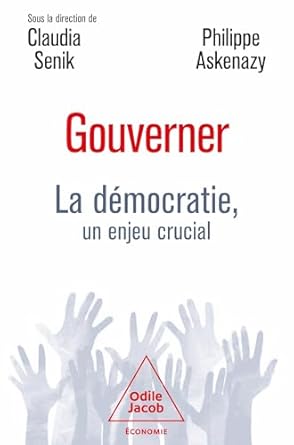
SENIK Claudia, ASKENAZY Philippe. Gouverner. La démocratie, un enjeu crucial, Odile Jacob, 368 pages.
This collective work is a synthesis of CEPREMAP’s latest work on democracy, in response to the major challenges of the 21st century. The first chapter, written by Fanny HENRIET and Katheline SCHUBERT, focuses on the energy transition to a net-zero world. This investment-intensive transition will be long, difficult, and costly, and the long-term impact on growth is not clear. Two worldviews are exposed to climate change: the pessimistic belief that the solution can only come from economic downturn or collapse; and optimistic faith in life-saving technological progress. However, effectively tackling climate change avoids high adaptation costs. The authors have a number of levers; some are more effective, others easier to implement, but none can be used alone. In the second chapter, Jean-François LASLIER explores innovative voting methods, such as “vote by evaluation” as opposed to “single member vote” and their impact on the results of elections. A passage is dedicated to Nicolas de Condorcet, economist under Turgot, and a key figure in the theory of voting. The author presents the work carried out from several French and US elections and concludes on a positive note. Voters are ready to experiment and express themselves in these new ways of voting, which would leave democracy intact. Thomas Renault then gave an overview on the use of Twitter to measure the well-being of French people. Before becoming X following Musk’s takeover in November 2022, the Twitter platform was accessible to researchers to collect opinions, thoughts and emotion metrics. In the study presented, the database consists of more than 23 million messages sent between 2010 and 2022. Once the sample has been constructed and corrected for biases (the effect of robots, among others), it turns out that it is possible to construct relevant and robust indicators to measure French morale in addition to surveys carried out in a more traditional way. In a fourth chapter, Quentin LIPPMAN presents his study on the effect of the “parity law” of 6 June 2000 on the number of women elected, their place in the political sphere and in the business world. While the law has increased the number of women on boards, it has not affected the highest positions in the company. The acceleration effect is not significant for two main reasons: the time-consuming nature of positions in the hierarchy seems incompatible with their greater family responsibilities. Women are also less ambitious than men and less eager to occupy these positions of power. Finally, Philippe ASKENAZY and Thomas BREDA address the theme of democracy at work, which is reflected in the close links with staff representation and collective bargaining. They also reflect on the obstacles to the implementation of a democracy at work, reflected in the collective expression of employees’ interests and aspirations. They end with a call to strengthen the capacities and competences of the social partners in order to resume social dialog. The authors are members of CEPREMAP (Center for Economic Research and its Applications). Its mission is to provide an interface between the academic world and public decision-making. Daniel COHEN was its director from 2005 to 2023. Since her disappearance, Claudia SENIK has taken over its management. Column by Sophie Friot