


Jean-Jacques Pluchart The encyclical Magnifique Humanité published in May 2026 (see clubturgot.com 114) has rekindled the debate on the ethical principles of AI. Various movements, made up of institutions, companies, scientific laboratories and think tanks, are striving to define ethical frameworks – in the form of codes and charters – based on philosophical, sociological and psychological considerations, but this framework is sparking debates between regulationists and libertarians. The foundations of AI ethics Ethical deliberations relating to AI practices follow three main approaches: universal, normative and applied. The first – of an axiological nature and inspired by Kant and Rousseau – is based on the principles and values that underpin life in society: respect for people, truth, justice, nature, etc. The second – known as legalistic or prescriptive – covers moral judgements and social values, such as true or false, good or bad, fair or unfair, etc. The third – of a praxeological nature – measures the consequences, externalities or impacts of a system, behaviour or object on the economy, nature, society or the individual. It is most often applied to new technologies, in particular AI, and to management, in particular sustainable management (Pistilli, 2024). Ethical frameworks for AI In order to limit their negative impacts on collective and individual thoughts, decisions or behaviours, guides or ethical charters published by companies and normative codes, frameworks and/or regulations issued by regulators (international organisations, nation-states, associations), aim to provide a framework for the design of software and the use of its data and results by companies (Constantinides & al, 2024). The codes generally do not have a deontological or moral dimension, unlike charters, guides or, in France, the “raisons d’être” of companies. International institutions such as the OECD, the UN, UNESCO and the G7 have been working since 2019 to establish a “normative ethics” and “global governance of AI”. The Vatican, notably inspired by the work of Bonanti (2018), who inspired several codes, advocates the advent of an “algo-ethics” (or ethics of algorithms) based on the principles “of transparency, social inclusion, responsibility,impartiality and reliability”. Overall, according to Menecoeur (2020), the 126 documents on AI ethics identified worldwide are divided between public codes (national and international) and private guides (from companies, universities and associations). But the leaders of the United States, the People’s Republic of China and the European Union, as well as the leaders of their digital companies, apply in practice rules, codes and ethical guides that often reflect different approaches. The ethical relativism of AI European texts – and in particular the AI Act – are the subject of intense lobbying, particularly by GAFAM, in order to avoid open-source AI and the decommissioning of certain generative AI software. Most European think tanks recommend strengthening the regulation of AI, such as the Institut Montaigne, which launched the Objectif IA operation in favour of digital training, the Observatoire de la RSE, which is striving to put AI at the service of the application of ESG standards, and the Institute Louis Bachelier, which has initiated the Good in Tech program to measure the impact of AI on society. But a collective of 30 global AI leaders has denounced the European approach, stating that “Europe hasbecome less competitive and less innovative compared to other regions, andit now risks falling further behind in the AI era due toinconsistent regulatory decisions“. These reactions show that AI codes and guidelines are subject to a form of “ethical relativism”, because they depend on both technological and economic factors, but also – and increasingly – on geopolitical and cultural considerations. They are interpreted differently depending on the disciplines, professions and ideologies of the AI stakeholders and ideology. In the United States, under the influence of the Federal Guidelines for Sentencing Organisations (1991), practical guides (guidelines) are more common among American companies than among European or Chinese firms. The GAFAM companies have initiated a Partnership on AI which recommends the application of general principles and a collective commitment: “We are committed to conducting open research and dialogue on the ethical, social and economic implications of AI” (Hern, 2016). But the interpretation of these principles differs from one company to another. Google focuses on social criteria (in particular non-discrimination). Apple has a charter based on honesty and respect for stakeholders. Meta only states that it applies the professional standards in force. Amazon adopts the fundamental principles, but paradoxically states that “AI guides humans”; Microsoft and Open AI display “Codes of trust reflecting their cultures and values”; they recognise “the potential for bias in algorithms and strive to mitigate its impact”. In Europe, reflections on the ethics of AI were launched in 2015 and led to a regulation aimed at the protection of personal data (Data Governance Act) published in 2018 (but applied in 2023), then a white paper on AI (2020), a directive on microprocessors (Chips Act, 2023) and a directive on artificial intelligence (AI Act) passed in 2024 (but applicable in 2026). These texts seek to manage the risks induced by AI and to promote a “trustworthy AI” based on compliance with the law (Lawful AI), ethical values (ethical AI) and technical skills (robust AI). The principles – borrowed from bioethics – relate to human autonomy (respect for citizens’ rights), the prevention of any harm (protection of people and property), fairness (between users) and explainability (of software). These principles were then broken down into “requirements”: the systems (data, software, results) must “remain under human control”; they must be robust, reliable and transparent “. Compliance with the requirements is monitored by so-called “technical” methods: auditing of “trustworthy architectures” (Trustworthy AI), monitoring of the application of design standards (X-by-design), methods of explanation, testing, validation and implementation. Non-technical methods complete this system: regulation by codes, charters and guides, certification of systems, guidance on AI training and AI research. Among these methods, the AI Act prioritizes so-called “foundational” AI systems according to three levels of risk to public and private life: models classified as “unacceptable”, leading to intrusive and discriminatory uses of AI, are prohibited; systems classified as

How does the company apply AI? The example of banking.
Are the canonical observations of Abernathy and Utterbach (1975) on the transition from experimental innovation to applied innovation still valid half a century later? Will the example of AI applied to banking activities make it possible to verify this? Since the 2020s, banks have been engaged in a vast process of AI-driven innovation of their products, services and systems, as well as of their relationships with their customers, their staff, their partners and regulators. These innovations aim to personalize products and services according to customer segments (households, businesses, local authorities, governments), their risk-return profiles, and the types of services provided (payment, credit, investment, etc.). They are seeking to diversify the current banking interface and integrate the payment function into various objects (telephones, homes, vehicles, glasses, watches, etc.). Their aim is to adapt credit and insurance offers to each purchase, and to automate investment management according to the risk profiles of savers and their ESG scoring requirements. They aim to ensure that each transaction is supported by a “robot advisor” or an AI-“augmented” banking advisor, capable of carrying out prospecting, projections, simulations and training. Thanks to AI, they are striving to better support start-ups in their “valleys of death” and industrial or financial groups in their merger and acquisition projects (especially cross-border), with the help of structured multi-disciplinary networks. In the structured products market, AI applications already allow for the automatic selection of counterparties, an analysis of the levels of protection and barriers offered, the coupons proposed, the pricing of embedded options, the strength of balance sheets and the rating of issuers, and the depth and quality of the secondary market. But above all, AI makes it possible to ensure better security for customer data, processing, transactions, settlement-delivery and securities custody. Achieving these objectives already requires the most advanced AI applications, such as biometric identification, automatic flow traceability, scheduled data dissemination, the systematisation of smart contracts (in MNBC and tokens), the control of loans financing investments with ESG impact (such as Tree Token), the development of “complementary currencies” (such as Bancor) and micro-payments promoting the inclusion of unbanked people (such as Arcadia Blockchain), etc. The staff of each bank must therefore demonstrate “innovism” (Phelps et al., 2020), so that their bank is not a “follower” but a “pioneer” in the application of AI. Innovation encompasses the ability to anticipate new, abnormal or crisis situations by setting up “innovation laboratories”, creating a financial “imaginarium” and stimulating the “desire to create” among staff at all levels. It therefore seems that, in the light of this example, the technological acculturation of companies is both more comprehensive and faster than it was during the “thirty glorious years”. Abernathy, W. J., & Utterback, J. M. (1975). A Dynamic Model of Process and ProductInnovation. Omega, 3(6), 639-656. Phelps, E., Bojilov, R., Hoon, H. T., & Zoega, G. (2020). Dynamism: The Values ThatDrive Innovation, Job Satisfaction, and Economic Growth. Cambridge, MA: Harvard University Press. Jean-Jacques Pluchart

Black, Scholes & Merton or mathematical neutralisation of chance
Philippe Alezard With Bachelier, finance had found its founding insight: stock market prices can be thought of as random movements and options as rights whose value depends on the probability of future prices. With Wiener, this intuition is given a rigorous mathematical foundation: the Brownian motion becomes a continuous process, with independent and Gaussian increments, capable of giving shape to uncertainty. Finally, with Markowitz, uncertainty is no longer merely described; it becomes the subject of a rational decision, organised at the level of a portfolio. However, a decisive question remained: if chance governs prices, is it possible to give a rigorous price to a contract that relates precisely to this chance? This is the question that Fischer Black, Myron Scholes and Robert C. Merton answered in the early 1970s. Their contribution is not just about producing a famous formula. It transforms the very nature of financial valuation. Before them, an option essentially appeared as a bet: the right to buy or sell an asset at a fixed price, in an uncertain future. After them, the option became an object that can be replicated, hedged and valued based on arbitrage reasoning. The price is no longer just an opinion about the future; it becomes the logical consequence of a dynamic hedging strategy. The intellectual and financial context of the 1960s and 1970s is essential to understanding this breakthrough. In the United States, finance was then in the process of becoming an independent academic discipline. Business schools were moving closer to the markets, price databases were developing, and Markowitz’s portfolio theory had introduced variance and covariance into the language of investors, while the CAPM (Capital Asset Pricing Model) of Sharpe, Lintner and Mossin sought to establish a balanced relationship between expected return and systematic risk. At the same time, the options markets, long dominated by over-the-counter transactions, were undergoing an institutional change. In April 1973, the Chicago Board Options Exchange opened its doors and offered, for the first time, an organised market for standardised stock option contracts. The publication of the Black-Scholes model came in the same year, almost at the exact moment when the market needed a common language to price, compare and hedge these new instruments. Fischer Sheffey Black was born in 1938 in Washington D.C. His career path was less linear than that of traditional academic economists. He first studied physics at Harvard before turning to applied mathematics and computer science. He obtained a doctorate from Harvard in 1964 in applied mathematics with a thesis devoted[1] to what we would now call artificial intelligence, at a time when this discipline was still in its infancy. Nothing in this initial career path would have predicted that he would become one of the founders of modern finance. However, this interdisciplinary background, spanning physics, calculus, logic and dynamic systems, undoubtedly explains his ability to view markets as formalisable mechanisms. After his studies, Black worked, among other places, at Arthur D. Little, a consulting firm where he met Jack Treynor[2], one of the pioneers of modern portfolio theory and the equilibrium model of financial assets. This meeting was decisive. Treynor introduced Black to financial problems and encouraged him to think about the links between risk, return and market equilibrium. Black then developed a very personal approach to finance: he was less interested in institutions than in the abstract forces that must govern prices if arbitrage opportunities are eliminated. His mind is that of a theoretical engineer: he seeks the hidden constraint, the necessary relationship, the equation that must be true if the market is consistent. Myron Scholes was born in 1941 in Timmins, Ontario, Canada, to a family with deep ties to the business world. In his Nobel autobiography, he emphasises the importance of this family environment: from a very young age, he was interested in trade, accounting, probability and risk. An eye operation during his adolescence disrupted his schooling and forced him to develop special working methods based on listening, memory and conceptualisation. This personal constraint would play an important role in his way of thinking: Scholes was not only a calculation technician, he was attentive to the economic structure of problems. He continued his studies at McMaster University, then at the University of Chicago, where he obtained his doctorate in 1969. Chicago was then one of the most powerful centres of the new financial economy. Eugene Fama was working there on market efficiency, Merton Miller on corporate finance, Milton Friedman on monetary theory, and the university’s intellectual tradition valued equilibrium reasoning, price consistency and the discipline imposed by competitive markets. There, Scholes received an economic education that was very different from the more institutional European tradition: the objective was not only to describe the markets, but to deduce what prices should be in a world where agents exploit all the possibilities of arbitrage. Robert Cox Merton was born in 1944 in New York. His father, Robert K. Merton, was one of the most influential sociologists of the 20th century, known in particular for his work on “self-fulfilling prophecy” and “unintended consequences”. Young Robert therefore grew up in an exceptional intellectual environment, but quickly chose a different path. He first studied mathematical engineering at Columbia in 1966, then applied mathematics at the California Institute of Technology, where he obtained his MS in 1967. He then joined MIT for his PhD in economics, under the supervision of Paul Samuelson. This point is crucial: Samuelson is one of Bachelier’s successors in American finance. Through him, Merton inherited a tradition in which mathematical physics, probability and economics could be brought together in a single analytical architecture. Merton had a more advanced technical mastery of stochastic calculus than most financial economists of his time. Where Black and Scholes construct a highly powerful arbitrage intuition, Merton gives the model its mathematical generality. His 1973 article[3], “Theory of Rational Option Pricing”, published in the Bell Journal of Economics and Management Science, broadens the framework, clarifies the conditions of validity, establishes general restrictions on option prices and embeds

The paradoxical effects of geopolitical conflictson the energy transition
Jean-Jacques Pluchart Is the rise in crude oil by more than 70% over the last six months changing the equation of the global energy transition? The replacement of fossil fuels (oil, gas, coal) by alternative energies (solar, wind, biomass) is in principle governed by their differential prices. The level of $105-110 reached in May 2026 by a barrel of crude oil (Brent) should in principle make most new energy sources competitive, and the risks of shortages caused by the closure of the Strait of Hormuz should encourage European and Asian countries to promote their domestic energy sources. Despite these incentives, the decision-makers of the companies that consume the most energy still seem hesitant to make the long-term investments needed for each link in the value creation chain of the various energy sources: production, mass transport, distribution, consumption. The stock market prices of the stakeholders in these chains are still undervalued compared to those of the dominant groups in the fossil fuel sectors. The governments of consumer countries are slow to implement massive plans to support the development of alternative energies. There are various explanations for this hesitation. The volatility of crude oil and natural gas prices is due to the uncertainty surrounding the outcomes of the Ukrainian and Iranian conflicts. A significant drop in prices following their settlement would compromise the profitability of projects undertaken in alternative energy sectors. Are investors subject to game theory and its law of minimum regret? In the most indebted countries, such as France, the room for manoeuvre to support energy supply and demand remains limited. The financing of green investments remains hampered by the uncertainty surrounding their long-term profitability, the foreign sources of supply of certain components and their supply infrastructure, as in the case of electric cars and solar panels. For all these reasons, while the latest conflicts are helping to change the strategies of the private and public stakeholders involved in the energy transition, their unpredictable outcomes and the inconsistency of public policies mean that it is not yet possible to see all the effects.

Tackling Poverty through Work
Nadia ANTONIN In a study published on 16 April 2026, INSEE reveals that the French redistribution system reduces income inequalities but locks beneficiaries into a structural dependency on public authorities. This reduction in inequality is mainly the result of four factors: 1) individualisable social transfers in kind; 2) cash social benefits in the form of replacement income; 3) collective expenditure; 4) levies (income tax and wealth tax). The INSEE study report also shows that, between the richest 10% and the poorest 10%, the income gap decreases from 1 to 20 before redistribution to 1 to 3.7 after the application of social welfare mechanisms. Finally, the INSEE analysis reveals that in 2023, more than one in two French people received more from the system than they contributed to it. Some claim that social welfare benefits in France trap people in an ‘inactivity trap’. Having examined the concept of poverty, we shall demonstrate that ‘work is indispensable to man’s happiness; it elevates him, it consoles him; and the nature of the work matters little’ […] (Alexandre Dumas fils). Examination of the concept of ‘poverty’ Ms Marie Lecerf from the European Parliament’s Directorate-General for Parliamentary Research Services points out (‘Poverty in the European Union’, March 2016), ‘there is no consensus on the definition of poverty, which is often defined by other concepts, such as well-being, basic needs, income or social exclusion, rather than by poverty itself’. According to INSEE, ‘a household and the individuals who make it up are considered to be poor when the household’s standard of living is below the poverty line, which is most often set at 60% of the median standard of living’. Like Eurostat and other European countries, INSEE measures income poverty in relative terms, whereas other countries (such as the United States or Canada) adopt an absolute approach. Absolute poverty refers to people who are unable to meet their basic needs (food, housing, etc.). The consequences of the decline in the value of work: living on state benefits Welfare dependency is over-developed in France. International comparisons reveal a ‘distinctive French exception’. Some refer to France as ‘the land of a thousand and one benefits’! The Directorate for Research, Studies, Evaluation and Statistics (DREES), the statistical department of the Ministry of Health and Social Solidarity, has entitled its presentation of the social protection accounts for 2024 ‘The French: Champions of Social Protection’. In 2024, social welfare expenditure reached €932 billion, i.e. 31.9% of GDP and an average of €13,650 per capita. In the EU-27, this expenditure accounts for an average of 27.3% of GDP. With redistribution having reached its structural limits, ‘France must be put back to work’. Work is the best way out of poverty In his book entitled ‘Celui qui ne travaille pas ne mange pas’ (‘He who does not work shall not eat’), Régis Brunet, a professor at the Catholic University of Louvain, points out that ‘from Benedictine abbeys to Bolshevik soviets, and from the Calvinist Reformation to capitalism’, St Paul’s dictum has continued to resonate: ‘He who does not work shall not eat’. This aphorism, adopted by Lenin during the Russian Revolution, expresses a social contract based on the ‘value of work’. In Candide, Voltaire writes: “Work keeps three great evils from us: boredom, vice and want.” Work is beneficial to human beings. According to Immanuel Kant, ‘the best way to enjoy life is through work: it is a profound deliverance that fulfils human beings, enables them to flourish in their freedom, rescues them from boredom and leads them to a deep understanding of practical interest, invigorates their reason, and ultimately brings them joy’. Escaping poverty through work certainly requires stability, fair remuneration and a favourable labour market, but also other essential conditions. Creating the conditions to enable individuals to succeed and progress through their work In his book ‘Development as Freedom’ (1992), the economist Amartya Sen proposes understanding poverty not in terms of insufficient income levels, but in terms of individuals’ ability to fulfil themselves: freedom of expression, dignity, self-respect, and participation in social life in general (what he calls ‘capabilities’). In order to restore work to its rightful place, we propose the following guidelines: – Reduce the tax burden on labour and productive capital. According to the OECD, France remains Europe’s champion of taxation. In 2024, the share of compulsory levies in France stood at 45.3% of GDP, compared to 40.4% for the EU as a whole (source: Eurostat). – Recognising work, i.e., identifying, assessing and rewarding each person’s merits. We must condemn bonuses for incompetence, nepotism and cronyism. In addition to the lack of recognition of merit, some people rightly complain about the devaluation of qualifications, particularly the PhD. – Combat envy, which is not confined solely to professional relationships. Described at the time as ‘social jealousy’, it lies at the root of a certain political ideal that advocates egalitarianism and reliance on welfare rather than financial prosperity earned through work. To conclude on the assertion that we can combat poverty through work, let us consider the Christian victims of the genocide perpetrated in 1915 in the Ottoman Empire. Having arrived as stateless persons, they found their place in society through their hard work. They received no help and held out with tenacity. They worked 16 hours a day, seven days a week. Hard-working and extremely dignified, they enabled their second-generation children to rise to the top of the hierarchy.

BESS: Sustaining Value in an Uncertain World
Column: Florence Anglès In the previous column, the focus was on verifying the project’s viability. But once this point is clarified, the question shifts. It’s no longer about whether value can be created, but whether it can be sustained. In a constantly evolving environment, the challenge is understanding when the equilibrium might become fragile. Sustaining Value: From EBITDA Volatility to NPV Sensitivity After verifying the structure’s solidity, the focus shifts to the sustainability of value rather than its mere existence. The question then becomes: do the projected cash flows remain stable in a realistic operating context, considering all technical constraints? Unlike traditional infrastructure, BESS construction projects are heavily dependent on revenues generated in the market. This makes them sensitive not only to price fluctuations but also to profound changes in market dynamics. At this stage, the aim is to assess risks to transform operational uncertainties into financial uncertainties, and thus measure how the investment reacts to key assumptions. Fragility of Revenue Streams and Risk of Market Saturation BESS projects often rely on multiple revenue streams, such as arbitrage, frequency response, voltage support, and sometimes capacity mechanisms. This diversity can reduce risk, but it also leads to exposure to market fluctuations. These markets are often highly competitive and can change rapidly. When new capacity is added, revenue margins tend to decrease, and past performance is no longer a guarantee of future results. In this context, the main risk is not the fluctuation of short-term earnings, but rather the gradual decline in margins over time. The key questions are: Weak revenues primarily affect EBITDA levels, but due to discounting and leverage effects, they can have a much greater impact on internal rate of equity. A project evaluated using overly optimistic growth assumptions, without considering downside risks, demonstrates financial vulnerability rather than genuine strength. Degradation, Efficiency, and Integrity of Long-Term Cash Flows Technical assumptions significantly influence financial results. In battery energy storage (BESS) projects, factors such as degradation, efficiency, and system condition directly impact the sustainability and reliability of cash flows. Battery degradation plays a significant role in energy production capacity, the duration of revenue generation, the need for capacity expansion, and the remaining asset value. Overly optimistic degradation assumptions may lead to inflated final cash flow projections, potentially resulting in an excessively high net present value (NPV). Other technical assumptions follow a similar trend: Even small deviations in these assumptions can have significant financial consequences. In some cases, they may be enough to push the project’s IRR below the investor’s cost of capital. The key question is: at what level of technical degradation or underperformance does the project become unprofitable? If small deviations in technical performance have significant consequences for returns, robustness should be prioritized over optimization. Schedule-related risk: commissioning delays and discounting effects Time is a critical but often underestimated risk factor. Delays in commissioning not only postpone revenue generation but also reduce the net present value. Initial cash flow plays a more significant role in net present value (NPV). An initial cash flow lag increases the risk to NPV, particularly in capital-intensive projects. A six-month lag may have a limited nominal impact but a disproportionate effect on NPV due to the discounting effect. From an investor’s perspective, the question is not only whether the lag can occur but also what lag the project can withstand without impacting its returns. Furthermore, a delay in commissioning can lead to various side effects, including: In leveraged structures, schedule risk can directly impact debt repayment capacity and refinancing conditions, thereby amplifying its effect on return on equity. The question, therefore, is not whether the project will ultimately be operational, but rather: how significant is the value erosion caused by an execution delay? Leverage, Coverage Ratios, and Resilience to Risk Ultimately, a project’s “bankability” is tested in a crisis, not in baseline scenarios. A project may appear robust under optimistic assumptions but prove fragile under more realistic adverse conditions. Stress tests must assess the robustness of the investment project under adverse scenarios, such as: At this stage, it is essential to make the following distinction: A project with a stable NPV under adverse scenarios is considered investable despite fluctuating short-term performance. A project with a marginal NPV under moderate crisis scenarios is considered inherently fragile. Conclusion Ultimately, the goal of risk assessment in battery energy storage (BES) mergers and acquisitions is not to create a perfect model or to account for every possible scenario. It is to answer a few practical questions, even if the answers are not always clear or perfectly structured. First, is the project feasible in a safe and realistic way? This is the starting point. Grid access, permits, regulatory compliance: if any of these elements are uncertain, the projected revenues become meaningless. The project may look promising on paper, but it simply won’t materialize. Then, assuming it does materialize, the question is whether its value will hold over time. BESS assets do not operate in a stable environment. Performance fluctuates, equipment ages, and market conditions change. What matters is not the base-case scenario, but the project’s behavior when conditions are less favorable. There is also the question of execution. Delays or friction, even relatively minor ones, can have disproportionate effects, not necessarily because they significantly alter the project, but because the time factor may not be as secondary as one might think. Costs skyrocket, revenues fluctuate, and the overall balance sheet changes. Over time, operational stability becomes equally crucial. A project unable to maintain consistent performance tends to accumulate problems. Individually, these problems may seem manageable. Together, they can become far more significant. Finally, there is resilience. A project should not be evaluated solely under favorable conditions. The real test is observing its reaction to pressure, declining revenues, rising costs, or less favorable market conditions. This is where the distinction becomes clearer. Some projects remain largely intact even when assumptions change. Others do not. This isn’t always immediately apparent, but ultimately, it’s what makes an investment worthwhile. Therefore, risk assessment

AEFR Seminar, 7 April 2026 Insurance and Coverage of Major Risks: Towards a European Approach
Jean-Jacques Pluchart Club Turgot attended the seminar on the insurance and reinsurance of systemic risks. Daphné Le Conte des Floris (AXA) presented AXA’s latest study on the perception of major risks in 2025, based on a survey of 23,000 policyholders and 3,600 experts in 27 countries. The survey reveals an increase in the impact of claims since the 2000s. The main factors, in order of frequency, are climate change, cybersecurity, geopolitical instability (since 2025), social divisions (especially in France), and damage to biodiversity. The survey also indicates that respondents are aware of the inadequacy of the current governance of polycrisis insurance in democratic systems. Rémy Lecat (ACPR) reported on the stress tests carried out by the ACPR to cover the risks posed by the climate and energy transitions. The tests show that coverage of the impacts of CO₂ emissions can be considered satisfactory overall, but that significant differences can be observed between regions and sectors of activity. The tests also focused on the coverage of property losses caused by clay subsidence and dam failures. They show that companies’ value chains can be severely affected by certain risks. These growing impacts will increasingly be covered by higher premiums and excesses, but also by ever-larger contributions from reinsurers and governments. Amélie Breitburd (independent expert) proposed the creation of interactive online platforms to serve policyholders, bringing together insurers, pension funds, brokers, mutual insurance companies, private equity firms, etc., based on the model of the platform created by Lloyd’s. These platforms would make it possible – for example, under EUInc status – to collect data on claims, calculate losses, pool coverage and provide back-office support. Edouard Viellefond (CCR) then presented the French ‘Natural Disasters’ scheme (CATNAT), which manages compensation for damage caused by exceptionally severe natural phenomena. This compensation scheme is activated following a ministerial order recognising a state of natural disaster. It applies to natural events that cannot be insured under standard policies, such as floods and mudslides, earthquakes, ground movements, avalanches and cyclones. However, CATNAT has been operating in the red for nine years, as the cost of natural disasters has continued to rise, reaching €6.5 billion in France in 2023. A reform in 2023–2024 introduced an increase in the CatNat surcharge (included in home and business insurance policies) in order to strengthen the scheme’s resources in the face of a sharp rise in climate-related claims. The reform also introduces a ‘presumption of refusal of insurance’, making it easier for uninsurable claimants to access cover. One seminar participant pointed out that coverage for major risks is increasingly provided by the claimants themselves (who are uninsured or subject to high excesses) and by the state (which is increasingly called upon). Another participant noted that the more numerous and significant the claims, the higher the insurers’ financial performance. At the European level, three directives regulate life and non-life insurance activities: Solvency I (introduced in the 1970s), which harmonises the minimum coverage rules; Solvency II (2016), which sets out the rules for calculating capital based on actual risks (market, credit, underwriting, operational – with two capital tiers) and defines the governance and reporting requirements for insurers; and Solvency III, which is currently under discussion.

BESS: Securing the Foundations of Value Before Any Investment Decision
Florence Anglès Battery energy storage systems (BESS) are now widely recognized as essential assets of the energy transition. This is no longer in dispute. However, how their value is realized in practice is more complex. Unlike traditional infrastructure, there is no single revenue stream that guarantees their sustainability. Value generally stems from a combination of services, optimization strategies, performance degradation, and regulatory conditions—all elements that do not necessarily evolve linearly or predictably. This creates a unique situation in the context of a merger or acquisition. It is not a matter of acquiring a stable asset, but a system that evolves over time. Some aspects can be modeled, but a significant portion depends on the actual evolution of the situation—from a technical, commercial, and regulatory perspective. The question, therefore, is not simply whether the model works on paper. It’s more about understanding where it starts to weaken. In practice, risk assessment is less about listing problems one by one than about forming an opinion—admittedly imperfect, but coherent—on the actual viability of the investment project. And ultimately, this should answer a fairly simple question: should we move forward, renegotiate, or back down? Ensuring Structural Viability: Protecting the Foundations of NPV Before examining performance, a crucial question must be asked: does the project have a solid and enforceable right to generate cash-flow? In an M&A transaction in the field of battery energy storage systems (BESS), the most concerning risks are not those affecting margins, but rather those relating to the legal, technical, and/or regulatory foundations of the project. These factors are essential to the existence, duration, and execution of future cash flows and therefore have a direct impact on valuation. The goal here is not to optimize returns, but to ensure that value can exist. Grid Access and Interconnection Certainty For a battery energy storage system (BESS), grid access goes beyond a simple technical criterion; it represents the economic lever through which all revenues flow. The main risk factors are: Without firm and transferable interconnection rights, projected revenues remain largely hypothetical. From a valuation perspective, network fragility affects: • Cash flow duration, • Eligibility for ancillary services, • The long-term viability of the asset. If network access is uncertain, the numerator of the NPV equation becomes speculative. In this context, simply changing the discount rate does not remedy the structural deficiencies. It is essential to address the risk at its source, or to review the investment. 1.2 Regulatory Stability and Market Eligibility Battery energy storage system (BESS) projects operate within an evolving regulatory environment. Market rules, remuneration schemes, and network code requirements can change over time, sometimes significantly. The key questions are: Regulatory uncertainty not only affects potential growth potential but can also directly impact on the asset’s ability to contribute to the market. In this context, risks must be assessed beyond the current situation, considering the project’s resilience to different regulatory scenarios. Permits, Land Rights, and Transferability In the context of mergers and acquisitions of battery energy storage systems (BESS), it is important to emphasize that legal transferability is not a minor detail, but a key element for value creation. The ability to transfer permits, land rights, and contractual commitments to the buyer directly impacts the project’s transition from the development phase to the operational phase. At first glance, the permits and authorizations appear complete. However, their validity depends on their validity, conditions, and, above all, their transferability. Any uncertainty at this stage introduces an execution risk that is often underestimated during due diligence. Hidden charges may include unresolved legal challenges, conditional permits, or unusual obligations imposed on the developer. These factors These issues can have a considerable impact on the operation. They are not always clearly visible in the documentation but can have immediate operational implications. In practice, these risks can lead to: Time is a critical factor in infrastructure investments. Delays reduce NPV through discounting effects, while legal uncertainty increases perceived risk and, consequently, the required return. In this context, ambiguity regarding permit transferability is a classic source of value erosion. Delivery Model and Contractual Architecture The robustness of a battery energy storage system (BESS) project depends primarily on the consistency between its implementation model and its contractual framework. Even if the contracts appear comprehensive, their success largely depends on their adaptation to technical requirements and actual operation. One problem often overlooked in this field is battery degradation. It’s frequently considered a purely technical aspect, but it has a direct impact on finances. Over time, battery capacity and efficiency decrease, which also reduces their ability to generate revenue. If this isn’t properly factored into investment analysis, there’s a risk of overestimating expected performance. This naturally raises the issue of replacement. Indeed, key components (particularly batteries and containers) will require replacement during the system’s lifecycle. These interventions can lead to additional costs, operational constraints, and potential downtime. Consequently, in such an isolated or complex environment, the logistical challenges associated with these replacements can significantly contribute to increased costs and complexity. End-of-life issues are often neglected. Whether it’s recycling, recovery, or reuse, these aspects can impact residual value and must therefore be considered from the outset. Ignoring this can provide a partial view of the project’s profitability. Furthermore, managing battery degradation requires more than just technological improvements. It’s also essential to consider preserving their value over the long term. A sound investment isn’t solely based on perfect conditions, but also on considering the real-world constraints of use. Therefore, it’s crucial to anticipate degradation and its implications to ensure lasting protection. The responsibilities between the various stakeholders – system integrator, inverter supplier, energy management service provider, and maintenance provider – are often unclear from the outset. On paper, this seems manageable, but it can cause performance issues or even conflicts once the system is operational. Contracts don’t cover all possible situations. If the commissioning doesn’t accurately reflect actual operation, gaps appear. Over time, these shortcomings become risks borne primarily by the investor. These risks have very real consequences. They can delay operational
Round table organized on 31 March 2023 by the AEFR
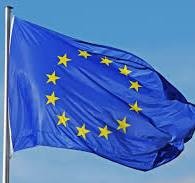
The 28th regime: a new legal framework for innovative companies Jean-Jacques Pluchart The purpose of the round table is to examine the European proposal for a new European company status, provisionally referred to as the ‘28th regime’ (in addition to the 27 national regimes), EU Inc or Societas Europaea Unificata. On 18 March 2026, the European Commission presented to the Council a proposal for a regulation establishing a new company form that would complement the framework for the organization of services in the internal market (the 2009 Bolkestein Directive). It would complement the little-used statuses of the European Company and the European Economic Interest Grouping. The EUInc status is intended primarily for innovative European SMEs, SMIs and mid-cap companies. In his introductory remarks, Michel Cojean (AEFR) stated that this status would be primarily aimed at innovative start-ups and scale-ups. Its purpose would be to facilitate their financing during the development phase. It would respond to the proposals set out in the Draghi-Letta and Noyer-Kukies reports, which aim to enhance the competitiveness of European companies vis-à-vis US and Asian industries and services. Didier Martin (Bredin Prot law firm) clarified that the EUInc status would be fully digital, with registration taking less than 48 hours via a single European portal. It would not entail a minimum capital requirement and would provide access to the financial markets. However, the creation of this status would raise several challenges: how to reconcile it with national legal frameworks in terms of stock options, employment law, insolvency law, etc. Christian Noyer (former Governor of the Banque de France) argued that this status should be ‘simple, flexible and digital’. He highlighted the value of this project, which aims to raise between €50 million and €100 million in capital to finance scale-ups using European and foreign pension funds. André Trade (legal expert at the European Commission) clarified that the proposal is based on a regulation under Article 114 of the Treaty, which requires approval by the Council by a qualified majority, rather than a directive (which requires unanimous approval). This is why the proposal reflects a minimalist vision of the legal framework for the European company. It falls solely within the scope of company law, which raises issues of compatibility with other branches of law. Martin Guesdon (legal expert at the French Ministry of Justice) identified three advantages of this status: it can attract foreign investors; it encourages the creation of companies in Europe; and it stabilises the legal framework for business creation. However, it raises issues concerning the valuation of assets and the protection of financiers and creditors. He raised the question of which court would have jurisdiction in the event of disputes. Sandrine Mesnard (Director General of the Treasury) raised questions about the accounting and regulatory frameworks applicable to UEInc and about the tax regime applicable based on the company’s registered office or operational headquarters. Alain Clot (France Fintech) pointed out that the European market is currently experiencing a veritable exodus of talent working for fintech companies to the US market, as the European market is unable to raise the capital required (around €10 billion per year) to develop its 14 ‘diamonds’ and 100 fintech companies. He pointed out that in France, over €6 trillion of savings are held in current accounts or short-term guaranteed investments, and do not contribute to the financing of young, innovative companies. He believes that this status would prevent these start-ups from seeking tax loopholes rather than opportunities for productive investment. René Repassy (Member of the European Parliament and Professor of European Law) expressed pessimism about the chances of this statute being adopted quickly, given the debates it would generate within the European Council and Parliament. He is not certain that this status would sufficiently protect contracts and public interests, particularly in terms of taxation. He also criticised the name EUInc, which is borrowed from the US model. During the round table chaired by Pervenche Berès (President of the AFER), all the speakers acknowledged the strategic nature of the project, which is essential for Europe to regain a competitive advantage over the United States and China. However, they were also unanimous in acknowledging that its implementation will be a long and challenging process, given the scale of the issues it addresses and the interfaces it shares with other branches of European and national law, particularly with German co-management.

Cybersecurity in France: Current Situation and Challenges
Nadia Antonin The explosion of data in the digital world, referred to as the concept of big data, poses numerous challenges for contemporary society. Data security is now a major challenge of unprecedented scale in the face of data breaches. ‘For almost two years now, not a week – or even a day – has gone by without us hearing about a new data breach in France,’ says Clément Domingo, a security expert. Recent examples of massive data breaches illustrating France’s digital vulnerability On 18 February 2026, the Ministry of Finance revealed in a press release that, since the end of January 2026, a cybercriminal had been able to access 1.2 million accounts in the National Bank Account Database (FICOBA). The hack is said to have been made possible by the theft of a civil servant’s login credentials, with access lasting approximately one month. The personal data disclosed included ‘bank details (RIB/IBAN), the account holder’s identity, their address and, in some cases, the user’s tax identifier’. What about securing such a sensitive application? Can access to such sensitive databases be based solely possessing a username and a password? According to Clément Domingo, ‘an employee’s password and email address are sufficient, in each case, to hack sensitive data’. According to Etienne Wery, a lawyer practising in Brussels and Paris, ‘In principle, access to such sensitive databases requires strong authentication mechanisms, strict limitation of the rights granted, and detailed tracking of the accesses made. In addition, there are monitoring requirements.” On 27 February 2026, the French Ministry of Health confirmed the enormous scale of a health data breach. The cyberattack targeted 1,500 doctors who use the Cegedim software. Gérôme Billois, a cybersecurity expert at Wavestone, sees this as the result of ‘years of underinvestment in cybersecurity’ in the healthcare sector. Cyberattacks can also have disastrous consequences for businesses (theft of sensitive data, financial losses, damage to reputation, etc.) and, in the worst-case scenario, can lead them to bankruptcy. An overview of cybersecurity in France According to Check Point’s annual report on the threat landscape in France, published in February 2026, France ranks second among the most targeted European countries. With 13% of attacks, it ranks second, behind the United Kingdom (17%). Furthermore, according to data published on 19 February 2026 by the Public Statistics Service for Internal Security, around 17,600 cyberattacks were recorded in France in 2025, an increase of 4% compared to 2024. Why is France being targeted? How can we explain the targeting of French companies or public authorities? According to the aforementioned report, the main hypotheses put forward are: France’s economic clout, its increasing use of digital technologies, and its geopolitical role, particularly within the EU and in its support for Ukraine. The sectors most targeted are the government sector, with 22% of attacks, business services (18%), and retail (15%). The most common forms of attack remain the same, with a marked increase in phishing, which, according to the third cybersecurity barometer by Docaposte and Cyblex Consulting, affects 38% of organisations, ransomware, which remains high at 28%, and data loss or theft, which stands at 17%. Finally, cybercrime comes at a considerable cost. According to Statista, the annual cost of cybercrime in France is estimated at €118 billion in 2024, equivalent to 4% of GDP. In 2023, it reached €93.5 billion, whereas in 2016, it stood at €5.1 billion. The gap between the measures put in place to combat cybercrime and the level of the threat continues to widen, due in particular to underinvestment in cybersecurity, a lack of an overarching strategy, etc. Overall, we are observing a lack of ‘digital hygiene’ within businesses and public administrations, i.e., a set of best practices to protect data and avoid digital pitfalls. A cybersecurity culture should not be optional: it is essential Neglecting security is a serious mistake. It is essential to develop a genuine culture of digital security. In mid-January 2026, the Minister of the Interior, Laurent Nunez, acknowledged before the Senate a ‘lack of digital hygiene’ in connection with the cyberattack on his ministry. Good digital hygiene is not based solely on tools, but also on a culture of cybersecurity. A cybersecurity culture refers to the set of attitudes, behaviours, knowledge and practices adopted by individuals and organisations to protect IT systems, networks and data from cyberattacks and unauthorised access. Developing an effective and sustainable cybersecurity culture requires a number of principles: – Understanding that security is everyone’s responsibility. It is a collective responsibility rather than a matter for experts alone; – Acknowledge that human error remains the primary vulnerability in cybersecurity. 82% of data breaches are linked to human factors; – Provide regular training for employees; – Integrating cybersecurity into all projects from the design stage (security by design); – Implement cyberattack simulations that enable the proactive identification and remediation of security vulnerabilities, before they can be exploited by real criminals. Organisations such as the French National Agency for the Security of Information Systems (ANSSI) and the European Union Agency for Cybersecurity (ENISA) emphasise the importance of this cultural approach. In short, cybersecurity is a collective mindset, a daily discipline and a cornerstone of modern governance. Not investing in a cybersecurity culture means accepting major risks.