

With Benoît Mandelbrot, modern finance was confronted with one of its deepest limitations. Markets do not always behave as classical Gaussian models assume they should. Extreme movements are more frequent, periods of turbulence are more concentrated, and structural breaks occur more often. Financial randomness is not merely continuous and regular; it is often rough, intermittent, and abrupt. Mandelbrot had thus forced finance to confront what the models derived from Bachelier, Wiener, and Black–Scholes–Merton had largely left in the shadows: fat tails, discontinuities, episodes of crisis, and changes of scale.
Yet one question remained unanswered. If volatility is not constant, if it rises during periods of stress and declines in calmer phases, how can it be measured? How can it be modeled? How can we move from an empirical observation—that markets experience different regimes of turbulence—to a statistical tool that can be used for forecasting, hedging, pricing, and risk management?
Robert Engle provides a decisive answer to precisely this question. His work does not primarily seek to reconstruct the entire edifice of financial theory. Instead, it begins with a simple but essential observation: in financial time series, large price movements tend to be followed by other large movements, while small changes are often followed by other small changes. In other words, volatility clusters into periods. It is not uniformly distributed over time. It has a memory, not necessarily in the direction of prices, but in the intensity of their fluctuations.
This property is now known as volatility clustering[1]. It has become one of the most important stylized facts in contemporary empirical finance. In the early 1980s, Robert Engle gave it a rigorous econometric formulation through ARCH models, subsequently paving the way for GARCH models, which would become one of the central tools of modern financial risk measurement.
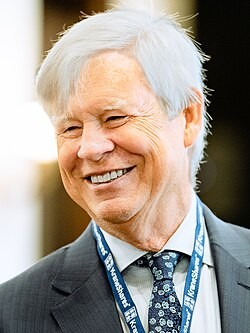
Robert Fry Engle III was born on November 10, 1942, in Syracuse, New York State. His intellectual journey is revealing of the evolution of quantitative finance and economics in the second half of the twentieth century. He began with a scientific education focused on physics before gradually turning to economics. This trajectory is not incidental. Like Bachelier, Wiener, and Mandelbrot, Engle belongs to a family of researchers whose contributions to finance stemmed from a shift between disciplines. He did not come primarily from financial practice, but from a culture of measurement, dynamic models, and the analysis of complex phenomena.
[1] Journal of Economic and Social Development (JESD) – Resilient Society, Vol. 10, No. 2, September 2023.
After his initial studies, he continued his education at Cornell University, where he earned a PhD in economics. He then taught at the Massachusetts Institute of Technology, followed by the University of California, San Diego, which would become one of the major centers of modern econometrics. He later joined New York University, where his work moved even closer to practical financial applications. This academic trajectory placed him at the intersection of several worlds: theoretical econometrics, macroeconomics, financial markets, and risk management.
Econometrics, the discipline at the heart of his work, consists of applying statistical methods to the analysis of economic phenomena. It does not merely describe data; it seeks to identify relationships, test hypotheses, and build models capable of accounting for how economic and financial variables evolve over time. In Engle’s case, this ambition focused on a variable that has become central to contemporary finance: volatility.
Volatility was, of course, known before Engle. In Markowitz’s work, it appears as a measure of risk in portfolio theory. In Black–Scholes, it becomes the key parameter in option pricing. In these frameworks, however, it is often treated as a relatively stable quantity, or at least as a value that can be estimated over a given period. Yet observations of financial time series show something quite different. Volatility changes. It contracts, expands, and sometimes explodes. It appears to follow a dynamic of its own.
This idea is essential. In a classical model, one may assume that an asset’s returns are random but that their variance remains constant. Such an assumption greatly simplifies calculations and makes it possible to work with a stable distribution of returns. But it is empirically fragile. Markets move through very different regimes. A stock, currency, interest rate, or equity index does not fluctuate with the same intensity in normal times, during a financial crisis, following a central-bank announcement, or in response to a geopolitical shock. Risk is therefore present not only in price levels, but also in the instability of instability itself.
Engle made it possible to formalize this second layer of uncertainty. In his landmark 1982 paper, he introduced ARCH models—Autoregressive Conditional Heteroskedasticity. The term may sound technical, but the idea is intuitive. “Heteroskedasticity” means that variance is not constant. “Conditional” means that the expected variance at a given date depends on the information available from the preceding period. “Autoregressive” means that this variance depends on its own past values, or more precisely on past shocks observed in the series.
In other words, in an ARCH model, tomorrow’s uncertainty depends on the magnitude of yesterday’s errors or surprises. If markets have recently experienced large movements, the model predicts higher volatility in the immediate future. If recent movements have been small, it predicts lower volatility. This logic corresponds remarkably well to market experience: after a shock, prices do not immediately return to a calm regime. Investors reassess their positions, orders multiply, hedges are adjusted, margin requirements change, and expectations diverge. The initial shock gives rise to a prolonged period of turbulence.
Engle’s contribution can be summarized by a simple equation. If an asset’s return is represented as a random innovation whose variance changes over time, then its conditional variance may depend on past shocks. In a basic ARCH model, the conditional variance at time t can be expressed as a constant plus a term involving the square of the error observed in the previous period. The squared error plays a central role: it measures the magnitude of the shock regardless of its sign. A large rise and a large fall both increase future volatility. What matters is not only the direction of the movement, but also its size.
This point is crucial for finance. Asset prices may be difficult to predict in terms of level or direction, but volatility often exhibits some degree of predictability. It is very difficult to know whether an asset will rise or fall tomorrow; it may be more reasonable to anticipate whether the market will be calm or turbulent. Engle therefore shifts the focus of forecasting. He does not necessarily seek to predict the return itself; he seeks to predict the intensity of the uncertainty surrounding that return.
This idea profoundly changes financial management. For an investor, bank, portfolio manager, or clearing house, knowing the expected return is not enough. It is necessary to measure the amount of risk carried by a position, and that amount of risk changes over time. A portfolio that is acceptable during a period of low volatility may become dangerous when volatility rises. A leveraged strategy that appears sustainable in a calm regime may become untenable in turbulent conditions. Engle’s models provide a statistical language for tracking this transformation.
Engle’s contribution was soon extended by GARCH models, developed notably by Tim Bollerslev in 1986. The GARCH model, or Generalized ARCH, generalizes the original intuition by making conditional variance depend not only on past shocks but also on past variance itself. This extension is important because it captures volatility persistence. In financial markets, turbulent periods do not disappear immediately; they have inertia. GARCH models represent this persistence more flexibly and efficiently than the original ARCH model.
The success of ARCH and GARCH models rests on two qualities. On the one hand, they are simple enough to be estimated using real financial data. On the other, they are rich enough to capture an essential phenomenon: volatility changes over time and depends on the market’s recent history. This combination of statistical tractability and empirical relevance explains their widespread adoption in contemporary finance.
Engle’s influence first becomes apparent in market-risk measurement. Financial institutions must estimate the potential losses on their portfolios. Value at Risk (VaR), stress tests, capital requirements, and internal risk-management models all depend, directly or indirectly, on estimates of future volatility. Using constant volatility amounts to ignoring changes in market regime. Models inspired by Engle make it possible to adjust risk measures to market conditions. When recent volatility rises, risk estimates rise as well. When the market stabilizes, risk measures gradually return toward normal levels.
This mechanism is particularly important for trading activities. A trading desk does not face the same risk when implied and realized volatility are low as it does when markets are in crisis. Position sizing, risk limits, margin calls, permitted leverage, and hedging strategies all depend on the state of volatility. Engle therefore helped turn volatility into a dynamic management variable. It is no longer merely historical data; it becomes a conditional quantity that is updated and can be forecast over the short term.
His contribution is equally significant for option pricing. In the Black–Scholes model, volatility is the key parameter. But the model assumes constant volatility, an assumption contradicted by observations of options markets. Implied volatilities vary with strike prices and maturities, forming smiles, skews or smirks, and surfaces. ARCH and GARCH models do not, by themselves, solve the entire option-pricing problem, but they form part of the same intellectual movement away from a world of constant volatility. They show that volatility has its own dynamics and must be modeled accordingly.
This shift naturally paved the way for stochastic-volatility models such as Heston’s. In Engle’s approach, volatility is conditional on past observations and estimated econometrically. In Heston’s model, volatility itself becomes a continuous random process incorporated into the pricing model. The two approaches are not identical, but they address the same shortcoming in the Black–Scholes framework: the assumption of fixed volatility cannot fully explain real markets. Engle provides the empirical and econometric approach; Heston offers an approach more directly geared toward derivatives pricing.
Engle’s importance to macroeconomics and time-series analysis should also be emphasized. His work is not limited to stocks or options. ARCH models were initially developed to analyze British inflation, a macroeconomic variable. Their application to financial markets came later because financial data exhibit particularly pronounced patterns of conditional variance. This macroeconomic origin is a reminder that volatility is not merely a trading-floor issue. It concerns interest rates, currencies, commodities, inflation expectations, and, more broadly, all economic variables whose uncertainty changes over time.
In 2003, Robert Engle received the Sveriges Riksbank Prize in Economic Sciences in Memory of Alfred Nobel, jointly with Clive Granger. The Nobel committee recognized his work on methods for analyzing economic time series with time-varying volatility. This institutional recognition confirmed the significance of his contribution: Engle gave economists and finance professionals a tool for modeling not only the levels of variables, but also changes in their uncertainty.
Engle’s work therefore marks an important stage in the history of the mathematization of finance. Bachelier introduced the idea that prices could be described probabilistically. Wiener provided a rigorous foundation for Brownian motion. Markowitz made risk a central variable in portfolio allocation. Black, Scholes, and Merton showed how to price a derivative within a continuous-diffusion framework. Mandelbrot revealed that markets are more irregular, more extreme, and rougher than Gaussian models suggest. Engle, in turn, provided a practical instrument for measuring one of the most important manifestations of this roughness: changes in volatility itself.
His contribution is all the more important because it lies at the boundary between theory and practice. ARCH and GARCH models are not merely academic constructions. They are used by banks, asset-management firms, risk-control systems, volatility-forecasting models, trading platforms, and applied researchers. They belong to the category of tools that have profoundly changed how markets are observed, measured, and managed.
Yet, like any major theoretical framework, Engle’s approach also has limitations. ARCH and GARCH models assume that future volatility dynamics can reasonably be inferred from past behavior. Financial crises, however, show that some regime changes can be abrupt. A political shock, bank failure, pandemic, war, or liquidity breakdown can instantly alter market conditions. In such situations, recent history may no longer be enough. Volatility does not always persist gradually; it can jump.
Moreover, GARCH models capture volatility clustering well, but they do not always describe the extreme tails of distributions or market asymmetries accurately. Sharp declines often have a stronger effect on future volatility than rises of the same magnitude. This is sometimes called the leverage effect: when a company’s share price falls, its financial leverage increases mechanically, which can raise perceived risk and therefore volatility. Extensions of the original model have been developed to account for these asymmetric effects, including EGARCH and GJR-GARCH models.
These limitations do not diminish the significance of Engle’s work; rather, they demonstrate its fertility. A major model is not merely a definitive tool. It is also a starting point. Engle opened up a vast field of research into conditional volatility, dynamic correlations, systemic risk, and financial forecasting. He provided a vocabulary and a method for a phenomenon that practitioners had long observed but had not always been able to formalize.
One important extension of his work concerns dynamic correlations. In Markowitz’s theory, covariances between assets play a central role in portfolio construction. But, like volatility, correlations are not constant. They change with market regimes and often tend to rise during crises. This means that a portfolio diversified under normal conditions may prove much less diversified when markets fall together. Engle later developed dynamic conditional correlation (DCC) models to better measure this instability in the relationships between assets. This extension directly links his work to portfolio management and systemic risk.
Here we can see the deep continuity between Markowitz and Engle. Markowitz showed that portfolio risk depends on variances and covariances. Engle showed that these quantities are not fixed: they evolve over time. The efficient frontier itself is therefore not a stable structure; it shifts with market conditions. What was optimal yesterday may no longer be optimal tomorrow, not only because expected returns change, but because the risk matrix itself is transformed.
Engle’s contribution is therefore both technical and philosophical. It forces finance to treat risk as a dynamic object. Risk is not a fixed measure calculated once and for all. It is a living variable, dependent on recent history, accumulated shocks, market regimes, and collective behavior. Volatility thus becomes a memory of uncertainty. It records past shocks and influences future decisions.
This vision has profoundly transformed contemporary finance. Today, no serious market participant reasons as though volatility were constant. Traders monitor realized and implied volatility. Risk managers adjust their models to market regimes. Central banks observe volatility indices as indicators of financial stress. Regulators require crisis scenarios. Investors understand that volatility levels affect leverage, liquidity, option valuation, and portfolio stability.
Robert Engle thus occupies an essential place in the history of the relationship between mathematics, statistics, and finance. His work extends Mandelbrot’s critique by giving it an operational econometric form. Mandelbrot showed that markets are irregular; Engle showed how to measure, model, and forecast some of that irregularity. Mandelbrot emphasized the violence of extremes; Engle provided a tool for tracking the rise of turbulence. Mandelbrot challenged an overly smooth view of financial randomness; Engle developed a method for analyzing randomness whose intensity changes over time.
After Black–Scholes–Merton, Engle therefore represents an indispensable stage. He does not replace pricing theory, but corrects one of its most fragile assumptions. He reminds us that volatility is not a technical constant embedded in a formula; it is a shifting, observable, persistent, and sometimes explosive market reality. In this sense, his work belongs fully to post-Black–Scholes finance: an approach that retains the power of models while seeking to bring them closer to actual market behavior.
The conclusion to be drawn from his contribution is simple: in financial markets, risk changes regime. It is not enough to measure it; its dynamics must be tracked. Robert Engle gave modern finance one of its most powerful instruments for doing so. Thanks to him, volatility became not merely a model parameter, but a subject of analysis in its own right. It is no longer the statistical shadow of returns; it has become one of the principal languages through which markets express their anxiety, instability, and memory.
Ph Alezard