


Jean-Jacques Pluchart Management in post-colonial Africa has long been reduced to the management of SMEs or domestic cooperatives and the administration of subsidiaries of Western groups. Recent African literature [1] shows that the continent is going through a period of transition marked by the redeployment of sectors of activity such as agri-food, energy, construction, tourism, as well as health and telephony sectors. These transformations are being driven by a new African elite, itself stimulated by a youth that refuses to be condemned to emigration and wishes to adapt to the changes of the contemporary world. This elite is aware that Africa is the richest of all continents in terms of its raw material resources, its youth (more than a third of the population), its social structures (more than 2,000 ethnic groups) and its cultures. This elite, trained in European and American universities is striving to ease the tension between the legacy of post-colonial traditions and post-modern models based on innovation, individualism and freedoms. It notes that too many African states are still victims of political instability, institutional precariousness, social inequalities and lack of funding.It is confronted with struggles between governments that are rarely democratic, but above all, between local castes for the appropriation of income from the exploitation of natural resources. It is confronted by certain Western (increasingly less European), Asian (increasingly Chinese) and Russian multinational groups. African nation-states are traversed by convergent and divergent dynamics. They are striving to settle the legacy of colonisation, to consolidate their access to independence, to achieve their full sovereignty and to influence the balance of power between the continents of the west, the east and the global south. African youth want the emergence of an original managerial model, the advent of an “active African modernity”, conceived as an adaptation of Anglo-Saxon models, and as a “plural construction, combining science and conscience, but also reflecting the realities of the continent”. It perceives modernity as “a historical construction aimed at freeing the individual from certain social and cultural constraints “. This modernity is characterised by a loosening of traditional practices, a search for pragmatism and above all, an appropriation of the technologies of the digital economy – and in particular of AI and crypto-assets – as well as by the development of large environmentally friendly infrastructure projects. It seeks new types of alliances, cooperation and investment, based on more balanced exchanges. The priorities of the new African leaders and managers are to ensure more stable, inclusive and transparent governance, better regional integration and a stimulating dynamic for young people. The new management methods are oriented towards the creation of companies by African youth, aiming to better exploit local resources and to develop skills in the professions sought by international investors. Another priority of the cooperation is to train Africans in specialities that contribute to the achievement of the Sustainable Development Goals (SDGs), in particular SDG 1 (“No poverty”), SDG 2 (“Zero hunger”), SDG 5 (Gender equality), SDG 8 (Decent work and economic growth), SDG 10 (Reduced inequalities and social inclusion) and SDG 13 (Combating climate change). The impetus for this dynamic is collaborative research and educational innovation, in which French-speaking teacher-researchers must take part. [1] Literature commented on each week on clubturgot.com.
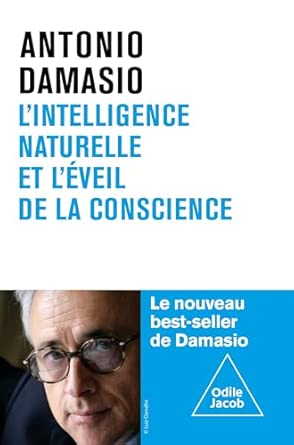
Antonio Damasio, L’intelligence naturelle et l’éveil de la conscience, Eds Odile Jacob, 280 pages.
This book tells the extraordinary story of life and natural intelligence, from the emergence of protocells four billion years ago to the appearance, 500 million years ago, of organisms endowed with mind, feelings and consciousness, thanks to a radical novelty: the nervous system. For the author, current advances in neurobiology can provide satisfactory answers to the question of the “manufacture” of consciousness. According to him, this is “the biological process that allows everyone to experience their individual life, in other words, to know that we are alive and that we exist“. The complex beings that we are come into the world equipped with biological mechanisms to protect the life we have against major threats that could jeopardise it. These mechanisms are “homeostatic” feelings, which participate in the regulation of life by maintaining key organs or functions in an ideal range: “homeostasis”. This is the fundamental break proposed by Damasio. Consciousness is not born in the brain, but in the feelings necessary to sustain life. It emerges from a permanent dialogue, via the spinal cord and the vagus nerve, between the inside of the body and certain areas of the brain, much more differentiated than those dedicated to cognition. This dialogue is that of interoception. The continuation of life depends on the reliability of the information it provides and the responses that the subject provides. We feel before we think. Hunger, thirst, pain or fatigue are conscious biological responses to the vulnerability of life. Interoceptive or homeostatic feelings are spontaneously conscious, with a single purpose: to inform the entire mental process with warning signals that cannot be ignored. We are thus viscerally aware, what the author calls the “sensitive mind”. Nature has given this sensitive spirit two valuable allies: exteroception, which brings together all the sensory receptors – sight, hearing, taste, touch, smell – allowing us to connect to our environment, and proprioception, which makes all voluntary movements such as walking, eating, running or talking possible. Consciousness is therefore not a software installed in the brain, but the juxtaposition of all these living processes. The brain alone does not hold the key to mental processes: it depends on the physiology of the body and the non-neural components of the brain. Natural intelligence is a property of the living, which sets it apart from artificial intelligence, which does not have to worry about its life since it does not have one. AI has no homeostatic feelings. Machines can process huge amounts of information, speed up many tasks and reduce costs, but they cannot rely on the feelings that allow us to sort things out. They remain dependent on their human owners – and humans can be bad. It is this conscious vulnerability, a distinctive feature of human intelligence, that should be introduced into AI. It would induce a form of artificial prudence that could inhibit risky behaviour just as it has led to the development of moral systems and justice in humans. Antonio Damasio, Professor of Neuroscience, Neurology, Psychology and Philosophy at the University of California. He heads the Brain and Creativity Institute. Member of the National Academy of Medicine and the American Academy of Arts and Sciences. Ph Alezard
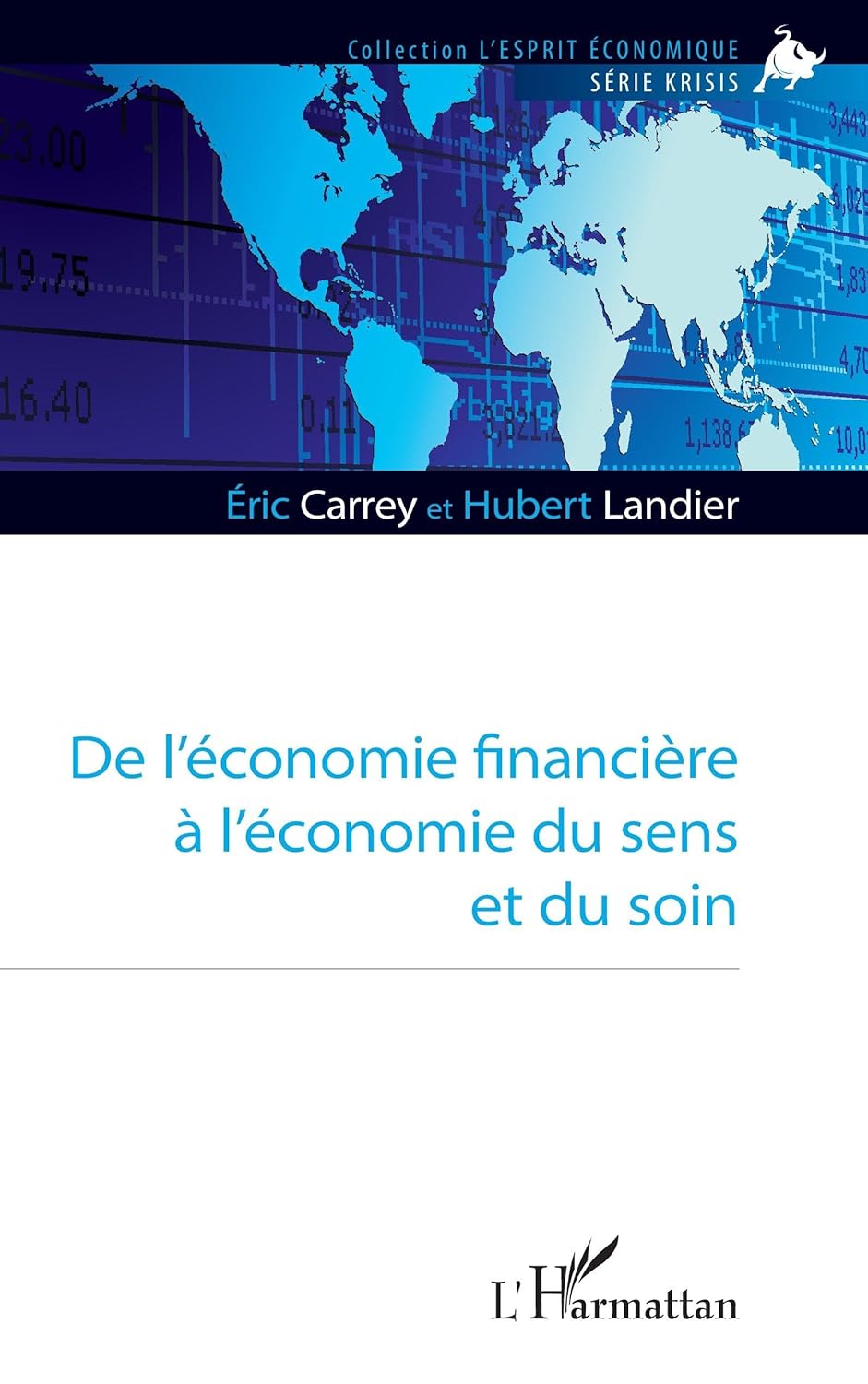
Eric CARREY et Hubert LANDIER, De l’économe financière à l’économie du sens et du soin, L’Harmattan, 2025, 238 pages.
The latest book by Eric Carrey and Hubert Landier raises an issue that is currently much debated in all cultures around the world, centered on the two strongly synergistic concepts of “meaning and care” applied to the planet, humanity, society, business and the individual. The authors emphasize that the numerous measures implemented over the past half-century at the international, national and local levels, in terms of sustainable development and social, environmental and governance responsibility, despite their progress, are insufficient to meet the expectations of producers, consumers and citizens. Their quest for meaning in their actions and their aspirations for solidarity and well-being are thwarted by governments’ desire to restore major economic and financial balances, by the attempts of workers’ attempt to adapt to new technologies, by f consumers ’fears of facing shortages, but also by the determination of more and more social actors to achieve the energy, ecological and digital transitions. The authors invite us to go beyond the canonical notions of homo economicus by recalling the genealogy of the concepts that have marked out the vast field of “meaning and care”: the economies of gift-giving, the common good, well-being, happiness; circular and frugal economies; cooperative, associative and partnership-based governance, CARE and CURE practices, etc. They revisit the notions of sustainability, resilience, responsibility, solidarity, etc. Using illuminating ideal-type cases, the authors analyze the application of these concepts to the planet (water, air, earth) and to different objects (clothes, bottles, etc.).They strive to perceive the weak signals that herald the turning points in our civilization, its vital principles, its essential practices, its mobilizing values and its new languages. Hubert Landier (Doctor of Economics) is Professor Emeritus of Universities. Eric Carrey (St Cyr, Exeter and ESSEC) is a professor of social and solidarity economics. Jean Jacques Pluchart
The geoeconomic stakes and challenges of artificial intelligence
The geoeconomic stakes and challenges of artificial intelligence Nadia ANTONIN Power factors have changed in the contemporary period. Recent examples of power politics reveal that economic means have become essential in the exercise of power by states. This paradigm shift is summarised by the term “geo-economics”. Economic interests take precedence over political interests. While in classical geopolitical analysis, it was in the territory and military means that the State found the basis of its sovereignty, geoeconomics assumes that power and security are not only linked to the physical control of the territory. Today, the objective is to acquire or maintain a dominant economic position on the international scene, in particular by mastering innovation. This is the thesis defended by the economist and historian Edward Luttak. In the early 1990s, this economist analysed how the decline in the importance of military power led to a shift from geopolitics to geoeconomics, “States and economic entities replacing the armed forces as the main actors (“From Geopolitics to Geo-economics. Logics of Conflict, Grammar of Commerce”, The National Interest, Summer 1990). Among the new instruments of economic and geopolitical power, artificial intelligence is today a major lever, an instrument of strategic competition and a factor in the reconfiguration of global industrial power relations in the same way as energy, finance or armaments. Analysis of the geoeconomics concept For Professor Antto Vihma, geoeconomics “consists […] in shaping and managing the strategic environment in which states operate for the pursuit of their national interests by economic means“ (2018). The concept of “geoeconomics” was developed in the United States by Edward Luttwak and in France by the political scientist Pascal Lorot, who created the journal Géoéconomie in 1997. It covers the study of the relationship between the economy and the political geography of a territory. A branch of geopolitics, geoeconomics is at the crossroads of economics and international relations. Luttwak (1990) highlighted geoeconomics as “a modern form of rivalry between international powers for which the role of the State and its financial capacities constitute the foundations of diplomacy and the “economic” deployment of nations“. As for Lorot (1999), he sees in geoeconomics “an instrument for analysing the economic and commercial strategies determined by the policies and diplomacy of national governments seeking the reciprocal international influence of these national enterprises and the State“. Block strategy for a dominant position A global struggle for artificial intelligence has entered the international arena. In other words, as artificial intelligence has become a major geoeconomic issue, the major powers of the United States, China and the European Union (EU) are engaged in a technological and economic race to carve out the lion’s share. Each is seeking to master the technologies, infrastructures and standards that will shape the economy of the 21st century. AI is redefining the global hierarchy: the United States dominates through innovation, China through state strategy, and the European Union through standards. – At present, only the USA holds a monopoly on AI and has managed to rise to the rank of leader in the AI race, despite China’s rise in this field. China is the main rival of the United States. The US’s supremacy in AI innovation is based on three pillars: 1) academic excellence: 2) Silicon Valley, which remains the heart of the technology and innovation industry; 3) significant public and private funding. – China is accelerating the integration of AI in all sectors. In addition, a major revision of the Chinese cybersecurity law (October 2025) reflects the state’s desire to technically and ethically regulate the meteoric growth of artificial intelligence in various applications. By updating its legislative framework, China is seeking not only to assert itself on the world stage as a leader in cybersecurity, but also to better manage the risks associated with AI and infrastructure. - The European Union has chosen the standard as a strategic and competitive weapon in order to impose its vision and conquer new markets. Wanting to become a pioneer in “a field that fascinates as much as it worries“, the European Union has taken the lead over the USA or China, to regulate AI. Thus, on 14 June 2023, the European Parliament largely approved the draft regulation on artificial intelligence, the Artificial Intelligence Act, which entered into force in 2025. The geoeconomic challenges of artificial intelligence The deployment of AI raises geoeconomic issues, particularly in terms of resources, ethics, employment and regulation. - Artificial intelligence depends on three essential resources: data (“new black gold”), semiconductors and computing power. The battle for these resources is at the heart of current geoeconomic tensions. - In addition, given the biased algorithms, the discrimination that AI can generate, security issues and data protection, etc., the adoption of this technology raises ethical questions. The AI economy must be based on trust. - The rise of artificial intelligence is profoundly transforming global geoeconomic balances, in particular through its effects on employment. Three major issues can be identified: 1) first, global competition for talent is intensifying; 2) second, AI is causing a recomposition of global value chains; 3) finally, AI is destroying intermediate jobs, while promoting the creation of highly skilled jobs, requiring a set of advanced technical and cognitive skills. - With regard to regulation and digital sovereignty, countries are seeking to regulate AI to protect their economic interests and values. In conclusion, the countries that succeed in innovating quickly, while ethically and legally regulating the uses of AI and preserving their technological sovereignty, will be the big winners of the AI revolution.

Corporate culture, the best defence against storms
Business leaders have always learned to juggle the unpredictable. In a world today marked by successive crises — health, geopolitical, climate, economic — resilience is an essential quality. Whatever the size of the company, there are leveraging effects that will promote this resilience. There is one that remains largely underestimated: corporate culture. Sometimes reduced to a few symbols or values, corporate culture is too often confined to a human resources component. However, it is a strong dimension of the company, a set of values and behaviours capable of driving innovation and growth. When everything is faltering, it is not the tools or processes that will save the company. These are often invisible elements, which do not appear on the company’s balance sheet or in the profit and loss accounts. Corporate culture exists from the moment the entrepreneur starts his or her entrepreneurial adventure surrounded by his or her first employees. Indeed, in a company where the culture is strong, clear and embodied, employees know how to behave, what matters, and what is expected of them, even when the benchmarks change. This makes it possible to react quickly, to reorganise without chaos, and to remain faithful to the company’s identity without succumbing to organisational panic. Conversely, a company without a shared culture quickly becomes a field of tension: power games, inertia, strategic misalignment. In a storm, the absence of culture is paid for in cash. So, is corporate culture a brake on innovation or growth? This is a common mistake, but one that has never been proven! Corporate culture creates a secure framework that enables strategies to be implemented. So many business leaders wonder about the causes of the failure of their strategies: the answer probably lies in the presence or absence of a corporate culture! Corporate culture is also the remedy to prevent the company from going through difficult times. In other words, there can be no innovation without a strong culture. Companies that innovate sustainably are often those where the culture values curiosity, questioning, cooperation and responsibility. Not those where innovation is confined to an isolated unit or driven by sterile indicators. We can ask ourselves about the causes of the sharp rise in business failures in our country. The lack of corporate culture could be one of the causes of failure, because when the culture no longer supports the strategy, the company becomes misaligned and takes the risk of becoming stagnant. But a ship that does not move forward moves backwards! What if corporate culture was simply the conscience of the legal entity? This consciousness capable of perceiving and interpreting events. But this is without counting on the cognitive biases that are increasingly being put forward to warn us about what we think we see when the reality is quite different. Corporate culture is no exception. It is up to the entrepreneur to preserve and maintain this cognitive capital: it is vital for their business! The world of tomorrow will remain uncertain… that’s for sure! Crises will continue, in other forms. Innovation will remain vital, but difficult to maintain without benchmarks. In this context, corporate culture becomes a factor of strategic robustness. It does not protect against storms: it gives the posture to cross them, and sometimes even to emerge strengthened. François NAUX is Managing Director of WICS Consulting, independent director, member of APIA and member of the Turgot Club. Column published in the newspaper Les Echos, 1 December 2025;

Anne de GUIGNE, Tout l’or du monde. De l’Antiquité à nos jours, les écrivains racontent l’économie, Les presses de la Cité, 2025, 272 pages.
The author, a great reporter at Le Figaro, engages in a difficult and original exercise: to draw economic lessons from world fiction. The exercise is particularly successful because the book enriches its readers with useful economic knowledge and valuable cultural contributions. The author declines her literary career by rereading 18 works covering 6 periods. The first relates the lessons lavished by the authors of Genesis (the curse of work), Homer (the role of money), Hesiod (misery), Thucydides (the financing of war) and Petrone (manipulation and fraud). The second covers medieval times, with Tristan and Isolde, the tale of the Grail, the Roman de Renart and the ballads of Christine de Pisan, which illustrate the difficult material and social conditions of peasants, women and the bourgeoisie of cities and fairs. The third sequence is marked by the shift in the market economy, with analyses of the works of Shakespeare, Cervantes, Lafayette, La Fontaine, Rousseau and Casanova, marked by tensions between financial interests and friendship, rules of the past and the future, work and income, nature and culture, investment and speculation. The fourth age is that of the transition from economics to the state of science with the economic lessons of Goethe, Austin, Stendhal, Balzac, Dostoievki, Zola, Mann and Wharton, who describe the effects of capitalism and conventions on the economic situations of women, the bourgeois, workers and consumers. The next phase is devoted to London (work ethic), Kafka (the excesses of bureaucracy), Yourcenar (the end of religions), Akhmatova (totalitarianism), Ayn Rand (individualism), Perec (consumerism), Druon (social declassification), Pamuk (standardisation) and Wolf (ambition). The last sequence focuses on 21st century literature, with books by Houellebecque (the attraction of platforms), Adiichie (migration), Coe (the torments of the middle class), Egan (the development of digital technology) and Koenig (digital and ecological transitions). Anne de Guigné’s book thus makes it possible to rediscover or discover the thoughts and biographies of authors who have lived through their century and economic laws that have spanned the centuries. The author’s elegant and lively style gives the book a character that is both educational and cultural. Anne de Guigné is a senior reporter at Le Figaro, in charge of economic issues, and the author of several books. Jean-Jacques Pluchart
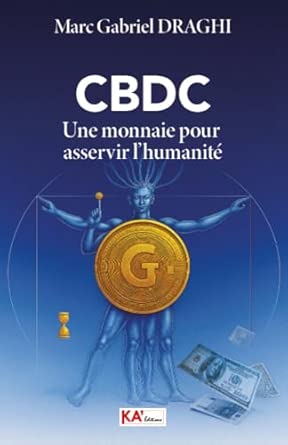
CBDC, Une monnaie pour asservir l’humanité. Marc Gabriel Draghi -Ed Ka’editions Et Conseils- 312 pages- Octobre 2025
This is an essay on the “hidden” dangers of digital currency. As central banks around the world prepare to roll out their digital currencies (CBDCs), a historic shift is brewing in the shadows, according to the author. This incisive and accessible investigative book delves into the heart of this silent revolution of technologies presented as innovative, secure, and practical, when “CBDCs actually conceal a logic of permanent surveillance, the extinction of cash, and algorithmic control of populations.” The author deciphers what he claims to be the real objectives of this technology, its intertwining with artificial intelligence, social credit, green passports, and digital identities. He highlights his vision of a global agenda, “shared by both Western institutions and emerging powers (BRICS+, etc.), aimed at establishing a cashless society, driven by algorithms and subject to behavioral compliance criteria.” However, the book does not mention the advantages of central bank digital currencies, nor the risks inherent in their implementation, nor the measures envisaged to manage these risks. There is a negative, even conspiratorial bias in some pages: “there is a technological mechanism which, under the guise of progress, threatens the autonomy of peoples and the very survival of humanity.” And again, “the ultimate goal of the financial elite is clear: to enslave humanity through eternal debt that people will carry until their last breath.” It is therefore not surprising that the information on this subject provided in this book is incomplete. This book claims to be an “intellectual weapon for resistance”: by calling for the reappropriation of monetary sovereignty, the preservation of gold and silver metal, and a questioning of the all-digital approach, the author « urges us not to become spectators of the fourth industrial revolution, but to actively challenge its most dangerous excesses. We must inspire the world and Europe by proving that an alternative is possible: reintroducing gold and silver, restoring the franc, and driving the merchants from the temple ». Marc Gabriel DRAGHI is a lawyer and essayist. Dominique Chesneau
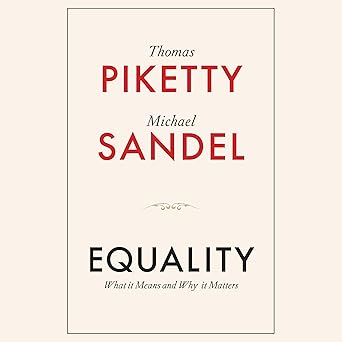
PIKETTY Thomas & SANDEL Michael, Equality What It Means and Why It Matters, Polity Books, 2025, 128 pages
The book transcribes a lively debate between these two influential thinkers, held at the Paris School of Economics in May 2024. Both Piketty, an economics professor, and Sandel, a professor of political philosophy, present structured arguments that place the question of equality—and its opposite, inequality—at the heart of a perceived malaise in today’s democracies. Their central hypothesis is that wealth is fundamentally a collective achievement, not merely the result of individual effort, and that redistribution requires a shared sense of engagement and community as a prerequisite for genuine equality. Throughout the debate, both thinkers offer tangible proposals for reducing inequality, and while they agree on many points, they do not hesitate to challenge each other’s arguments, which adds dynamism and passion to the discussion. All the same, the reader will likely question the feasibility of implementing the wide array of proposals discussed. Further, accept that some generalisations are inherent in any debate! So-called “northern economies” such as the USA & Europe, have enjoyed prosperity. The efforts to reduce inequality have progressed over the past century through increased access to education, basic goods, income and wealth. Both debaters argue that these northern economies have largely benefited from less developed “southern economies” through the exploitation of natural resources and the division of labour. The challenge of sustainability at a planetary level further complicates the task of reducing inequalities. The thinkers guide the reader through a journey that confronts theory and historical developments with concrete suggestions, focusing on three principal pillars of equality: the distribution of income and wealth, political voice and power, and dignity, recognition, and respect. The book covers a wide range of topics, including money, market forces, globalization, forms of allegiance beyond nations, political dogma, and missed opportunities—especially within the social democratic sphere. Consequently, extreme political factions have adopted many traditional social justice topics. It also explores the tension between meritocracy and broader representativity, the importance of education (particularly investment in higher education), the equality of tax and remuneration systems, identity, borders and migration, and climate change. A key part of the debate centres on the dignity of work. Michael Sandel suggests that society should value those who contribute to the common good, not just those who succeed in a meritocratic system. He points out that in the United States, over $160 billion is spent each year on higher education for a privileged few, while vocational and technical training receives only about $1 billion, mostly serving the working class. Sandel questions why jobs like teaching, nursing, or medicine are paid so much less than financial roles such as hedge fund management. This conversation took place before the significant expansion of generative AI. Since 2024, artificial intelligence has advanced rapidly, transforming many industries and changing the nature of work. Generative AI tools are now widely used in fields like education, healthcare, finance, and the arts. These technologies have made some tasks easier and more efficient, but they have also created new challenges. Many highly skilled workers are seeing their jobs change or even disappear, while new roles are emerging that require different abilities. As we embark upon this incredibly fast and uncontainable acceleration of generative AI and its future successors, these basic questions have never been more relevant. As AI continues to evolve, society must rethink what work means, how people contribute, and how to recognize and reward vocational and technical skills. The question of dignity of work will be challenged on a large-scale as various traditional professions disappear. The ideas developed by Piketty, Sandel, and others in the social-democratic tradition may just well help guide mainstream thinking as we adapt to these changes. Kathleen Wantz-O’Rourke Thomas Piketty is Professor at EHESS and at the Paris School of Economics. He is also co-director of the World Inequality Lab and the World Inequality Database, and one of initiators of the Manifesto for the democratization of Europe. He has been a visiting professor at MIT and the London School of Economics. In 2013 he was awarded the “Yrjö Jahnsson” prize by the European Economic Association. Michael Sandel teaches political philosophy at Harvard University. He has been a visiting professor at the Sorbonne and delivered the Tanner Lectures on Human Values at Oxford, the BBC’s Reith Lectures, and the Kellogg Lecture on Jurisprudence at the U.S. Library of Congress. He has served on the President’s Council on Bioethics and is a member of the American Academy of Arts and Sciences. A graduate of Brandeis University, he received his doctorate from Oxford University, where he was a Rhodes Scholar.

The FIVE report – Financing Innovative Ventures in Europe
The report, commissioned by the French and German finance ministers, Jörg Kukies and Christian Noyer, was made public in January 2026. The FIVE (Financing Innovative Ventures in Europe) report proposes concrete measures to improve access to capital for high-growth companies (scale-ups and nuggets) in Europe.It makes concrete recommendations on access to late-stage financing for innovative European companies. It aims to strengthen the EU’s competitiveness and create a more efficient and integrated European capital market. The findings The absence of European world leaders in certain high-tech sectors is a paradox, insofar as the ecosystem of young shoots of the Old Continent is generally solid. Experts argue that the ability to turn start-ups into “nuggets” is an essential condition for the competitiveness of the industry and the sovereignty of Europe. They note that the current development deficit stems from a shortage of venture capital in the final phase, a lack of adequate capital reserves, due in particular to the inadequacy of funded pensions, the risk aversion of institutional investors, regulatory constraints and the fragmentation of the European capital market. The authors point out that the European Union is at a critical juncture, requiring “bold and immediate action “. The proposals The think tank has formulated five main proposals. – EU Member States should develop supplementary funded pension schemes to complement their pension systems. Without a sufficient pool of retirement savings, Europe will remain unable to finance large-scale innovation. Following the Swedish example, European countries should undertake ambitious reforms of their supplementary pension systems in order to meet the challenges of demographic ageing and the lack of funding for innovation – A larger share of existing institutional and retail capital should be mobilised to finance innovation.In the short term, it would be essential to unlock existing pools of institutional capital, particularly those of insurers. In order to promote the allocation of institutional investors in venture capital, initiatives such as Tibi and WIN should be deployed in Europe.4.3. Transparency and liquidity are other non-prudential barriers that need to be addressed – National and European public funding for investments in growth companies should be better adapted to the capital needs of scale-ups, and a 28th company law regime should be created to facilitate their cross-border expansion and limit transaction costs. – Stock option plans should also be harmonized, including the current listing and trading frameworks. – Equity markets in the Old Continent should offer more attractive financing conditions. Finally, measures should be taken to enhance the attractiveness of listing in the EU. In order to support listings, the EU should promote greater integration and increased liquidity in its markets. Jean-Jacques Pluchart

Survey of French managers who have become lecturer-researchers in management sciences
Jean-Jacques Pluchart In January 2026, the FNEGE (National Foundation for Business Management Education) published a study on Practitioners Becoming Researchers (PDC), aimed at “understanding their backgrounds and motivations, supporting future candidates in this transition, and highlighting the specific strengths of these profiles for teaching and research in management sciences “.The study uses a methodology based on a survey carried out between January and March 2025, which collected 207 responses, including 124 teacher-researchers who stated that they had been working for between five and twenty years. The survey reveals that a quarter of respondents work in public institutions, half in private schools and the last quarter abroad. The study distinguishes three profiles of PDCs: “meaning-oriented” (of existence), “intellectual challenge” (faced with the theoretical corpus), and “balanced” (between professional and private lives). The PDCs underline the scale of the challenges to be met by the PDCs: research training, assimilation of scientific literature, drop in financial income, limitation of career prospects, acculturation to the academic environment (often distant), confrontation with a certain psychological distress (due to uprooting), etc. However, they recognize that they have assets favorable to their transition: field experience, mobilization of professional networks for research, better understanding of managerial issues and challenges, less rigid hierarchy, legitimacy with students, etc. They particularly appreciate being able to carry out parallel associative, elective, sports or consulting activities. They acknowledge having underestimated the effort of retraining and the difficulty of accessing the status of university professor. Overall, they do not regret their choice of radical retraining. The authors of the study recommend that PDCs “adopt a learning posture, accept the status of novice, develop a critical distance from their previous practice, set up companionship systems promoting the transmission of codes, methods and postures of research, create places of collective reflexivity (seminars, peer groups) mobilizing the diversity of courses, organize webinars informing practitioners about the reality of the profession of EDC, and promote projects enhancing the professional expertise of PDCs”. The study shows that the multiplication of PDCs contributes to a better synergy between theorists and practitioners, between the university and the company, between fundamental research and applied research. Reference: https://us02web.zoom.us/webinar/register/wn_57sf8hq_rdol5jh987mkxq