

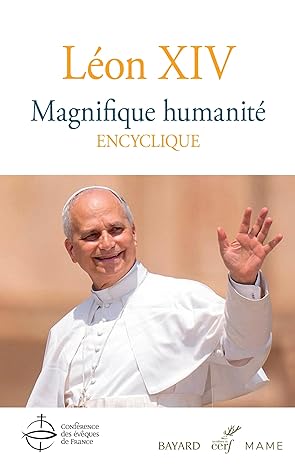
The encyclical, which “does not offer an analysis of AI because it is not possible to provide a single, comprehensive definition of it,” focuses on human dignity and moral responsibility in the face of emerging technologies. It follows in the footsteps of Leo XIII, who presented the social doctrine of the Church and emphasized that the pursuit of profit cannot be the be-all and end-all of human society.
The Pope explains two reasons why the book is not technical: any statement about AI risks quickly becoming obsolete given the speed at which these systems evolve; and all of us, including those who design them, know little about how they actually work!
Furthermore, the book does not make alarmist claims such as that AI would lead to mass layoffs and a widespread dumbing down of the population (“do not be afraid”), but, drawing on the work of numerous working groups cited in the book, it argues that good will come from this revolution, provided that this good is not monopolized by a tiny minority because “a large part of this technology falls under the common good.” In seeking to establish humanistic principles for the development and use of AI, the goal is not to create restrictive regulations that would stifle innovation, but rather to incorporate ethical and moral considerations into the design of models and the selection of training data. And according to Ricoeur and Levinas, the essence of ethics lies in respecting the other by seeing oneself in the gaze of one’s counterpart, beyond laws and rules.
A few chapters—the 3rd and 4th deserve special attention among: (1) The evolution of the Church’s social doctrine and its role as a “theology of communion” throughout history, (2) The foundations and principles of social doctrine, including human dignity, the common good, the universal destination of goods, subsidiarity, solidarity, and social justice, (3) Analysis of the risks associated with artificial intelligence, the concentration of technologies, and the need for a common code of ethics, (4) Preserving the human dimension in the digital transformation, valuing work, education, and freedom in the face of commodification, (5) Building a “civilization of love” in the digital age, promoting peace, dialogue, and multilateralism.
We will recall the five principles of the Catholic Church’s social doctrine, which have been presented by past and present economists and elaborated upon in the first two chapters: the principle of the common good (developed by Jean Tirole in his seminal work), the principle of the universal destination of goods (mentioned by 18th-century moralists), the principle of subsidiarity (in management literature, the term “subsidiarity” and the difficulty of its implementation are discussed in France-Lanord and Vannier 2014; Verrier and Bourgeois 2016, 27); the principle of solidarity and the principle of social justice.
To illustrate the relevance of the topics discussed, let us cite a few illustrative excerpts from the book: let us avoid the pretension of a single language capable of translating everything into data and performance metrics, even the mystery of the person; entrusting, in practice, to an algorithm the power to select who deserves what, without anyone bearing the weight of the decision, amounts to entrusting it with the task of redefining the limits of human possibilities; data ownership must be regulated and managed as a common good ( !); developers bear an ethical responsibility because every design choice expresses a vision of humanity
These concerns and humanistic recommendations are echoed by Anthropic, which cannot predict whether the phenomenon of AI misalignment (when an artificial intelligence pursues goals that conflict with human values or do not truly correspond to what humans have asked of it, Ed.) will ever be fully resolved.
Anthropic continues in a text published by its think tank, the Anthropic Institute: “We believe it would be good for the world to have the option to slow down or temporarily suspend the development of advanced AI, in order to allow societal structures and alignment research to keep pace with technological progress.”
This nearly 200-page letter, dedicated to “the protection of the human person in the age of artificial intelligence,” resonates far beyond Catholic circles and “constitutes a political and humanist manifesto of unprecedented scope.”
Dominique Chesneau