

The blockade of the Strait of Hormuz brings us face to face with our dependence on fossil fuels and especially on oil.
The energy transition is now facing a conflict where the stoppage of the supply of oil and gas is disrupting the world’s economies.
The occupant of the White House, as a staunch defender of coal and the “liquid gold” of oil and gas, is blowing hot and cold on the markets to the detriment of the user, who sees their fuel bill skyrocket.
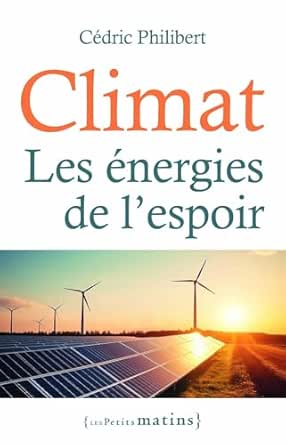
Published last October, Cédric Philibert’s essay addresses the energy transition and renewable energies from an optimistic perspective. The solutions for a decarbonised world are there, and it is urgent to continue the transition that has begun. The author challenges a number of preconceived ideas through numerous quantified arguments. He sets the record straight in a polarised debate between climate sceptics and proponents of degrowth.
In this essay, he demonstrates that resources such as solar or wind power are sufficient and abundant to achieve the transition. Having these energies available at a moderate cost will make it possible to move towards other possibilities, such as heating ores to several hundred degrees in order to accelerate hydrometallurgical processes, applicable to copper and rare earths, among others.
One of the main levers for achieving carbon neutrality concerns the energy efficiency of vehicles. The author even claims that electric cars are good for the climate. Indeed, with the exponential development of renewable energies, electric vehicles will benefit from increasingly low-carbon electricity during their manufacture and lifetime.
In addition, he also demonstrates that it is possible to achieve this transition without having harmful consequences for biodiversity. He believes that the energy transition as a whole does not have a significant impact on the rate of artificialisation. The development of agrivoltaics is a real opportunity to achieve the goal of decarbonising energy and has more impact than producing biofuels.
As a solution, the author gives pride of place to moderation. To move towards net-zero emissions, it is necessary to divide net emissions of CO2, methane and nitrous oxide by 8 or 10. Nevertheless, we must remain vigilant about the “rebound effect”. Studies have shown that investments in the thermal renovation of buildings do not lead to a significant decrease in the energy consumption of buildings; since they are better insulated, the owners focus on their comfort.
A book to recommend to all readers who are keen on the issues of the energy transition and who want an objective view from an energy and climate expert.
Cédric PHILIBERT is an independent consultant and senior analyst
in the field of energy and climate. He is also an associate researcher at
the French Institute of International Relations (Ifri). He advised the
Director General of the French Environment and Energy Management Agency
(ADEME), before joining the United Nations Environment Programme
(UNEP), then the IEA until 2019.
Sophie FRIOT