

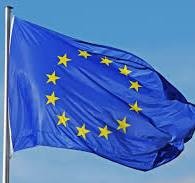
The 28th regime: a new legal framework for innovative companies
Jean-Jacques Pluchart
The purpose of the round table is to examine the European proposal for a new European company status, provisionally referred to as the ‘28th regime’ (in addition to the 27 national regimes), EU Inc or Societas Europaea Unificata. On 18 March 2026, the European Commission presented to the Council a proposal for a regulation establishing a new company form that would complement the framework for the organization of services in the internal market (the 2009 Bolkestein Directive). It would complement the little-used statuses of the European Company and the European Economic Interest Grouping. The EUInc status is intended primarily for innovative European SMEs, SMIs and mid-cap companies.
In his introductory remarks, Michel Cojean (AEFR) stated that this status would be primarily aimed at innovative start-ups and scale-ups. Its purpose would be to facilitate their financing during the development phase. It would respond to the proposals set out in the Draghi-Letta and Noyer-Kukies reports, which aim to enhance the competitiveness of European companies vis-à-vis US and Asian industries and services.
Didier Martin (Bredin Prot law firm) clarified that the EUInc status would be fully digital, with registration taking less than 48 hours via a single European portal. It would not entail a minimum capital requirement and would provide access to the financial markets. However, the creation of this status would raise several challenges: how to reconcile it with national legal frameworks in terms of stock options, employment law, insolvency law, etc.
Christian Noyer (former Governor of the Banque de France) argued that this status should be ‘simple, flexible and digital’. He highlighted the value of this project, which aims to raise between €50 million and €100 million in capital to finance scale-ups using European and foreign pension funds.
André Trade (legal expert at the European Commission) clarified that the proposal is based on a regulation under Article 114 of the Treaty, which requires approval by the Council by a qualified majority, rather than a directive (which requires unanimous approval). This is why the proposal reflects a minimalist vision of the legal framework for the European company. It falls solely within the scope of company law, which raises issues of compatibility with other branches of law.
Martin Guesdon (legal expert at the French Ministry of Justice) identified three advantages of this status: it can attract foreign investors; it encourages the creation of companies in Europe; and it stabilises the legal framework for business creation. However, it raises issues concerning the valuation of assets and the protection of financiers and creditors. He raised the question of which court would have jurisdiction in the event of disputes. Sandrine Mesnard (Director General of the Treasury) raised questions about the accounting and regulatory frameworks applicable to UEInc and about the tax regime applicable based on the company’s registered office or operational headquarters.
Alain Clot (France Fintech) pointed out that the European market is currently experiencing a veritable exodus of talent working for fintech companies to the US market, as the European market is unable to raise the capital required (around €10 billion per year) to develop its 14 ‘diamonds’ and 100 fintech companies. He pointed out that in France, over €6 trillion of savings are held in current accounts or short-term guaranteed investments, and do not contribute to the financing of young, innovative companies. He believes that this status would prevent these start-ups from seeking tax loopholes rather than opportunities for productive investment.
René Repassy (Member of the European Parliament and Professor of European Law) expressed pessimism about the chances of this statute being adopted quickly, given the debates it would generate within the European Council and Parliament. He is not certain that this status would sufficiently protect contracts and public interests, particularly in terms of taxation. He also criticised the name EUInc, which is borrowed from the US model.
During the round table chaired by Pervenche Berès (President of the AFER), all the speakers acknowledged the strategic nature of the project, which is essential for Europe to regain a competitive advantage over the United States and China. However, they were also unanimous in acknowledging that its implementation will be a long and challenging process, given the scale of the issues it addresses and the interfaces it shares with other branches of European and national law, particularly with German co-management.