

Ultimately, taking a close interest in the pension system is not a question of age.
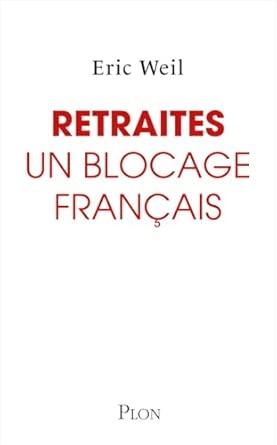
As he approaches the age of 30, and in contrast to his peers, Eric Weil has made pensions his favourite subject and, in this book, offers us an in-depth reflection on the system. His aim is to help us see things more clearly, so that we can exercise greater discernment in the often heated debates on the subject.
First, he explains, in an accessible manner and supported by statistical evidence, how the current system works and its history. Reforming the system often brings the French out onto the streets, although most of them do not always know exactly what it is all about. Indeed, he points out that while one-third of French people say they know how the system works, only 8% truly understand it.
He highlights the principles and rules of the system, in particular the differences between the statutory retirement age / the age at which entitlement begins (AOD), the required insurance period (DAR) and the age at which the reduction in pension entitlement is cancelled (AAD): whether poorly understood or imprecise, these concepts often cause confusion among working people.
A chapter is dedicated to the ten misconceptions about pensions and offers the reader a useful overview. All the sticking points that divide the French public and politicians are addressed: the status of civil servants, long working lives, the points-based system and retirement at 60, among others.
As for the perspective on the financing of the pension system, the book clarifies that the issue of the pension deficit cannot be separated from that of the overall balance of public finances. While deductions are necessary to finance the largest item of the public deficit, increasing contributions is not an end in itself, as this will have an impact on employees’ net pay and on the competitiveness of businesses.
Subsequently, a second section seeks to demonstrate that, although the system is inequitable, complex and difficult to manage, it is far more generous than elsewhere and represents an exception among OECD countries.
Finally, the author takes the debate further by proposing reforms that could be implemented in the short and medium term. Our ‘good old pay-as-you-go system’ has become less cost-effective over time. It cannot be continuously pitted against the funded system. The author believes that a mixed system would be more appropriate, for example by encouraging retirement savings through voluntary personal pension accounts (PERs).
In addition, he advocates the creation of a ‘single pension account’, which would eventually enable the transition from around forty schemes with disparate rules to a single scheme.
In summary, he believes that, among all the proposed solutions, it seems difficult not to ask current pensioners to make an effort and to encourage them to work longer. In any event, the reform will have to be implemented gradually in order to be accepted by the French public, with the support of at least one major trade union.
This book is recommended for all readers seeking a better understanding of our system and the issues it faces, and above all, for all young people who are convinced that they will not have a retirement pension in 30 or 40 years’ time.
Eric Weil is a former ministerial adviser responsible for pensions. A graduate of ESSEC, he has also provided strategy consultancy services to French and foreign companies.
Book review by Sophie FRIOT