
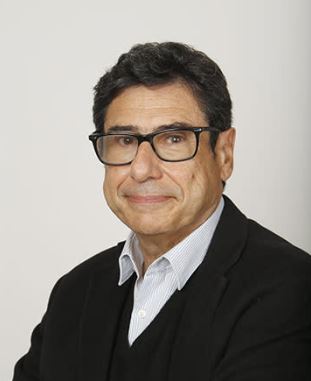
Philippe Aghion received the Nobel Prize in Economics, along with Israeli-American Joel Mokyr and Canadian Peter Howitt, for his research on the “theory of sustainable growth through creative destruction,” more specifically for his studies on “the dynamics of aggregate growth and innovation achieved by heterogeneous firms.”
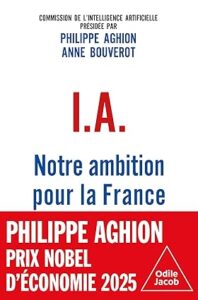
Philippe Aghion (ENS, PhD from Paris I University and Harvard University) was a research fellow at the CNRS and an economist at the EBRD. He was a member of the Economic Analysis Council (CAE) and the Commission for the Liberation of French Growth. He has taught at MIT, Oxford University, University College London, and Harvard University. He is currently a professor at the Collège de France, INSEAD, the London School of Economics, and the Paris School of Economics. He has written numerous scientific articles and books, as well as several official reports, notably for MEDEF (“growth spurt”) and for the government (“Our ambition for France”), reviewed below by the Turgot Club.
Since the 1990s, his research has focused on the issues of incentive mechanisms, bankruptcy, and governance. He then proposed the founding model of the endogenous growth theory known as Schumpeterian, based on technological innovation as a factor in the creative destruction of old ecosystems. During the 2000s, he explored the relationships between competition, institutions, and growth. He established an inverted U-shaped relationship between competitive intensity and innovation. He showed that disruptive (or radical) innovations stimulate economic growth but widen social inequalities, particularly the gap between the incomes of the poorest and the richest. He revealed that these gaps can be partially bridged by greater professional, geographical, and social mobility among the working population, as well as by appropriate public policies, especially fiscal policies. Above all, he emphasized the importance of general and vocational training both as a stimulus for innovation and as a factor in reducing social inequalities.
Philippe Aghion has also studied the conditions conducive to economic take-off in developing countries. He shows that to overcome the “middle-income trap,” these countries must promote and stimulate endogenous innovation through appropriate training, stable institutions, effective competition, and an active stock market. His latest work examines the effects on growth of process automation, artificial intelligence, and investments in environmental protection.
Jean-Jacques Pluchart