

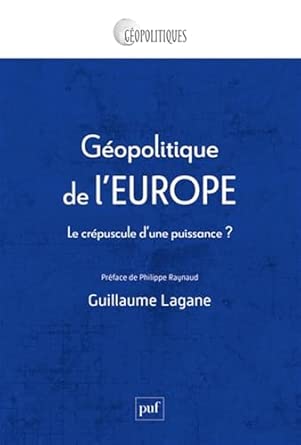
Europe has been experiencing chaotic times for several years, particularly since the rise to power of an American president whose behavior is unpredictable and indecipherable within the traditional framework of global relations.
What has become of Europe’s geopolitical influence in recent years?
Russia’s outbreak of war against Ukraine has shaken the entire geopolitical landscape.
How can Europe respond to the strategic shift of its historical ally, the United States?
The author examines Europe’s geographical origins, its specific culture, and its economy. With a global GDP of 15%, the EU attracts international investment: the euro guarantees monetary stability, and the institution’s functioning is designed to be reassuring in order to ensure its security. However, its model, which promotes “unity in diversity,” does not currently allow it to play a leading role on the world stage.
Long before the arrival of the American president in the red cap, some of his predecessors had taken very radical positions regarding Europe. One can cite President Washington, who advised Americans in 1796 not to get involved in European affairs. As for Monroe, he expressed a very strong idea: “America for the Americans.” These slogans and powerful ideas resonate with us constantly these days.
It’s as if we are in the process of dismantling the UN to create a world divided into spheres of influence. To address this situation, President Macron mentioned, in 2017, a path toward “European strategic autonomy.”
But where do we really stand? How can Europe be militarily independent when a large number of its member states are buying American F-35 fighter jets? The answer may lie in building a more integrated and powerful European military industry in the coming decades. In conclusion, the author outlines various hypotheses: his scenarios range from pessimism to a degree of optimism. We will also consider a possible scenario of a European resurgence.
Analysts have often observed that Europe manages to overcome its divisions in the face of severe crises. Will it succeed in forging a consensus position to make its voice heard on the world stage and influence the course of history?
Guillaume Lagane is a senior civil servant and lecturer at Sciences Po Paris. He is a specialist in defense issues.
Renzo BORSATO.