The latest events that mark contemporary history, such as the wars in Ukraine and the Middle East, as well as the emergence of new forms of nationalism in the United States and Europe, worry – even “stun” – citizens. These events are widely commented on by the media and social networks, but are also analyzed by researchers, who strive to find the keys to understanding them by drawing on economic and social theories. Karl Polanyi (1886-1964), in his major work entitled The Great Transformation published in 1944, puts forward an explanation that is likely to answer these questions.


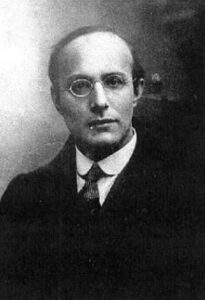
Reasoning as a philosopher, sociologist, and economist, Karl Polanyi argues that the current capitalist system, based on private property and the freedom to undertake and exchange, is only one phase of the evolution of humanity. He believes that the organization of society is part of a long process “seeking to reproduce the conditions of terrestrial life” by respecting man, nature and the planet. To ensure this, he analyzes the social forms and economic principles that governed human societies before the emergence of capitalism. He notes that humanity has long lived under the influence of an “autarkic economy” dominated by direct exchange and based on the gift and counter-gift. Capitalism was built in the nineteenth century by Westerners. Its growth is due to the technical progress that has allowed mass production, and the promise of abundance advanced under the Enlightenment. Western society has put all its human, natural and financial resources at the service of the “economy of abundance”. It aims to meet the needs of consumers, but it leads to the indefinite accumulation of private property and the creation of inequalities. Polanyi therefore challenges the paradigm of the homo economicus, the founder of liberalism and capitalism.
Karl Polanyi attributes the rise of fascism in the 1930s to the excesses of liberalism. A century later, this observation is again observed in Western societies – and especially in French society – increasingly attracted by more or less authoritarian populist regimes with improbable aims. According to him, the majority of citizens want “a great transformation” of society. In the postwar period, this aspiration had resulted in an internationalization of institutions and exchanges, with the creation of the International Labor Organization and the International Monetary Fund. In 2025, it seems to be turning towards a rejection of international capitalism and a nationalist retreat. Karl Polanyi believed in 1944 that a common horizon for humanity was possible; what would he think today?
Jean-Jacques Pluchart