

and
Humanity Facing Polyrisks – A Transdisciplinary View of the Future, Springer Nature, February 2026, 164 pages .
Hubert Landier’s latest books raise a question that is increasingly shared by philosophers, political scientists, sociologists and economists, concerning the transformation of neoliberal society and the industrial economy, which are currently in crisis. The author argues that the interactions between the demographic crisis (declining birth rates), the technological crisis (“black boxes”), the geopolitical crisis (armed conflicts), the pandemic and ecological crisis (global warming), the economic crisis (degrowth and over-indebtedness) and the social crisis (and social movements , identity tensions, etc.) are confronting humanity with polyrisks that have become uncontrollable. The combination of these risks produces complex systemic effects, as Edgar Morin observed half a century ago.
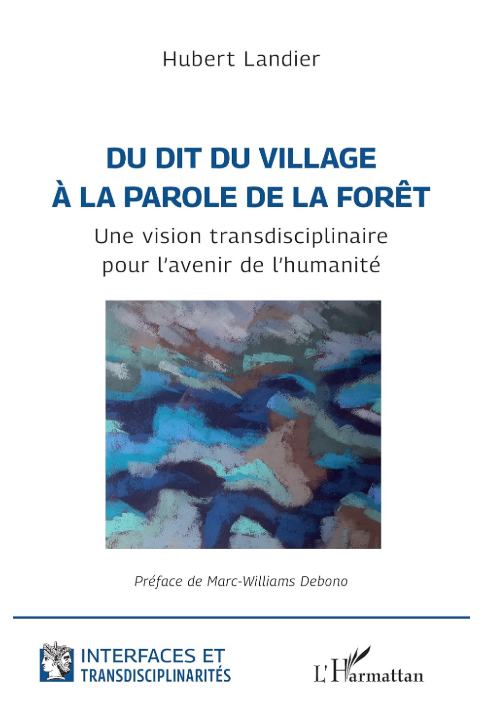
The author uses metaphors to better illustrate the seriousness of humanity’s situation of “systemic fragility” and to propose solutions to this impasse: the sinking of the Titanic, which was considered unsinkable, whose passengers continue to play the violin; the “techno-industrial village”, whose inhabitants consider their own customs to reflect universal truths; the spectator who sees only the tree and no longer the forest (this is the title of Hubert Landier’s book). In particular, he argues that the tree must not hide the forest, whose sustainability depends on respect for nature, the diversity of species and the effectiveness of treatments. This approach presupposes a reassessment of the individual’s relationship with nature (more respectful), with space (more inclusive), with time (longer term) and with others (more supportive). This reassessment therefore presupposes a more multidisciplinary view of ‘polycrises’ and a keener sense of responsibility in the face of them.
The author proposes deconstructing certain economic paradigms that underpin, in particular, development economics, the regulation of economic growth and/or the functioning of financial markets. He draws on the work of Kuhn and Bardi on the influence of paradigms, Morin on the governance of complexity, but above all Aglietta on the critique of the Capitalocene (initiated by Malm and Moore), Diamond, Tainter and Servigne on the theory of collapse, Meadows and the ‘dismayed economists’ on economic degrowth, and Hannah Arendt on collective disobedience…
Hubert Landier is a French economist, holder of a doctorate in economics, consultant, lecturer and author of numerous books. He is Secretary General of CIRET (International Centre for Transdisciplinary Research and Studies) and a member of the Institute for Psychoanalysis and Management.
Jean-Jacques Pluchart