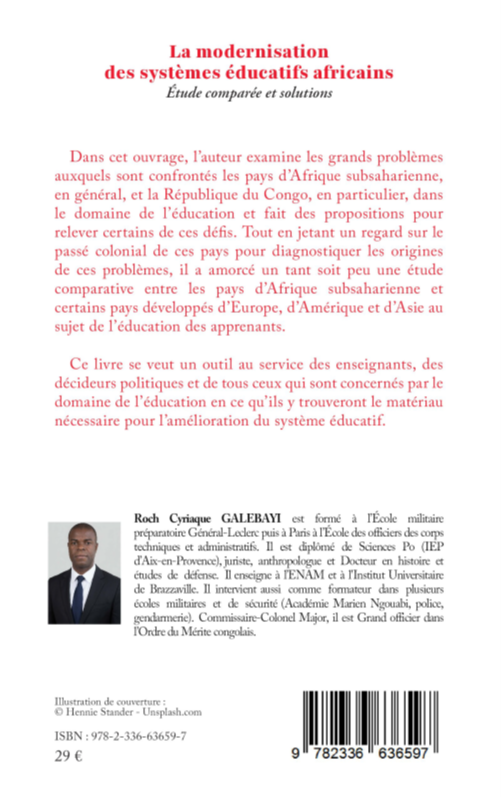

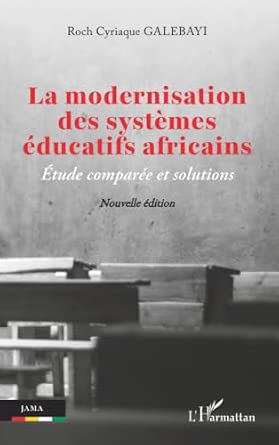
The author notes that African countries are more than ever faced with the challenge of modernity in order to hold their place in the community of nations. He argues that African modernity can only be based on growth, consumption and technological innovation, which are the foundations of Western modernity. He is aware that “the lights of Western reason will not be enough” to reform African institutions and practices, particularly in the field of education and training. The African education system must indeed train elites capable of responding to the multiple challenges of the contemporary world. To fulfil its mission, the system must acquire true “educational sovereignty”.
But he notes that the idea of revolutionising education systems faces multiple political and bureaucratic obstacles in Africa. In some countries, academic freedom is “manipulated” by the ideologies and interests of the social groups in power, by religious or ethnic traditions, and by the “symbolic violence” and “economic imperialism” of Western capitalism. The author courageously denounces certain “patronage” practices used in universities, which favour the selection of students, the appointment and promotion of professors, the setting of teaching programmes and the organisation of examinations. In particular, the author analyses the procedures that contribute to the reproduction of the elites and their alignment with the practices of the groups or coalitions in power.
According to the author, African universities must provide spaces for freedom of teaching, research and innovation. In order for the education system to reflect a country’s cultural identity and serve the deepest aspirations of its population, the new system must partially break free from the colonial education model and better integrate the African socio-cultural paradigm.
The author is aware that, following the Western model, each African state will have to deconstruct certain traditions, modernise its administration, reform its institutions and rethink its governance. The role of schools and universities will be essential in implementing this reconstruction, through realistic diagnoses of problems, effective support for decision-making, implementation and monitoring of execution. He courageously advocates for a reform of African education systems that aims to break free from colonial models and integrate the continent’s cultural particularities, but his well-documented plea shows the extent of the path still to be travelled by the African continent.
Roch Cyriaque GALEBAYI is a graduate of the IEP of Aix
en Provence and holds a doctorate in history. He is a trainer in African military schools.