

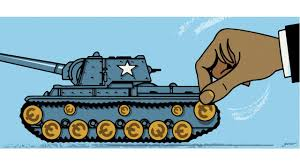
We are entering a war economy. Not a military economy, but an economy where the priority is no longer simply to optimize costs but to guarantee business continuity. For thirty years the dominant model was built on speed, globalization, and the constant reduction of safety margins. The low-cost model delivered efficiency gains, but it relied on a simple assumption: a stable world. That world no longer exists. Geopolitical tensions, supply chain disruptions, industrial dependency and competition between economic blocs are reshaping the rules. Companies must now secure before they optimize.
Economic models should not be opposed because they complement each other. The low-cost model remains necessary to stay competitive, simplify offerings and control costs. The frugal model brings profitable resilience, doing better with less, cooperating rather than over-competing, relocating rather than over-globalizing, regenerating rather than over-consuming. The war economy adds a third dimension: security. It requires protecting supply chains, cash flow, margins, leadership and productive assets. Economic performance no longer comes from a single model but from the ability to combine efficiency, robustness and security.
This shift directly transforms corporate financial management. The low-cost model aimed to reduce working capital needs by minimizing inventories and accelerating capital turnover. The war economy does the opposite. It encourages strategic inventories, supplier diversification and operational redundancy to avoid disruption. This mechanically increases cash requirements and puts short-term financing back at the center of the system. At this point one reality becomes clear: in the coming war economy, short-term financing becomes an issue of economic sovereignty.
The figures confirm this trend. Corporate lending in France represents roughly €1.4 trillion in outstanding loans, including nearly €300 billion in short-term cash financing according to Banque de France and French Banking Federation data. At the same time, the Banque de France has observed a slowdown in short-term lending, around –3% year-on-year in late 2025. This means that needs are increasing while credit supply is tightening. This tension is structural.
The clearest example is the Military Programming Law. The 2024-2030 program represents €413 billion in investment. Behind this budget figure lies a major industrial reality. If we assume conservatively that 40% flows directly into private production, this represents around €24 billion per year for industry. With an average industrial cycle of four months, this creates roughly €8 billion in permanent cash-flow needs. Industrial ramp-up will therefore depend not only on long-term investment but on the ability to finance the operating cycle.
In this new environment one discipline becomes essential: dependency analysis. Business leaders must understand the financial strength of their suppliers, measure concentration risks and anticipate possible disruptions. A company can look strong on paper yet remain fragile through its supply chain. Banks must do the same. Financing a client without analyzing its ecosystem becomes an incomplete risk assessment. In a war economy risk travels through economic chains.
Security needs translate into concrete banking solutions.
– Securing supply chains involves documentary credits, bank guarantees and short-term lines dedicated to strategic inventories.
– Securing cash flow relies on overdraft facilities, revolving credit lines, structured short-term credit, factoring and reverse factoring to accelerate liquidity from receivables.
– Securing margins requires financing capable of absorbing cost gaps and appropriate hedging tools.
– Securing the business leader means protecting the private sphere through protection insurance and key-person coverage to ensure decision continuity.
– Securing productive assets relies on property and casualty insurance and business interruption coverage, since any disruption immediately becomes a liquidity risk.
In this context the role of banks is changing fundamentally. For years they mainly financed growth. Tomorrow they will have to finance continuity. This requires faster decisions, an industrial understanding of business models and dedicated short-term financing envelopes. Short-term financing is no longer a simple banking product. It becomes a strategic tool.
The question of risk remains central. In an uncertain environment banks may be tempted to reduce exposure. That would be a collective mistake. As during the Covid crisis, a public reinsurance mechanism for short-term credit could be introduced. The principle is simple: banks distribute financing quickly, the State guarantees part of the risk, and Bpifrance coordinates and mutualizes the system. Such a framework would support industrial ramp-up without blocking financing to the real economy.
Bpifrance would then play a central role as coordinator, sharing risk, guiding sector priorities and securing the overall system, while commercial banks maintain proximity to businesses and execution speed.
The war economy does not replace the previous economic model; it corrects it. Low-cost brings efficiency, the frugal model brings resilience, and the war economy imposes security. Real performance will no longer be measured only by growth speed but by the ability to endure. In this new environment short-term financing returns to the core of the economic system because it determines whether companies can continue to produce.
Ultimately, the economy that is emerging reminds us of a simple truth: resilience comes before performance. Business continuity, control of dependencies and the ability to finance the short operating cycle become conditions of economic sovereignty.
As Jacques Rueff wrote:
“Order, and order alone, ultimately creates freedom. Disorder creates servitude.”
In the coming war economy, that order also depends on our collective ability to finance and secure the real economy.
Benoit Frayer