

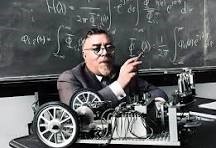
Phlippe Alezard
According to classical economic theory, the price of an asset is determined by the interaction between supply and demand: between a seller wishing to dispose of the asset and a buyer wishing to acquire it. The stronger the demand, for various reasons, the higher the price of the asset will be pushed. Indeed, in theory, demand can be almost unlimited, whereas the asset, by definition, is limited in number. Conversely, when demand is low, the seller seeking to dispose of their asset will tend to lower the price in order to find a buyer. We can therefore understand that, at any given moment, the price corresponds to the point of equilibrium between supply and demand.All
of this is true in an ideal, theoretical world. In reality, a wide range of events can occur at any time: geopolitical, climatic, informational, economic or financial events. These events trigger emotional reactions – panic, rumours, euphoria – which in turn lead to human decisions, as well as algorithmic positioning in one direction or another. This multitude of random shocks affects the behaviour of economic agents and creates erratic and unpredictable movements in the short term. It is precisely these random fluctuations, this constant uncertainty, that mathematicians have sought to model in the form of stochastic processes.
The first person to have this insight was Louis Bachelier. In his now famous thesis[1] ‘Théorie de la spéculation’ (‘Theory of Speculation’), submitted in 1900, he introduced the use of probabilities to describe price movements and showed that price changes can be represented as a sequence of independent, identically distributed random variables. He went even further by constructing histograms that showed that these variations were distributed according to a bell-shaped curve, in other words, a Gaussian distribution. In this way, Bachelier laid the initial foundations for finance based on Brownian motion, a diffusion process, and the normal distribution.However
, the history of Brownian motion begins long before finance. In 1827, Robert Brown[2] used a microscope to observe the persistent agitation of pollen particles suspended in a fluid. This phenomenon can be explained by the incessant and random impacts of the fluid molecules on the particles. The individual movement of each molecule is negligible, but the combined effect of all these impacts produces a completely erratic overall movement. The Brownian motion of a particle can therefore be modelled as a stochastic process characterised by a succession of independent increments, with a mean of zero, whose magnitude and direction vary unpredictably.In
finance, the pollen particle becomes the price of an asset suspended in a market. The molecules of the fluid are replaced by the multitude of buy and sell orders, which are themselves driven by an infinite amount of information, events and sometimes conflicting decisions.
For a process to be classified as standard Brownian motion, three properties must be satisfied:
1. All trajectories start at the origin, or more precisely, in the probabilistic sense, the probability that the trajectory starts at zero is equal to one.
2. Each increment of the process is independent of the previous one: future changes do not depend on the past. Brownian motion has no memory.
3. The distribution of the increments P(t+1) – P(t) at each instant follows a normal distribution with a mean of zero, whose variance (t+1) – t is proportional to the elapsed time.
It was precisely these properties that Bachelier had already observed when studying the prices on the Paris Stock Exchange. However, it was Norbert Wiener who would provide this phenomenon with its rigorous mathematical formalisation.
Born in 1894 in Columbia, Missouri, Wiener came from a Russian Jewish family who had immigrated to the United States. His father, Leo Wiener, a translator of Leo Tolstoy’s complete works and later a professor of Slavic languages at Harvard, personally oversaw his son’s education, employing innovative teaching methods. A child prodigy, Norbert received his primary education at home, entered secondary school in 1903 and obtained his equivalent of the baccalaureate in 1906, at the age of twelve.
He then attended Tufts University before moving on to Harvard, where he defended a thesis on mathematical logic. At the age of just eighteen, he became the youngest doctoral graduate in the history of this prestigious university. After his thesis defence, he travelled to Europe: in Cambridge, he attended Bertrand Russell’s lectures; in Göttingen, he studied with David Hilbert, one of the greatest mathematicians of the 20th century.
Back in the United States, after several temporary positions, Wiener joined MIT in 1919, where he would spend the majority of his career. There, he developed a remarkably diverse body of scientific work, spanning the fields of mathematical analysis, probability, engineering and the philosophy of science. Brownian
motion had been known since Brown’s observation in 1827. In 1900, Bachelier had applied it to price fluctuations. In 1905, Albert Einstein published his theory of Brownian motion, while Marian Smoluchowski [3] independently developed an approach based on the random collisions of molecules. These works provided a physical interpretation of Brownian motion.
However, a fundamental question remained: how could a continuous random trajectory over time be rigorously defined in mathematics?
By 1923, discrete random walks, such as those resulting from a game of heads or tails, were already well understood. At that time, a finite number of random variables were used. However, the transition to continuous time posed a major conceptual challenge: how could a probability be defined over a non-countable infinity of random variables?
In his article ‘Differential-Space [4]’, Wiener proposed an elegant solution. He considered the set of possible trajectories as the points of a functional space of infinite dimension. To construct a probability measure on this space, he begins by discretising time by subdividing the interval [0,1] into n segments:
0 = t0 < t1 < t2 … < tn =1
He then studied only the increments:
X1 = J(t1) – J(0)
X2 = J(t2) – J(t1)
….
Xn = j(tn) – J(tn−1)
Three points are crucial:
1. It is not the successive positions that are independent, but the displacements over each interval;2
. Each increment follows a normal distribution, the variance of which is proportional to the length of the interval.3
. A path can then be represented by a vector (X1, X2, …, Xn ), and therefore by an object of finite dimension.As
n approaches infinity, we obtain a finite Gaussian measure on a space of infinite dimension. This construction is now known as the Wiener measure.
Another notable consequence emerges: the trajectories of Brownian motion are continuous, but not differentiable at any point. In other words, they are infinitely irregular. At the time, these were referred to as ‘pathological functions’. These objects would later become a new class of mathematical structures, popularised by Benoit Mandelbrot[5] under the name of fractals.Wiener
’s contribution thus marks the culmination of a long chain of scientific discoveries: Brown’s experimental observation, Bachelier’s financial intuition, and the physical interpretation of Einstein and Smoluchowski. This chain would later be extended by Andrey Kolmogorov’s[6] work on modern probability theory and by Kiyoshi Itō’s[7] stochastic calculus.
Although originally formulated to describe Brownian motion, the Wiener process has now become the probabilistic framework for modelling financial markets and one of the cornerstones of quantitative finance.
The central idea is to model uncertainty using a continuous process with independent, Gaussian and stationary increments. In finance, this amounts to assuming that short-term price changes are:
· conditionally independent of the available information,
· Centred (no arbitrage),
· Proportional to the square root of time (diffusive structure).
This is precisely the structure of the Wiener process. The key application of this model in finance is reflected in the dynamic equation for the price of an asset :
dSt
= μStdt + σStdWtwhich
forms the starting point for the Black–Scholes model.
This equation, known as geometric Brownian motion, shows that the price of an asset follows, on average, an exponential growth pattern (the first term in the equation), but that this trajectory is constantly disrupted by Brownian noise, which represents unpredictable market fluctuations (the second term in the equation).
In this context, the key parameter is not ‘μ’, the expected market return, but ‘σ’, volatility. Volatility thus becomes the quantitative measure of uncertainty: a probabilistic structure that can be modelled and observed, particularly in option prices. It is listed, traded and becomes a fundamental macro-financial variable.
Quantitative finance therefore transforms uncertainty into a financial asset.Wiener
’s legacy is omnipresent, often in an invisible way. Trading floors, risk management models, and the simulation methods used by central banks or financial institutions are largely based on tools derived from this probabilistic framework.
The transition from Brownian motion to price dynamics represents one of the most powerful transfers between pure mathematics and economic theory.It forms the conceptual framework of modern quantitative finance.
In this sense, Wiener’s legacy extends beyond probabilistic geometry: it shapes our contemporary understanding of risk, time and capital.
Wiener’s process is not merely a mathematical construct; it illustrates the unique fruitfulness of mathematical abstractions: designed to shed light on a specific phenomenon, they sometimes end up becoming a universal grammar of uncertainty.
[1] L. Bachelier’s thesis report can be found in the thesis register of the Faculty of Science of Paris, deposited at the National Archives.
[2] Robert Brown, 1773–1858, Scottish botanist, surgeon and explorer
[3] Marian Smoluchowski, 1872–1917, Polish physicist whose contributions to Brownian motion, electrophoresis, fluctuation theory, the blue colour of the sky and the physics of colloids were of paramount importance at a time when the existence of atoms and molecules was far from accepted.
[4] https://djalil.chafai.net/docs/M2/history-brownian-motion/Wiener%20-%201923.pdf
[5] Benoit Mandelbrot, 1924–2010, Polish-French-American mathematician
[6] Andrey Kolmogorov, 1903–1987, Russian mathematician, who made significant contributions to probability theory
[7] Kiyoshi Itō, 1915–2008, Japanese mathematician regarded as the founder of stochastic calculus