

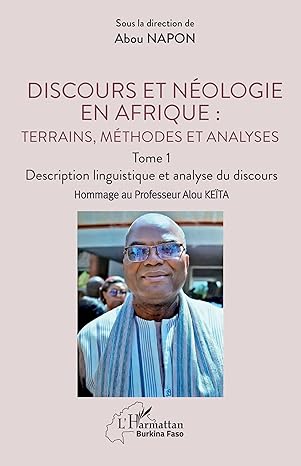
This monumental and unprecedented tribute to the work of Professor Alou Keïta, sociologist and linguist, does not deal with economic and financial issues, but it nevertheless deserves the attention of the readers of our blog, because it testifies to the vitality of African research. The book presents the proceedings of a symposium organized in September 2024. It brings together 92 articles covering two themes: the analysis of African discourses; contemporary African literature and society.
The first volume deals with the phonology, syntax, enunciation, lexicology and terminology of African languages. The authors endeavor to document the uses and dynamics of these many languages, which are both contextualized and insufficiently documented. They engage in an analysis of the discourses of African peoples, which cover narratives illustrating human actions influenced by different norms, values and social codes. The work highlights the plurality of African discursive practices, whether public or private, institutional or social. In an international context marked by tensions and more or less contradictory assertions of identity, the work of Alou Ketta, his colleagues and students illustrates the fertility of African research fields.
The second volume focuses on language, a means of communication and a vehicle for learning. The articles analyze the relationship between language, society and education. The articles explore the relationship between language, society and education. Their authors endeavor to measure the influence of literature on language learning and the awakening of consciousness. Its practice is influenced, in Africa more than elsewhere, by the social status of the speakers. The authors show that language learning plays a central role in the education of the peoples of Africa, and in particular of its youth, who represent more than a third of its population.
This tribute to a great African linguist is part of the current of thought opened by Saussure (the signifier and the signified), Chomsky (the innate character of language), Orwell (newspeak), Lacan (the language of the unconscious) and Damasio (the language of AI).
Jean-Jacques Pluchart