

Louis Bachelier or the birth of modern finance
Philippe Alezard
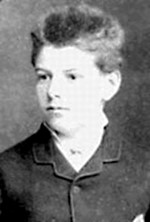
Louis Bachelier (1870-1946) has long been a marginalised figure in the history of mathematics and economics, but is now recognised as one of the founders of modern finance. Defended in 1900 under the direction of Henri Poincaré, his thesis Theory of speculation constitutes a major methodological break by applying for the first time in a systematic way the calculation of probabilities and the tools of mathematical physics to the analysis of financial markets. Through a contextualised re-reading of his work, this article shows how a theoretical innovation born in France was ignored in its original academic context before being rediscovered, institutionalised and fertilised across the Atlantic. Bachelier’s scientific career thus sheds light on the social and intellectual conditions for the recognition of knowledge and questions the relationship between mathematics, economics and academic institutions.
Financial and institutional context of the end of the 19th century
On 29 March 1900, before a jury composed of Paul Appell, the great specialist in infinitesimal geometry, Joseph Boussinesq, the expert in fluid mechanics, and Henri Poincaré, one of the most illustrious mathematicians of all time, Louis Bachelier defended his thesis on “a subject that is a little different from those usually treated by our candidates, Theory of Speculation and has as its object the application of the Calculation of Probabilities to Stock Exchange Operations” as Henri Poincaré points out in his report [1].
Since the coup d’état of 2 December 1851 and with the creation of the Crédit Mobilier of the Pereire brothers, the Paris stock exchange was in its heyday and had become the world’s leading financial centre [2]. In 1850, 118 securities were listed, including 28 foreign, and at the end of 1869, 407 securities were listed, including 109 foreign and 298 French. Among these, 166 were fixed income, funds or government bonds. The Brongniart Palace, inaugurated a few years earlier, in 1826, was the kingdom of annuities. All this had begun with the “Billion Law for Emigrants” promulgated under Charles X in 1825 to compensate the nobles, returning massively from 1815, for the sale of their property as national property. The French State then issued a loan of 1 billion francs, guaranteed by the state and by the franc-gold parity, remunerated between 3% and 5%. The State paid the interest but never repaid the principal. This is the perpetual annuity. Each security had a nominal value of 100 francs and these securities could be traded, sold or bought in cash or forward, on a secondary market. The success was such that this loan led to many others. In 1900, the total nominal capital of government bonds (France, Russia, Germany and others, etc.) of French public loans amounted to 70 billion francs for an annual budget of 4 billion. All this stopped in 1914 with the collapse of the franc.
Louis Bachelier was born in Le Havre on 11 March 1870. His father, originally from Bordeaux, was a wine and spirits merchant. He represented Bordeaux and Champagne houses in export brokerage activities, but also in imports. In 1886, he was vice-consul of Venezuela. His paternal grandfather, also Louis Bachelier, was the author of “Une histoire du commerce à Bordeaux” (A history of commerce in Bordeaux) in 1863 [3]. His mother was the daughter of a former wine merchant who had become a banker. Young Louis therefore “bathed” in a family environment that was very well-informed about the port’s commodity futures markets. At the end of the 19th century, the port of Le Havre was the first and only French port to have a futures market where daily clearing operations for coffee, cotton and cocoa were processed. Every day, the prices of these commodities in Liverpool, London, New York, trends and statistics were published in the local newspapers as well as in the Le Havre stock market chronicle.
In 1888, in Caen, he passed his science baccalaureate and in 1889, he suddenly lost his father, and his mother died a few months later. Following this family tragedy, at the age of 19, he interrupted his studies to take over the family business and take care of his little sister and his 3-year-old brother. But the end of the 19th century was doubly tragic for young Louis. The phylloxera that had begun to spread in French vineyards from 1865 reached its peak in 1890, causing French production to fall from a peak of 85 million hectolitres in 1875 to 30 million in 1890. Would the family business still be viable? Was there still the desire to continue? In 1991 the company was liquidated, the stock which had increased in value in these periods of shortage, sold well, enough to properly endow his sister and ensure the education of his brother. In 1892 he left to do his military service and enrolled at the Sorbonne where he passed his mathematics degree in 1895.
It was during these years that Bachelier met Henry Poincaré, who then occupied the chair of what was called physical mathematics (mechanics) and probability. He took courses on the theory of heat and probabilities. Almost a century earlier, Joseph Fourrier had developed the solution of the equation of heat diffusion by the decomposition of a periodic function in trigonometric series. Bachelier’s genius was to adapt these equations to the calculation of probabilities of increases and decreases in the prices of loans and to use the increases of the Brownian movement [4] in order to fix the price of options. It is this relationship between random movements and the heat equation that interested Poincaré. He had just introduced the critical path method in his course on celestial mechanics, which involves trajectories. He was therefore one of the only ones to understand the interest of the method for stock prices. But it took two free spirits, almost “frivolous” and not attached to rigour and mathematical precision to see the “beauty” in a thesis on a subject, speculation, the trade of government bonds, the stock market which is located, as Benoit Mandelbrot notes [5], “on the opposite bank in the geographical and intellectual sense of the famous Sorbonne.“
With this somewhat esoteric subject, far removed from physics and not considered very noble, he only obtained the mention “honourable “, which closed the doors to a great university career. He spent the next ten years struggling to get his work recognised, to find positions worthy of it, and to obtain the few first research grants that were being set up. Thanks to Poincaré’s support, his work was published in important journals, the Annals of the École Normale Supérieure and the Journal of Pure and Applied Mathematics. After his four years of war, he was appointed lecturer at the University of Besançon, then Dijon and Rennes. In 1926, the chair of differential calculus at the University of Dijon became vacant. Bachelier applied and Maurice Gevrey [6], holder of the mechanical chair, was commissioned to make a report. Gevrey, who had another choice in mind, George Cerf [7], had to quickly read Bachelier’s work, of which he was not at all a specialist, and found an error in Bachelier’s last article of 1913, in which he brought new developments on the Brownian movement of his thesis. He had this error confirmed by Paul Lévy [8]. In 1926, Paul Lévy was already considered an authority on the calculation of probabilities and had just published “Calcul des probabilités” with Gauthier-Villars. He only read the page about the error and confirmed it. Bachelier was furious and accused Lévy of having blocked his career without knowing his work.
Late recognition and international posterity
It was in 1931, while reading Kolmogorov’s thesis [9] on his analytical theory of Markov processes, that he discovered that the latter cited Bachelier for his work on Brownian motion. In 1921 Keynes, in his book on probabilities [10], also cites two books by Bachelier. In 1946, Lévy, who had become passionate about the Brownian movement, corresponded with Bachelier just before the latter’s death, expressing his regret at having been left with the impression of an error that had prevented him from continuing to read his work.
But it was in the 1950s, on the other side of the Atlantic, that Louis Bachelier’s work would receive its noble accolades. This rediscovery of Bachelier is generally attributed to the mathematician Leonard J. Savage [11] who, in the Chicago library, came across the English edition of Bachelier’s 1914 book and alerted his colleagues to the interest of these ideas. This relay in American academic circles revived not only the movement to re-evaluate Bachelier as a mathematician but as a pioneer of probabilistic calculus and Brownian motion applied to finance. Bachelier’s ideas were increasingly cited among American mathematicians and economists, and a major turning point came with the first English translation of the 1900 thesis by Paul Cootner [12] in 1964, “the random character of stock market prices“.
Paul Samuelson [13], future Nobel Prize winner in economics, and Paul Cootner were part of the same academic research community on financial market theories at MIT. On reading Bachelier, what struck Samuelson was the mathematical tools implemented at the time by the author of this thesis in 1900, the heat equation, the Brownian movement, Markov processes before Markov. It was notably by relying on these ideas that Samuelson contributed to integrating the notion of “random walk” into economic theory. By re-evaluating Bachelier, Samuelson acted as a catalyst in the modelling and mathematisation of markets. When Fischer Black, Myron Scholes and Robert Merton published their model for evaluating the price of an option in 1973 [14], they took up Bachelier’s concepts, a continuous price dynamic, a variance proportional to time and a resolution of a diffusion-type differential equation. This is the modernised and corrected version of the Bachelier model, which Robert Merton readily acknowledged.
More than sixty years after his thesis, Louis Bachelier helped transform Wall Street into a financial engineering laboratory. It is interesting to note the contrast, in the 1950s and 1960s, between the United States and Europe, and in particular France, where a discipline such as finance was not integrated as a serious field of research. In the United States, on the contrary, universities were moving closer to the economic world. Business schools were developing, financial markets were becoming increasingly important, and the idea of applying mathematics to the economy met with less resistance. Where France neglected a discovery, the United States took it up, institutionalised it and transformed it into a true academic discipline.
Bachelier is celebrated on this side of the Atlantic as the father of modern finance, mathematical finance, quantitative finance, but his career illustrates the gap that can exist between Europe and the United States. On the one hand, an isolated visionary researcher, ignored by his contemporaries, on the other, a university and financial system ready to welcome and exploit these ideas. Bachelier’s story thus shows how theoretical innovation can be born in Europe, but find its true recognition and practical applications across the Atlantic.
Conclusion
The story of Louis Bachelier illustrates in an exemplary way the gap that can exist between the emergence of a theoretical innovation and its institutional recognition. By applying probabilistic and differential tools to the study of financial markets as early as 1900, Bachelier anticipated major developments in economic theory and mathematical finance by several decades. However, the marginal nature of his object of study and the disciplinary norms of the French university of the time contributed to relegating his work to the periphery of the academic field.
The rediscovery of his work in the United States from the 1950s, its integration into MIT research and its influence on major figures such as Samuelson, Black, Scholes and Merton show how institutional conditions play a decisive role in the fertility of scientific ideas. The Bachelier case thus invites a broader reflection on the international circulation of knowledge, the hierarchy of disciplines and the ability of institutions to recognise emerging research subjects. As such, his work is not only part of the history of finance, but also constitutes an essential milestone in the intellectual history of contemporary social sciences and mathematics.
[1] The thesis report of L. Bachelier is in the register of theses of the Faculty of Sciences of Paris, filed in the National Archives
[2] Alain Plessis, La bourse et la société française du second empire, article (1983)
[3] Histoire du commerce de Bordeaux depuis les temps les plus reculés jusqu’à nos jours, Éditions P. Chaumas, 1863
[4] Named after the Scottish botanist Robert Brown (1773 – 1858) who observed the random trajectories of pollen particles suspended in water.
[5] Benoit Mandelbrot, Une approche fractale des marchés, Éditions Odile Jacob
[6] Maurice Gevrey (1887 – 1957), Normalien, associate, great French specialist in partial differential equations
[7] Georges Cerf (1888 – 1979), Normalien, specialist in partial differential equations
[8] Paul Lévy (1886 – 1971), polytechnician considered the founder, along with Émile Borel and Andrei Kolmogorov, of the modern theory of probabilities
[9] Andrei Kolmogorov, (1903 – 1987), Russian mathematician who, through his axiomatisation of the calculation of probabilities, marked the first half of the 20th century of mathematics by bringing out the probabilities of the geometry of chance dear to Pascal to create a new fundamental field of mathematics
[10] J.M. Keynes, A Treatise on Probability, Macmilan, London 1921
[11] LJ. Savage (1917 – 1971), American mathematician and statistician, of whom Milton Friedman said “one of the few geniuses I have met“
[12] Paul Harold Cootner, (1930 – 1978), economist at MIT
[13] Paul Samuelson, (1915 – 2009), Economist, Nobel Prize in Economics in 1970
[14] Robert Merton born in 1944, Myron Scholes in 1941, both American economists who received the Nobel Prize in Economics in 1997. Fisher Black (1938 – 1995) was not awarded, having died 2 years earlier