

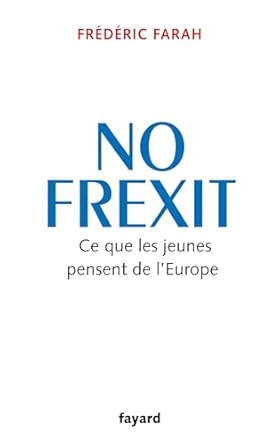
The author approaches the European subject by probing the opinions of his high school and college students. The students surveyed were from Seine-Saint-Denis, the 5th arrondissement of Paris, and Tolbiac University. Are young people passionate about the European project? Do they feel more European than French? Do they know the European institutions?
Bagnolet high school students are mostly from immigrant backgrounds and live in difficult family circumstances (some parents are unemployed).
They note that Europe may be a market offering opportunities. Given its presence in the media world, the European Central Bank (ECB) is perceived as a monetary regulation institution. However, the other European institutions are less well known: the Parliament, the Commission, the Council. The Schengen area is highlighted for the convenience of traveling in Europe. It should be noted that all they have known is the euro,.
Preparatory classes students (Paris 5th and 16th arrondissement) are of different sociological origins (more affluent social background), they adhere to the idea of a Europe that facilitates trade between its members.
The approach of Tolbiac Univeristy students is a little different: they know better the various workings of the institution.
Like their prep colleagues, they recognize the importance of the role played by the European Central Bank (ECB). They also note the importance of collective action during the financial crises and the COVID-19 pandemic.
In conclusion, no group of students mentioned the idea of a “Frexit”. It should first be noted that students see the practical side of Europe because of the existence of the Erasmus program: it is a way to open up to other horizons and other cultures and makes them aware of their belonging to Europe. It was created in 1987.
These young people were born after the creation of Europe and the euro: it would not occur to them to question it.
One particular point brings negative remarks: the social aspect. Indeed, because of the commercial competition between members, employees earning minimum wage may find themselves unemployed. Some industries are relocated to lower wages countries .
This book brings us closer to the concerns of these young people: we must listen to them and enlighten them on the path of Europe They will be the ones driving future European progress.
Frédéric FARAH is a professor of economic and social sciences, a professor in preparatory classes and at the University of Paris 1 Panthéon Sorbonne.
Renzo Borsato