

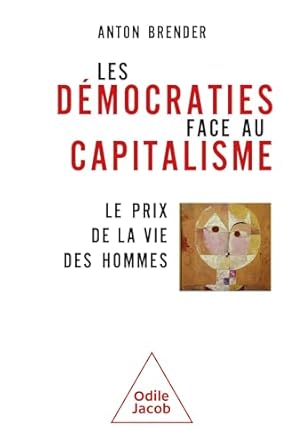
This book was published in 2024, but current parliamentary debates, steeped in ideology, make it highly relevant today. Capitalism has been left to its own devices since the 1980s, and is no longer relied upon to improve living conditions for all. Successive governments seem to have neglected social infrastructure—hospitals, schools, the justice system, etc.—either out of convenience or conviction, even though the quality of such infrastructure reflects the value that a democracy places on the lives of its citizens. Western economies in general, and ours in particular, are in the situation we are all familiar with, attempting to resolve a conflict of horizons, a concept that emerged about ten years ago to characterize the difficulties of managing energy and environmental transitions, and which can be extended to current societal transitions.
The author, a renowned economist who has worked in banking and asset management, is an advocate of capitalism focused on the common good, corrected for the excesses that are making the world increasingly threatening. The book is therefore a plea for our societies to use the drivers of capitalism to invest once again in “improving people’s lives; and this cannot be taken for granted.”
While democracy has made capitalism a factor for progress, laissez-faire has led to numerous excesses; these are the themes of the first two chapters. This is followed by two illustrations that “globalization has not made the Earth flatter” and that “the end of the USSR did not mark the end of history.” Finally, the last two ideas developed are injunctions to “take back the helm” and “look more closely at the future”; ideas that have been repeated by many, but which are treated with finesse, outside the paths usually taken by columnists… because Anton BRENDER is not a columnist but a field economist who, with his experience and his personal and professional cultures, tackles what are sometimes taken as clichés such as: forgetting GDP? Getting into more debt? Absurd budgetary rules? the challenge of sustainability, placing greater value on the future, democracy under threat, the influence of platforms, the weakening of traditional information channels, etc. The approach is therefore to objectify these themes by attempting to distinguish between fact and opinion, reality and perception.
The conclusion is that global chaos, climate change, and the increasingly acute tensions manifesting themselves in our country make the need for action urgent. Rebuilding the foundations of solidarity that underpin a democratic society should be a priority for governments…and citizens. This requires consolidating the physical and social infrastructure that reflects the value a society places on the life of each individual. It may also involve considering a redistribution of income to reduce some of the inequalities naturally generated by capitalism; and above all, it requires the mobilization of as many people as possible.
Only widespread awareness can make this happen. The current debates on whether to increase taxes to finance increased spending—or vice versa—without any consideration for the future of society show that we are still a long way from this. There are 18 months to go before the next presidential election, and this awareness, leading to the setting of a course that is acceptable to the majority. It is not much time !
Dominique CHESNEAU